 Anacortes Window
 Deck Replacement in March Point: Built for This Stretch of Fidalgo Island
March Point sits out on the water, exposed to wind and salt spray in a way that homes further inland simply aren't. If you own a deck out here, you already know the drill: railings pit and corrode faster, wood grays and softens sooner, and moss finds a foothold on any surface that stays damp for more than a day or two. A deck that would last two decades in a sheltered part of Anacortes can start failing structurally in half that time out here if it wasn't built with this exposure in mind.
We replace decks throughout Skagit County, but March Point gets treated as its own case. The salt air corrodes standard fasteners and hardware faster than most manufacturers rate for. The driving rain off the water finds every gap in flashing and framing. And the long moss season here — often stretching from fall through spring — means any deck surface that doesn't shed water and dry out quickly is going to grow something on it, and that something eventually rots the wood underneath.
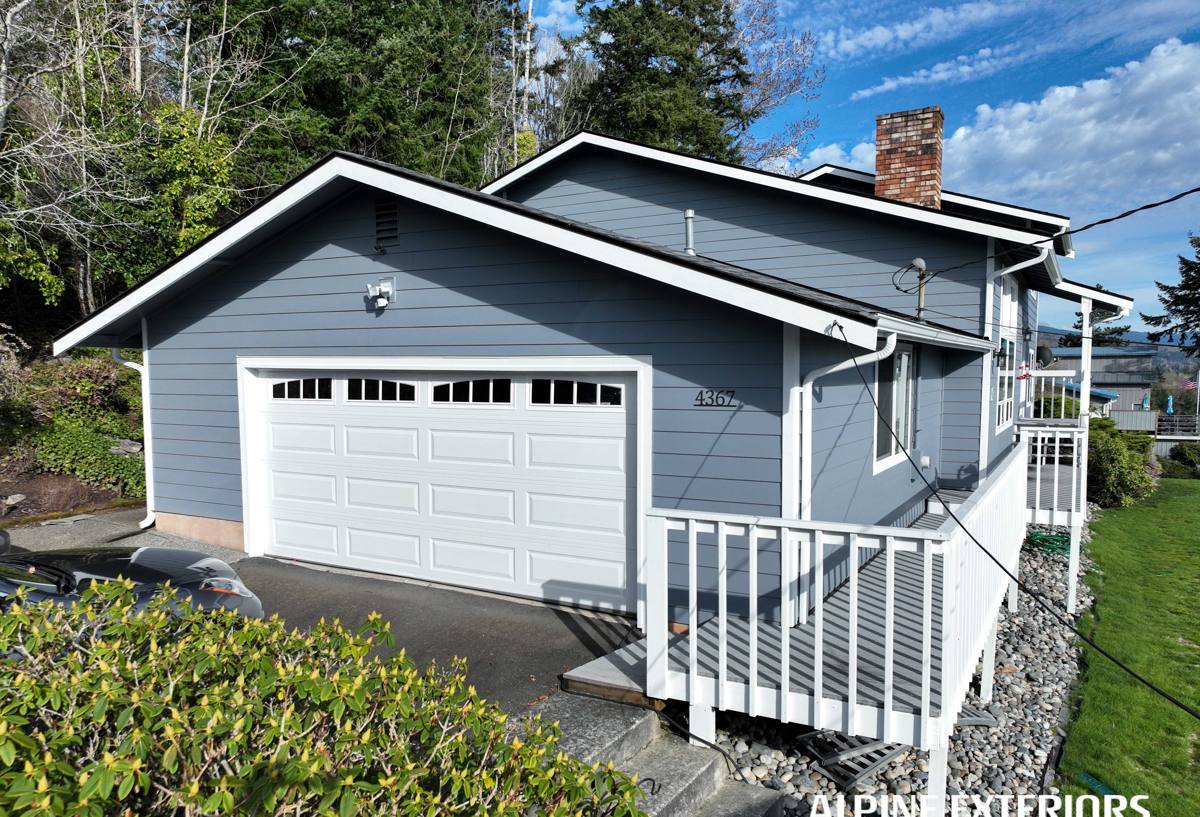
Signs Your March Point Deck Needs Replacing, Not Just Repairing
Not every tired deck needs a full tear-out. But there are a handful of signs that tell us repair is just delaying the inevitable, especially on a waterfront or near-waterfront property:
- Soft, spongy spots in the decking or around the ledger board where it meets the house
- Visible rust streaking from fasteners, joist hangers, or railing posts
- Persistent moss or algae growth that comes back within weeks of cleaning
- Railing posts that wiggle at the base — often a sign the framing beneath has gone soft
- Gaps or separation where the deck meets the house, which usually means the ledger flashing has failed
- A deck older than 15-20 years that has never had its structural framing inspected
If you're only seeing one or two of these and the framing underneath is sound, a repair or partial rebuild may be enough. Once the ledger connection or the joists themselves are compromised, patching individual boards just moves the problem down the road a year or two.
What a Correct Deck Replacement Actually Involves
A deck replacement isn't just pulling up old boards and screwing down new ones. On a home exposed to this much moisture and salt, the work that happens before the decking goes down matters more than the decking itself.
Tear-Out and Structural Inspection
We remove the old decking, railings, and any framing that's compromised, then inspect what's left: the ledger board connection to the house, the posts, beams, and footings. This is where we find the problems a homeowner can't see from the surface — soft framing hidden under boards that still look fine on top.
Ledger and Flashing Correction
The ledger board — where the deck attaches to the house — is the single most common failure point on decks in this climate. If the flashing behind it is missing, undersized, or improperly lapped, water gets behind the siding and into the rim joist. We correct this every time, even on jobs where the customer only asked for new decking boards.
Framing and Fasteners Rated for Coastal Exposure
Standard hardware corrodes faster in salt air. We use hot-dip galvanized or stainless connectors and fasteners rated for coastal and treated-lumber exposure, not the minimum-code hardware that's fine forty miles inland but underperforms out here.
Drainage and Spacing
Board spacing, joist spacing, and any under-deck drainage system are set up to shed water fast, not let it sit. In a climate with this much rain and moss pressure, a deck that drains slowly is a deck that grows moss and holds rot no matter what decking material sits on top.
Choosing a Decking Material for a March Point Property
There's no single "best" decking material — the right choice depends on how much maintenance you want to do, your budget, and how close you are to the water. Here's how the common options actually perform in this specific climate:
| Material | How It Handles Salt Air & Moss | Maintenance | Typical Lifespan Here |
|---|---|---|---|
| Pressure-treated wood | Needs regular sealing to resist moisture; moss and mildew take hold quickly if neglected | Annual cleaning and sealing | 10-15 years |
| Cedar | Naturally rot-resistant but still grays and softens under constant salt spray | Periodic cleaning, staining every 2-3 years | 15-20 years |
| Composite decking | Doesn't absorb moisture like wood; still needs cleaning to prevent surface moss/mildew | Occasional washing, no staining or sealing | 25-30 years |
| PVC/cellular decking | Fully resists moisture absorption; best option for constant moss and salt exposure | Occasional washing | 30+ years |
For homes with direct water exposure and heavy moss pressure, we generally steer customers toward composite or PVC decking. It's not that wood is a bad product — it's that the maintenance schedule wood requires out here (annual sealing, more frequent staining) is a lot to keep up with, and skipping a year is exactly when rot gets a foothold. That's a maintenance-burden tradeoff we're upfront about, not a knock on wood as a material.
Railings and Hardware: Where Corrosion Shows Up First
Railings and fasteners usually show wear before the decking does, because they're the parts most exposed to blowing salt spray and standing moisture. Untreated or standard-grade steel hardware will visibly rust within a few seasons out here. We spec stainless or coated hardware for railing posts, brackets, and structural connectors specifically because of this exposure — it costs a bit more up front and it's the difference between hardware that lasts the life of the deck and hardware you're replacing in year five.
Our Deck Replacement Process
We keep the process straightforward and try not to leave your property in limbo any longer than necessary:
- On-site assessment — we look at the existing deck, the framing underneath, and the ledger connection, and talk through what you actually need versus what's optional
- Written estimate — clear scope, materials, and timeline before any work starts
- Permitting — we handle the Skagit County permit application where one is required
- Tear-out — removal of the old deck and disposal
- Structural rebuild — framing, ledger, flashing, and footings corrected or replaced as needed
- Decking and railing installation — using the material and hardware spec we agreed on
- Final walkthrough — we go over the finished deck with you before calling the job done
Permits and Local Considerations
Most deck replacements in unincorporated Skagit County, including March Point, require a building permit, particularly when structural framing, footings, or the ledger connection are being replaced rather than just the surface decking. If your property is close to the shoreline, there can also be additional review depending on setback and shoreline management rules. We handle the permit application as part of the job so you're not the one tracking down paperwork or wondering if an inspection was missed.
Maintenance Checklist for a March Point Deck
Whatever material you choose, a few habits go a long way toward getting the full lifespan out of a new deck in this environment:
- Rinse or sweep off standing debris and moss growth regularly, especially through fall and winter
- Keep gutters and downspouts clear so runoff isn't dumping extra water onto the deck surface
- Check railing posts and stair connections once a year for looseness or rust staining
- For wood decking, reseal or stain on the schedule your material actually needs — don't stretch it
- Trim back vegetation that's shading the deck and keeping it damp longer than it should be
- Address soft spots or discoloration as soon as you notice them, before they spread underneath the surface boards
Why Hire a Crew That Already Works March Point
A lot of deck problems out here trace back to a build that was done to a generic spec — the kind that holds up fine in a sheltered inland yard but wasn't built for constant salt spray, driving rain, and a moss season that doesn't really end. We work this area regularly enough to know which fasteners actually hold up, where flashing tends to fail first, and which materials are worth the extra upfront cost versus which ones just mean more maintenance down the line. That's the difference between a deck that needs attention again in eight years and one that doesn't.
If your deck is showing its age, or you're planning ahead before a small problem becomes a structural one, we're happy to take a look. Fill out the form below for a free, no-pressure estimate — we'll tell you honestly what your deck needs, not just what's easiest to sell.