 Anacortes Window
 La Conner sits on the Swinomish Channel, and that location shapes almost every exterior decision a homeowner here makes, windows included. This isn't a generic "we install windows everywhere" page. It's specifically about what window installation needs to look like for a home in La Conner, given the tidal air, the wind-driven rain that comes off the water, and a moss season that runs longer here than it does a few miles inland. Get the installation right and a window will perform for decades in this environment. Get it wrong, and the same window can start showing problems in just a few years, not because the product failed, but because the install didn't account for what this place actually does to a wall.
What This Environment Does to a Window Installation
Skagit County's marine climate is not uniform. Homes sitting right on the Swinomish Channel deal with a meaningfully different set of stresses than a house set back a mile or two inland, and that difference matters more for window installation than for almost any other exterior component, because a window is a manufactured seam cut directly into the wall.
Salt Air and Tidal Exposure
Being on a tidal channel means the air around a La Conner home carries salt more consistently than air a few miles inland. Salt-laden moisture accelerates corrosion on hardware, screws, and lower-grade fasteners, and it's harder on window components that weren't finished with coastal exposure in mind. This doesn't rule out any particular product, but it does mean hardware quality and fastener choice deserve real attention rather than an afterthought during installation.
Driving Rain, Not Just Rain
Water off the channel and the broader Puget Sound system rarely falls straight down here. Wind pushes it sideways into window openings, which means the flashing and sill detailing around a window get tested far harder than they would in a calm, dry climate. A window that would perform fine in a sheltered inland install can leak in a wind-driven storm if the flashing sequence underneath it was rushed.
A Long Moss and Shade Season
Low-lying, waterside lots and shaded elevations common around La Conner stay damp longer through the year than sun-exposed inland sites. That extended dampness gives moss and mildew more time to establish around sills, trim, and anywhere water isn't shedding cleanly away from the window. On wood-framed or wood-trimmed windows, sustained dampness is also what eventually leads to soft, rotting sills if it isn't managed at installation.
The Housing Stock Around La Conner
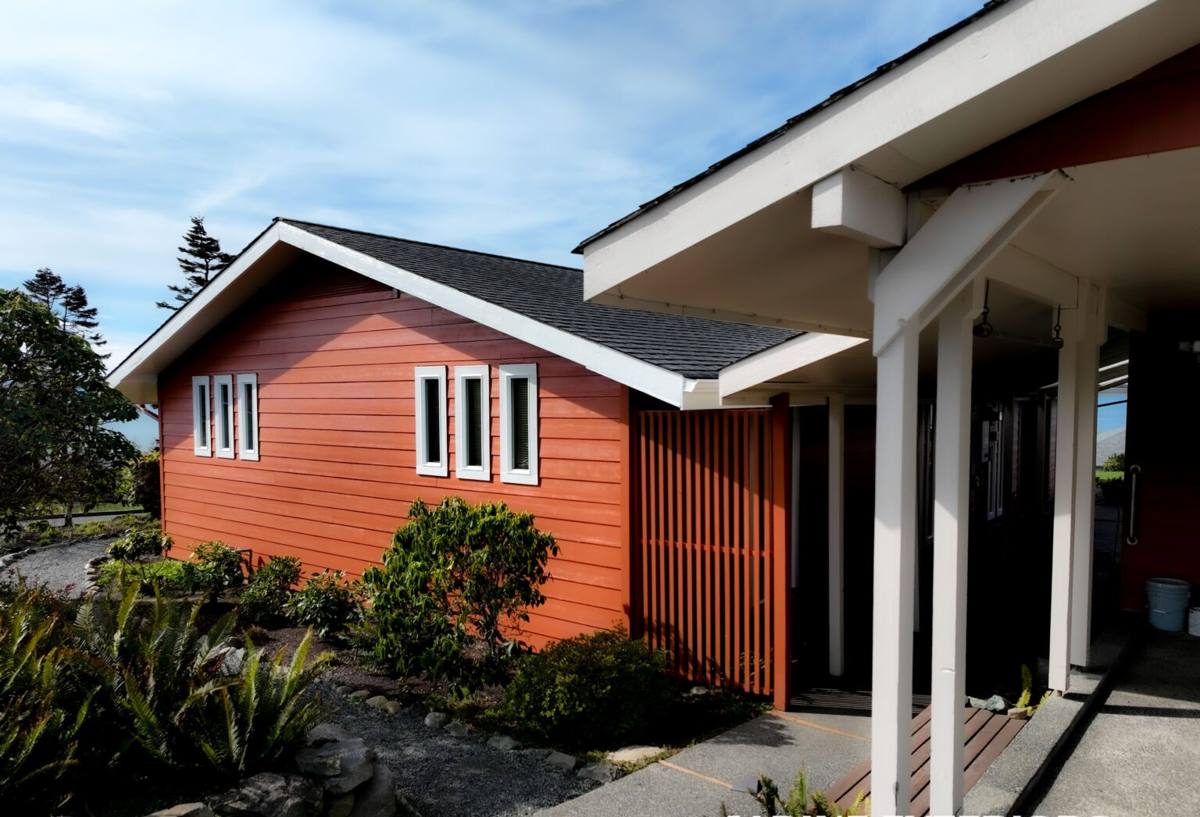
La Conner has a mix of older homes with real history and newer construction, and that mix matters for window work. Older homes often have openings that were framed before modern window sizing was standardized, so a straightforward swap isn't always possible without some reframing or a modified stock size. Many also have existing trim and exterior detailing worth preserving, which means the installation has to be planned around keeping that look intact rather than just getting a window into a hole in the wall. Newer construction tends to use more standard openings, but even then, the same climate rules apply — the flashing and sill work still has to be built for tidal air and driving rain, not just for whatever the manufacturer's generic install sheet assumes.
We treat older and newer homes differently from the first walkthrough, because the risks and the decisions are different. An older home usually needs an honest look at what's happening behind the existing trim before anyone commits to a scope of work. A newer home usually needs a straighter conversation about product and budget, since the opening itself is less likely to be the complicating factor.
What a Correct Window Installation Actually Involves
Full-Frame vs. Insert Replacement
One of the first decisions on any window project is whether to do a full-frame replacement, which removes the old window down to the rough opening and rebuilds the flashing from the framing out, or an insert replacement, which sets a new window into the existing frame. Insert replacement is faster and less disruptive to surrounding trim and siding, and it's a reasonable choice when the existing frame is sound and was properly flashed to begin with. Full-frame replacement takes longer and costs more, but it's the honest answer whenever there's already moisture damage at the sill or jambs, or when the original flashing was never done correctly. On a channel-side home, we check for that carefully before recommending the faster option, because sealing an existing moisture problem behind a new window doesn't fix anything — it just hides it.
Flashing and Sill Pans
This is the step that decides whether a window installation holds up here or not. A sloped sill pan under the window directs any water that gets past the exterior seal back outside instead of letting it pool against the framing. Flashing tape and building paper have to be sequenced correctly — each layer lapping over the one below it — so water sheds down and out rather than working its way behind the assembly. In a location that takes wind-driven rain off open water, this sequencing isn't optional detail work; it's the difference between a window that stays dry for thirty years and one that starts rotting the wall around it in five.
Insulation and Air Sealing
The gap between a new window and the rough opening needs to be insulated and air-sealed correctly, not just stuffed with whatever's on hand. Overpacking foam can bow a frame out of square; underfilling leaves a cold, drafty gap. Done correctly, this step also plays a role in keeping condensation from forming inside the wall cavity, which matters in a climate with this much ambient moisture.
Trim and Exterior Finish
The exterior trim around a window is also its first line of defense against water intrusion, not just a cosmetic detail. On older La Conner homes, matching existing trim profiles matters for the look of the house; on any home in this climate, the trim has to be installed and sealed in a way that sheds water rather than trapping it against the wall.
Frame Materials: What Actually Holds Up Here
There's no single right answer for every home — sun exposure, distance from the water, budget, and how long you plan to stay in the house all factor in. What matters is understanding the honest trade-offs for a climate with this much sustained moisture and salt exposure before deciding.
| Frame Material | Moisture & Salt Behavior | Typical Maintenance | Realistic Lifespan Here |
|---|---|---|---|
| Vinyl | Won't rot; performance depends heavily on installation quality and weld/seam integrity | Low; occasional track and weep-hole cleaning | 20-30 years |
| Fiberglass | Dimensionally stable, holds up well to sustained moisture and salt air | Low | 30-40+ years |
| Wood, painted or clad | Attractive and often the right call for historic character, but vulnerable at joints and sills without diligent upkeep | Higher; regular paint or finish maintenance | 15-30 years depending on upkeep |
| Aluminum | Conducts cold and can corrode over time in salt-influenced air unless well-finished | Moderate | 20-30 years |
We'll walk through which material fits your home's exposure and the look you're after rather than steering every job toward whatever's easiest to install. A wood-clad interior with a low-maintenance exterior cladding can be the right call on an older home where the interior look matters, as long as the exterior side is properly protected from the climate doing the work outside.
Our Installation Process
- On-site assessment — we look at the actual openings, check for existing moisture damage, and evaluate what the surrounding trim and siding will need
- Honest scope and recommendation — full-frame or insert, stock or modified size, explained with the reasoning behind it
- Product selection — we walk through frame material and performance options suited to your home's specific exposure
- Careful removal — old units come out without unnecessary damage to surrounding trim or siding, especially on older homes worth preserving
- Flashing and sill pan installation — built to a sequence suited for wind-driven rain off the channel, not a generic inland install sheet
- Setting, shimming, and air sealing — the new window is leveled, squared, and sealed correctly at the gap between frame and opening
- Trim and finish — exterior trim is integrated to match the rest of the home and to shed water correctly at every joint
What Drives the Cost
We won't put a number on a project without seeing the openings, but the factors that consistently move price are the same across most jobs:
| Factor | Why It Matters |
|---|---|
| Full-frame vs. insert | Full-frame involves more labor and materials but is often necessary when existing flashing has already failed |
| Opening condition | Rot, old moisture damage, or out-of-square framing add repair work before the new window goes in |
| Frame material | Vinyl, fiberglass, and wood-clad units differ in both material cost and long-term maintenance |
| Size and number of units | Larger openings and whole-house projects have different per-unit economics than a single window swap |
| Trim matching | Preserving or replicating existing trim profiles on older homes adds labor over a standard trim-out |
A Checklist Before You Hire Anyone
- Ask specifically how they handle flashing and sill pans, not just what window brand they sell
- Find out whether they're recommending full-frame or insert replacement, and why, for your specific opening
- Ask how they'll handle trim matching if you have an older home with existing detailing worth keeping
- Get clarity on what's covered under warranty — the window unit and the installation labor are usually separate
- Ask whether they've worked on homes in your immediate area, not just "the region" generally
- Get a written scope before work starts, not a verbal estimate that changes once the old window is out
Why It Matters That We Already Work in La Conner
Manufacturer installation guides are written for average conditions, and homes sitting on the Swinomish Channel don't experience average conditions. A crew that has actually flashed windows against wind-driven rain off this specific stretch of water, dealt with the salt exposure that comes with it, and worked around the trim details on older La Conner homes knows which parts of a standard install sheet are worth following exactly and where extra attention is worth the time even when it's not strictly required elsewhere. That judgment doesn't come from a product catalog. It comes from having done the work here before, seen what fails first in this environment, and adjusted the process accordingly.
Ready for a Straight Answer on Your Windows
If you're planning a window replacement or new installation on a La Conner home, it's worth having someone look at the actual openings before you start comparing products or prices. We offer free, no-pressure estimates for window installation in La Conner and the surrounding Skagit County area — use the form below to get a time on the schedule.