 Anacortes Window
 Why Guemes Island Siding Takes a Different Kind of Beating
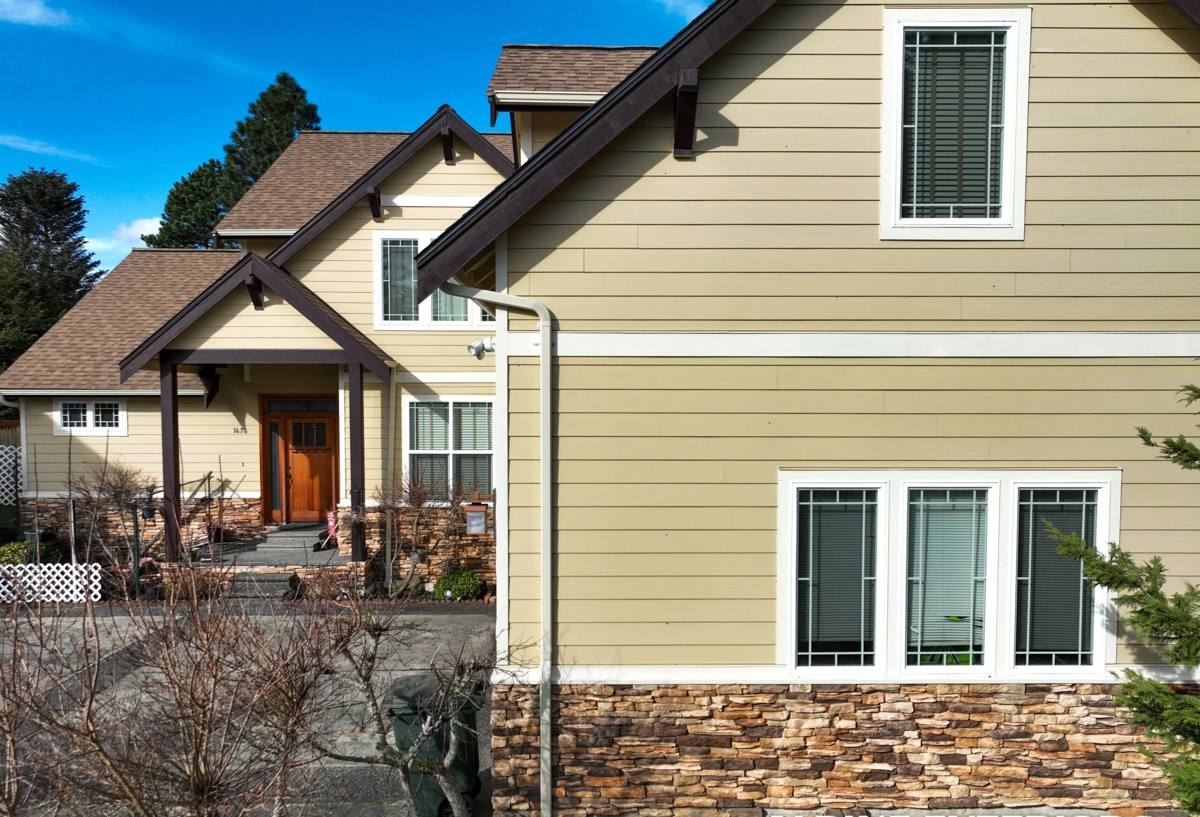
Guemes Island sits just across the ferry channel from Anacortes, out in Skagit County, but its exterior exposure is its own animal. Homes here catch salt-laden air coming off the water, driving rain that turns sideways in winter storms, and a moss season that can run nearly year-round on shaded, north-facing walls. Siding that holds up fine a few miles inland often shows trouble first on Guemes, because salt, wind, and standing moisture keep attacking the same weak points: fastener heads, butt joints, corner trim, and any spot where water can sit against wood or a wood-based product.
Repairing siding out here isn't just patching a hole and moving on. It means understanding why that spot failed in the first place, because if the underlying cause — a bad flashing detail, a caulk joint that gave up, a low-clearance edge that wicks water — isn't addressed, the same repair fails again in a season or two.
How the Island's Climate Actually Damages Siding
Salt Air's Slow Corrosion
Airborne salt accelerates corrosion on fasteners, metal trim, and flashing. Once a nail or staple starts rusting, it weakens its grip on the panel and can stain the siding face as it bleeds. Salt exposure also breaks down caulk and sealant faster than it would inland, which is often the real reason a "small crack" keeps reopening — the sealant around it has already failed chemically, not just physically.
Wind-Driven Rain
Storms coming off the water push rain sideways instead of straight down, forcing it into laps, seams, and any gap in flashing that would stay dry on a sheltered wall. Homes with open, unobstructed exposure to the water see this far more than homes tucked behind trees or a rise in the land — which is why two houses a few hundred feet apart can have very different repair histories.
A Long Moss Season
Shaded, damp exterior walls stay wet longer between dry spells, and moss and algae take hold on that lingering moisture. The problem isn't cosmetic — moss holds water directly against the siding surface for months at a time, which is exactly the condition that rots wood-based products and breaks down caulk joints faster than open, sun-exposed walls ever will.
Common Damage Patterns by Siding Type
What actually fails, and where, depends heavily on what's currently on the house. Here's what we typically find during Guemes Island repair calls:
| Siding Type | Typical Failure Point | What Drives It Here |
|---|---|---|
| Vinyl | Cracking, warping, faded/chalky finish | Wind flex plus UV and salt exposure over time |
| Cedar / wood | Rot at butt joints, low-clearance edges, fastener stains | Moisture retention, moss cover, salt-accelerated fastener corrosion |
| LP / OSB-based products | Edge swelling, delamination at cut ends | Wood-fiber core absorbs driven rain at any exposed or unsealed edge |
| Fiber cement (Hardie) | Chipped cut edges, failed caulk joints if not factory-primed | Correctly installed and sealed, it resists the above; problems usually trace back to an installation detail, not the material |
That last row matters: fiber cement's core doesn't absorb water the way a wood-fiber panel does, and it won't corrode. Most of the fiber cement repairs we do on the island trace back to a missed detail during the original install — an unsealed cut edge, a caulk joint that was never really compatible with the substrate — not a material weakness.
What a Correct Siding Repair Actually Involves
A repair that actually lasts on Guemes Island starts before anyone picks up a tool.
- Trace the moisture path. A damaged panel is usually the symptom, not the source. We check what's happening behind it — sheathing condition, house wrap, whether water is entering somewhere else entirely and just showing up here.
- Check flashing, especially kick-out flashing. Where a roofline meets a wall, missing or undersized kick-out flashing is one of the most common hidden causes of repeat siding damage, and it's invisible unless someone looks for it.
- Match manufacturer installation specs, not just "make it look right." Clearance heights, fastener placement, and lap coverage all affect how the repaired section performs against wind-driven rain.
- Seal every cut edge. Any exposed cut edge on fiber cement or wood-based siding is a moisture entry point unless it's properly primed or sealed — this is one of the most commonly skipped steps in a rushed repair.
- Use sealant rated for the exposure. Not all caulks hold up the same way to salt air and constant wet-dry cycling; the wrong product looks fine for a season and then fails.
- Match the finish. For Hardie ColorPlus siding, that means working with the factory finish system rather than field-painting a patch a slightly different shade.
Our Process on Guemes Island
We keep the process straightforward because homeowners deserve to know what's actually happening to their house, not just get a bill at the end.
1. On-Site Assessment
We look at the damaged area and the surrounding elevation, not just the spot that was reported. Damage on one panel is often a signal to check neighboring panels and the flashing above them.
2. Moisture and Cause Check
Where rot or swelling is present, we check how far the moisture has traveled and whether sheathing or framing behind the siding needs attention before any new siding goes back on — patching over a wet substrate just hides the problem temporarily.
3. Repair Plan and Options
We explain what's needed, what it will involve, and — when a wood, vinyl, or LP-based section keeps failing in the same spot — whether a straight repair makes sense or whether that section is a better candidate for replacement with James Hardie fiber cement, which is the only siding product we install.
4. The Work Itself
Repairs are done to the same clearance, fastening, and sealing standards as new installation — no shortcuts because it's "just a repair."
5. Warranty
Work is backed by our workmanship warranty, and any Hardie material used carries the manufacturer's own product warranty on top of that.
Repair or Replace That Section?
Not every damaged area needs full replacement, but recurring damage in the same spot is a sign that patching isn't solving the underlying issue. Here's how we help homeowners think it through:
| Factor | Leans Toward Repair | Leans Toward Replacement |
|---|---|---|
| Extent of damage | Isolated to one or two panels | Spread across a full elevation or multiple areas |
| Failure history | First occurrence in that spot | Same area has failed more than once |
| Underlying material | Fiber cement with a clear, fixable cause | Wood or wood-based product showing widespread rot/swelling |
| Remaining siding condition | Rest of the wall is sound | Rest of the wall is aging out around the same time |
| Long-term plan | Homeowner wants to keep current siding as-is | Homeowner is open to upgrading exposure-prone sections to Hardie |
Why a Crew That Already Works Guemes Island Matters
Guemes Island repair work has logistics that don't apply on the mainland. Ferry scheduling shapes the workday — trips need to be planned around sailing times, not squeezed in as an afterthought, and a crew that already works the island builds that into the estimate instead of discovering it mid-job and dragging the timeline out. Familiarity with the island's exposure also matters: which elevations take the worst of the wind-driven rain, which walls stay shaded and mossy longest, and which repair details tend to get skipped by crews that only see a property once. All of that adds up to fewer return trips, a more accurate first diagnosis, and a repair that's built for the exposure it actually faces rather than a generic fix.
Maintenance Between Repairs
A little upkeep between service visits goes a long way toward stretching the life of a repair, whatever siding is on the house:
- Rinse moss and algae off shaded walls before it builds into a thick mat that holds moisture against the surface
- Keep gutters clear so overflow doesn't run down the siding face repeatedly
- Trim back vegetation that keeps a wall shaded and damp longer than it needs to be
- Check caulk joints around windows, doors, and trim once a year for cracking or gaps
- Look at low-clearance areas near grade, decks, and walkways for splashback staining or softness
- Have any recurring stain, soft spot, or reopening crack looked at early — waiting rarely makes it cheaper to fix
Where James Hardie Fits Into Guemes Island Repairs
When a home already has James Hardie fiber cement siding, repairs are usually about correcting a specific detail — an unsealed cut edge, a failed caulk joint, a flashing gap — rather than fighting the material itself. We match the repair to the existing ColorPlus finish and installation spec so it holds up the same way the rest of the wall does.
When the damaged section is vinyl, cedar, or an LP/OSB-based product and it's failing in the same spot for the second or third time, we'll say so plainly. That's the point where a straight repair stops being the most useful answer, and replacing that section with James Hardie fiber cement is worth considering — it's the one product on our truck, because it holds up to salt air, driving rain, and a long moss season without the moisture sensitivity that keeps bringing wood-based and wood-fiber products back to the same spot for repair.
If you're dealing with damaged, stained, or repeatedly failing siding on your Guemes Island home, we're happy to take a look and give you a straight read on what's actually going on — no pressure, no obligation. Fill out the form below for a free estimate.