 Anacortes Window
 Flounder Bay Roofs Work Harder Than Most
Flounder Bay sits close enough to the water that roofs here take a different kind of beating than a roof ten miles inland in Skagit County. Salt-laden air drifts off the bay and settles on every exposed surface, driving rain comes in sideways during winter storms, and the shaded, damp conditions common to this part of Anacortes keep moss and algae growing for most of the year. None of that is dramatic on its own, but stacked together over ten or fifteen years, it shortens the useful life of a roofing system that would last longer somewhere drier and less exposed.
A roof replacement done right for a Flounder Bay home isn't just about swapping old shingles for new ones. It's about choosing materials and details that specifically account for salt exposure, wind-driven moisture, and constant organic growth pressure. That's the lens we bring to every estimate in this neighborhood.
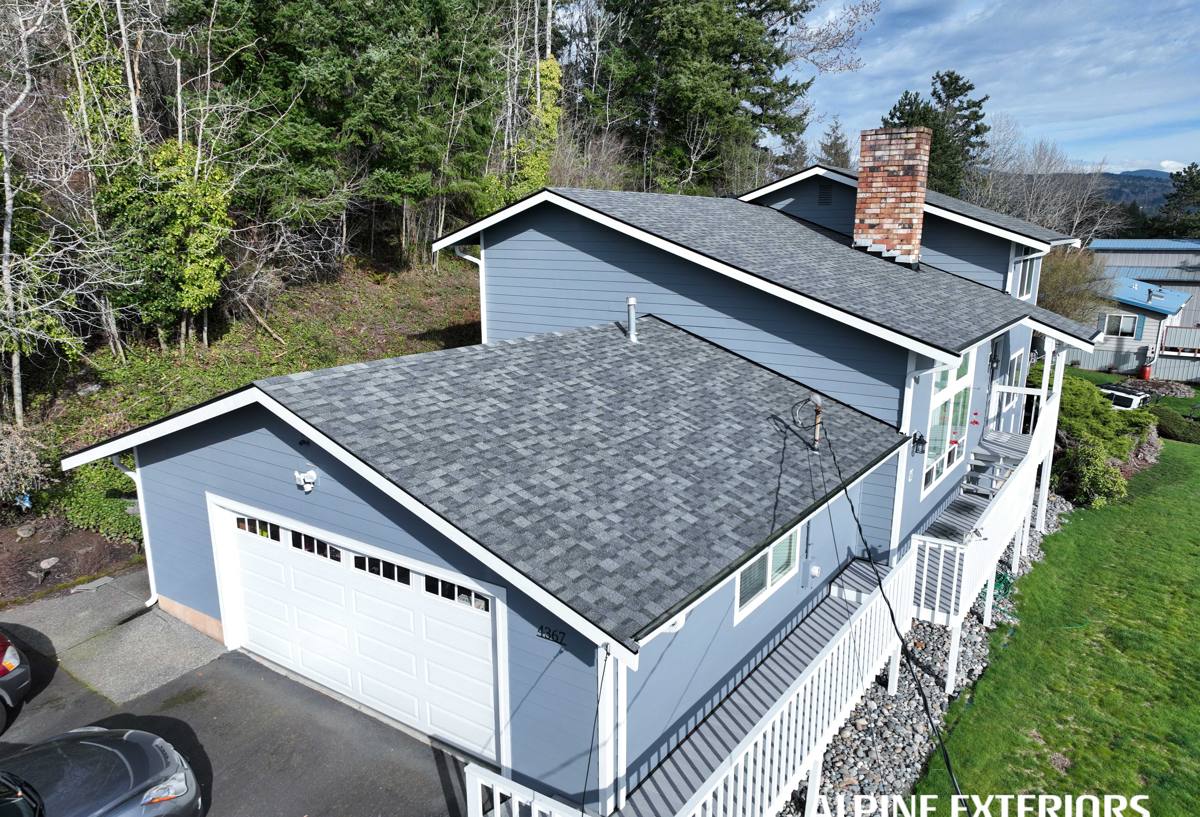
Signs a Flounder Bay Roof Needs Replacement, Not Repair
Repairs make sense when a roof has isolated damage and years of service life left. Replacement makes sense once the underlying materials are worn out everywhere, not just in one spot. Here's what we look for during an inspection:
- Granule loss heavy enough that shingles look patchy or blotchy rather than uniform in color
- Shingles that are cupping, curling, or cracking across large sections of the roof, not just one slope
- Moss or algae staining that keeps returning within a season or two of cleaning
- Soft spots or sagging in the decking when walked, which usually means moisture has reached the plywood
- Rusted, lifted, or missing flashing around chimneys, vents, and valleys
- Daylight visible through the attic decking, or damp insulation after a storm
- A roof that's approaching or past the manufacturer's expected service life for its material and exposure
Any one of these on its own might just need a repair. Several of them together, especially on a roof over 15-20 years old, usually means it's more cost-effective to replace than to keep patching.
What a Correct Roof Replacement Involves
A replacement is only as good as what's underneath the visible layer. On a home exposed to bay-driven rain and salt air, we pay particular attention to a few steps that are easy to shortcut and hard to notice once the roof is buttoned up.
Tear-Off and Deck Inspection
We remove the old roofing down to bare decking rather than layering over it. That lets us actually see the plywood or OSB underneath, check for soft or delaminated spots, and replace any sections that have taken on moisture over the years. Roofing over a compromised deck just hides the problem for a few more years.
Underlayment and Water Barrier
Given how much wind-driven rain this area sees, we treat underlayment as a real second line of defense, not a formality. Ice-and-water shield along eaves, valleys, and around every penetration gives the roof a sealed layer that ordinary felt alone doesn't provide, which matters more here than on a roof set back from the water.
Flashing Details
Most roof leaks trace back to flashing, not the field shingles. Chimneys, skylights, vent pipes, and valleys all need properly formed, corrosion-resistant flashing — and in a salt-air environment, the choice of metal matters. We favor materials that hold up to salt exposure rather than standard galvanized steel that can start showing rust within a few years this close to the bay.
Ventilation
Balanced intake and exhaust ventilation keeps the attic dry and the roof deck at a stable temperature. Without it, moisture gets trapped, which accelerates rot from underneath and can void shingle warranties. This is one of the most commonly skipped details on lower-bid replacements.
Roofing Materials for a Salt-Air, High-Moisture Site
| Material | How It Handles Salt Air & Moss | Trade-Offs |
|---|---|---|
| Architectural asphalt shingle | Good performance with proper algae-resistant granules; widely used and easy to source | Needs periodic moss/algae treatment; mid-range lifespan compared to metal |
| Standing seam metal | Sheds moss and rain well due to steep, smooth surface; strong against wind-driven rain | Higher upfront cost; requires correct fastener and underlayment detailing to avoid corrosion at penetrations |
| Cedar shake | Traditional look but holds moisture longer in shaded, damp conditions | Higher maintenance burden in this climate; we're upfront that it's not our first recommendation for shaded, moisture-prone lots |
| Composite/synthetic shingle | Resists moisture absorption and algae growth better than natural wood | Product quality varies significantly by manufacturer; warranty terms need careful review |
There's no single "best" material for every home — it depends on the roof's slope, how much shade and moss pressure the lot gets, and the homeowner's budget and maintenance appetite. We'll walk through the honest trade-offs for your specific roof rather than push one product line.
Our Replacement Process
- On-site inspection and estimate — we walk the roof (or use a lift/drone where pitch or access requires it), check the attic, and measure for an accurate material quote.
- Material selection — we go over shingle or metal options, color, and ventilation needs based on your roof's exposure and shading.
- Scheduling around weather — we build in buffer for Skagit County's rain patterns so tear-off days line up with a reasonable dry window.
- Tear-off and deck repair — old roofing removed, decking inspected and repaired as needed.
- Underlayment, flashing, and field installation — installed per manufacturer specification to keep warranties valid.
- Cleanup and final walkthrough — magnetic sweep for nails, debris hauled off, and a walkthrough so you know exactly what was done.
Cost Factors for a Flounder Bay Roof Replacement
Every roof is different, so we don't quote pricing sight unseen — but these are the factors that most affect the final number:
| Factor | Why It Matters |
|---|---|
| Roof size and number of planes | More square footage and more valleys/hips mean more material and labor time |
| Roof pitch and access | Steep or hard-to-access roofs require more safety equipment and time |
| Decking condition | Rotten or soft plywood found during tear-off adds material and labor to replace |
| Material choice | Asphalt, metal, and composite options carry different material and installation costs |
| Ventilation upgrades | Adding proper intake/exhaust venting where none existed is an added but worthwhile cost |
| Flashing and penetrations | Homes with more chimneys, skylights, or vents need more flashing work |
Broadly speaking, a full tear-off replacement on an average single-family home runs from the low five figures into the high five figures depending on size, material, and roof complexity. We'll give you a firm, itemized number after an on-site look — not a phone estimate.
Living With a Bay-Adjacent Roof After Installation
A well-installed roof still benefits from basic upkeep in this climate. A couple of habits go a long way toward getting the full service life out of a new roof near the water:
- Keep gutters clear of needles and debris so water doesn't back up under the shingle edge
- Have moss and algae growth treated before it spreads, rather than letting it sit through a full wet season
- Trim back overhanging branches that keep sections of the roof shaded and slow to dry
- Schedule a quick visual inspection every couple of years, especially after a hard winter storm
None of this requires a maintenance contract or constant attention — it's the same light upkeep any homeowner near the Salish Sea should be doing regardless of who installed the roof.
Why It Matters to Hire a Crew That Already Works This Neighborhood
A roofing crew that's replaced roofs elsewhere in Skagit County but hasn't worked specifically along the bay may not think twice about fastener corrosion resistance, flashing metal compatibility, or how much moss pressure a shaded, damp lot actually generates over a decade. Those aren't exotic considerations, but they're the details that separate a roof that looks fine at installation from one that still looks fine in year twelve.
We're an Anacortes-based crew, so a Flounder Bay roof replacement isn't a special trip or an unfamiliar climate for us — it's the environment we build for every day. That means realistic scheduling around local weather patterns, material recommendations based on what actually holds up here, and a crew that isn't guessing at how salt air and driving rain interact with the products we're installing.
Timing Your Project Around Skagit County Weather
Roof replacements can technically happen in any season, but drier stretches make for a cleaner installation and a faster timeline. We plan most Flounder Bay projects for spring through early fall when possible, while still handling winter replacements when a roof can't safely wait. If your roof is showing clear signs of failure, don't hold off for "the right season" — a temporary tarp-and-repair approach to buy time is worse for the decking than getting the work scheduled promptly.
If you're weighing repair versus replacement, or just want an honest read on how much life is left in your current roof, we're happy to take a look. Reach out for a free, no-pressure estimate using the form below — we'll walk the roof, explain what we find, and give you a straight answer either way.