 Anacortes Window
 Why Decks in Flounder Bay Wear Out Differently
Flounder Bay sits close to the water on Anacortes's marina side, and that location comes with a specific set of conditions that inland decks in Skagit County simply don't deal with. Salt-laden air off the bay accelerates corrosion on fasteners, hardware, and metal flashing. Driving rain off the water finds every gap in a deck's construction, not just the horizontal surfaces. And the long, damp moss season that defines a Pacific Northwest winter turns any deck with poor drainage into a slick, decaying mess by February.
None of this means a deck in Flounder Bay can't last decades. It means the deck has to be built and replaced with those specific stressors in mind, rather than treated like a generic backyard platform. A deck built to a baseline code minimum inland often fails early here — not because the homeowner did anything wrong, but because the original build didn't account for what marine exposure does to fasteners, framing, and finishes over time.
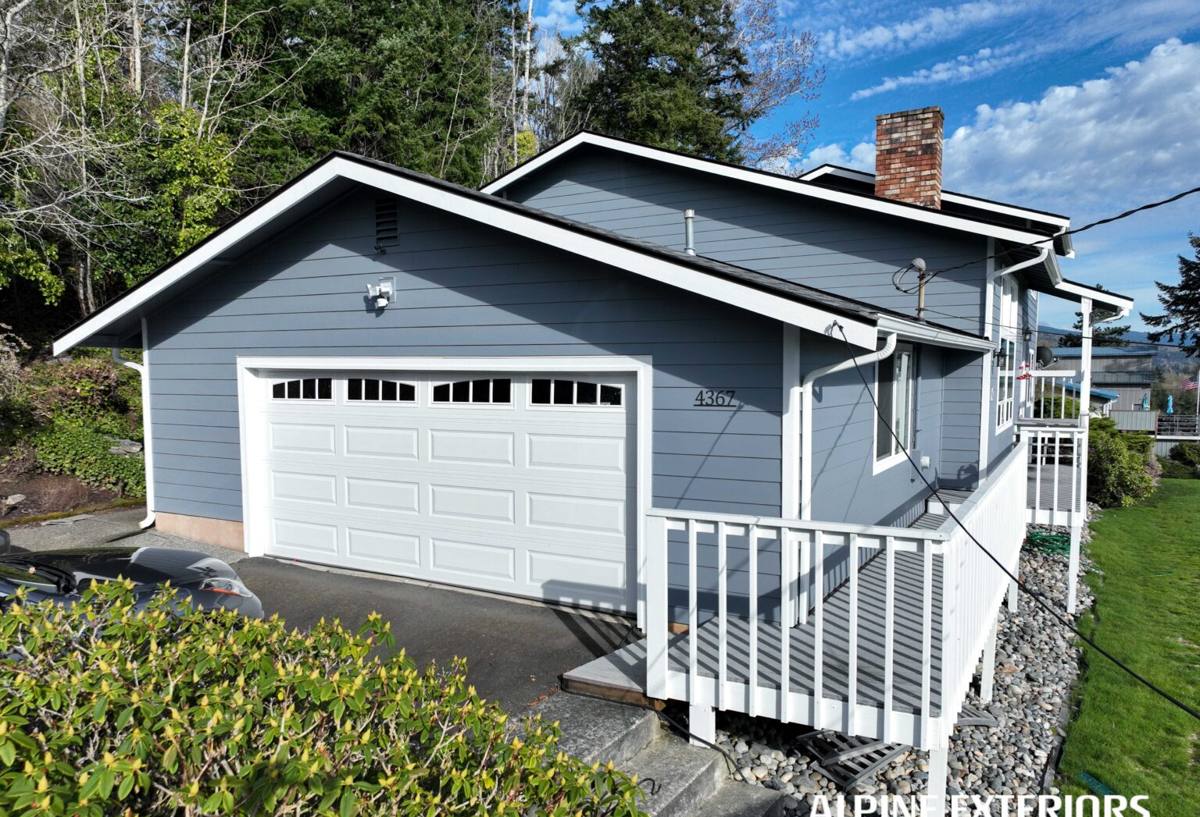
Repair or Replace? Reading the Signs Correctly
Not every tired-looking deck needs full replacement, but a lot of decks in this area get patched over and over when the underlying structure is already compromised. The difference matters because a repair on a failing frame is money spent twice.
Signs that point to repair
Isolated board cupping, a handful of popped fasteners, or surface graying on an otherwise solid frame are usually repairable. If the ledger connection, main beams, and posts are sound and dry, targeted board replacement or refastening can buy real years.
Signs that point to full replacement
Soft or spongy spots underfoot, visible rot at the ledger board or post bases, rust streaking from structural bolts, and a railing that flexes more than it should are all signs the frame itself is failing. In a salt-air, high-rainfall environment like Flounder Bay, once moisture has been working on hidden framing for several seasons, surface repairs won't address what's happening underneath the boards.
What a Correct Deck Replacement Actually Involves
A deck replacement is a structural project first and a finish-material choice second. The parts nobody sees when the project is done are the parts that determine whether it lasts 10 years or 30.
Ledger Board and Structural Connection
The ledger board — where the deck attaches to the house — is the single most common failure point on older decks, and it's also the point most exposed to water intrusion if it isn't flashed correctly. A proper replacement means removing the old ledger, inspecting the rim joist and sheathing behind it for hidden rot, and installing new flashing that actually sheds water away from the house rather than trapping it against the wall. In a location that gets driving rain off the water, this detail is not optional.
Framing, Joists, and Posts
Joist spacing, beam sizing, and post placement all need to match the actual load the deck will carry, not just whatever the old deck happened to use. Where posts meet grade or concrete footings, we look closely at ground contact and drainage — standing water at the base of a post is one of the fastest ways to shorten a deck's life on this side of the county.
Fasteners and Hardware
This is where marine exposure really shows up. Standard hot-dip galvanized hardware can start showing corrosion within a few years this close to salt water. We spec stainless steel or heavy-duty coated fasteners and structural connectors rated for coastal exposure, because replacing a deck's boards is a lot cheaper than replacing hardware that's rusting from the inside of the frame.
Choosing Decking Material for a Marine Climate
Every decking material has trade-offs, and in a salt-air, high-moss environment those trade-offs shift compared to an inland deck. We walk homeowners through the honest maintenance picture for each option rather than pushing one product.
| Material | Upfront Cost | Maintenance in This Climate | Typical Lifespan Here |
|---|---|---|---|
| Pressure-treated wood | Lowest | Needs regular sealing and moss removal; fasteners must be corrosion-rated | 10-15 years |
| Cedar | Moderate | Needs periodic oiling/sealing; grays fast near salt air without upkeep | 12-18 years |
| Composite decking | Higher | Low upkeep on the surface, but substructure still needs full attention | 20-30 years |
| PVC/capped polymer | Highest | Lowest surface maintenance; best moisture and moss resistance | 25-30+ years |
Composite and capped polymer boards tend to perform well here because they don't absorb moisture the way wood does, which matters when moss and algae have months of damp weather to take hold. That said, the decking surface is only one layer of the system — a premium composite board fastened to an undersized, poorly flashed frame will still fail early. We won't sell a homeowner an upgraded surface material as a substitute for correcting a weak structure underneath it.
Drainage, Moss, and Long-Term Maintenance
Moss doesn't just make a deck look neglected — it holds moisture against the board surface and, on wood decks, accelerates rot. In Anacortes's wet, mild winters, any deck with poor airflow underneath or boards laid without proper gapping will develop moss faster than a deck built with drainage in mind.
A correct replacement addresses this at the design stage: adequate board spacing for water and air movement, a joist layout that doesn't trap standing water, and skirting or underdeck detailing that doesn't seal off ventilation. We also talk with homeowners about realistic seasonal upkeep — an occasional soft wash or moss treatment in early fall goes a long way toward protecting the investment, regardless of which material is chosen.
Our Deck Replacement Process
We keep this straightforward because homeowners deserve to know what's happening at each stage, not just see a crew show up and start tearing boards off.
- On-site assessment — We inspect the existing deck's framing, ledger connection, posts, and footings to determine actual condition, not just surface appearance.
- Honest scope and estimate — We tell you what's structurally necessary versus what's a material preference, so you're making an informed decision, not guessing.
- Demolition and disposal — Full removal of the old deck surface and, where needed, the frame, with the site left clean and safe.
- Structural rebuild — New or reinforced framing, corrosion-rated fasteners, and properly flashed ledger connection sized to current load requirements.
- Decking and railing installation — Installed per manufacturer spacing and fastening specs, whichever material you've chosen.
- Final walkthrough — We review the finished deck with you, including basic care guidance specific to your material and location.
Permits and Local Considerations in Anacortes and Skagit County
Deck replacements that involve structural changes — new footings, altered height, or work near the water — typically require a permit through the City of Anacortes, and waterfront-adjacent properties can involve additional review depending on setback and shoreline rules. We handle the permitting conversation as part of the project rather than leaving homeowners to sort out what applies to their property. If your lot in or near Flounder Bay has any shoreline management overlay, that's worth flagging early, before design decisions are finalized, so the project doesn't stall partway through.
Questions to Ask Before You Hire a Deck Contractor
Because a deck is a structural project with real safety implications, it's worth vetting a contractor with the same seriousness you'd apply to a roof or foundation repair. A few questions separate a crew that understands coastal conditions from one that's applying a generic build everywhere.
- Are you licensed and insured to do structural deck work in Washington State?
- Will you inspect and address the ledger board, framing, and footings — not just replace the visible boards?
- What fastener and hardware grade do you use, and is it rated for coastal or marine exposure?
- Will you pull the required City of Anacortes permit, or is that left to me?
- Can you walk me through the maintenance expectations for the specific material we choose, honestly, including the downsides?
- Do you have experience working on homes in this specific area, near the water?
Why a Crew That Already Works Flounder Bay Matters
A contractor who works regularly in this part of Anacortes already knows what salt exposure does to a five-year-old ledger board, how fast moss builds up on a north-facing deck through a Skagit County winter, and which fastener grades actually hold up here versus which ones look fine in the showroom and start rusting within a couple of seasons. That local pattern recognition changes what gets specified before the project ever starts — it's not something you can fully substitute with a generic checklist, and it's the difference between a deck that needs attention again in eight years and one that doesn't.
If your deck in Flounder Bay is showing soft spots, rust staining, persistent moss, or just feels past its useful life, we're happy to take a look and give you a straight assessment of what it actually needs. Reach out for a free, no-pressure estimate using the form below — we'll tell you honestly whether you're looking at a repair or a full replacement before any work begins.