 Anacortes Window
 Deck Building on Fidalgo Island Isn't the Same Job as Inland
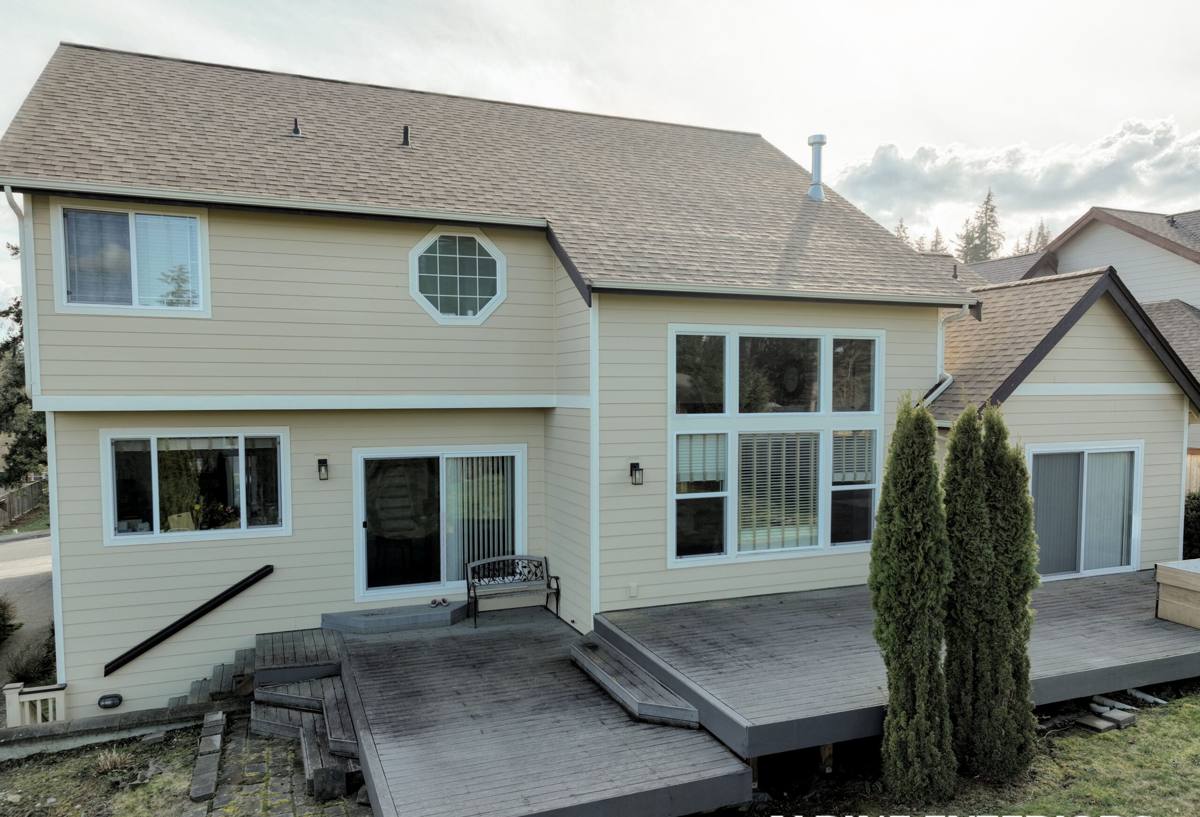
A deck built the same way you'd build one forty miles inland doesn't hold up the same way here. Fidalgo Island sits right on the water, and that means salt-laden air, long stretches of driving rain off the Sound, and a moss season that can run most of the year in shaded yards. None of that is exotic — it's just the normal cost of living where we live. But it means a deck built with generic materials and generic details will show wear years before it should: rust bleeding out of fastener heads, soft spots where water sits, decking boards growing a slick green film every winter.
We build decks for homeowners across Anacortes and the rest of Fidalgo Island, and the difference between a deck that lasts fifteen years and one that lasts thirty almost always comes down to a handful of details most people never think to ask about. This page walks through what those details are, what we actually do differently here, and what you can reasonably expect from the project.
What Salt Air, Rain, and Moss Actually Do to a Deck
Fasteners and Metal Hardware
Salt air accelerates corrosion on anything metal — screws, joist hangers, bolts, structural connectors. On a standard-grade fastener, that shows up as rust streaking down the decking within a few years, and eventually as a weakened connection you can't see until it fails. Coastal construction calls for corrosion-resistant hardware as a baseline, not an upgrade.
Wood Movement and Standing Water
Wood swells and shrinks with moisture cycling, and on Fidalgo Island that cycling happens constantly — wet in the fall and winter, drier spells in summer, fog and dew in between. Boards installed without the right gap or without proper drainage underneath will cup, split at fastener points, or trap water against framing long enough to start rot.
Moss, Algae, and Slick Surfaces
Anywhere a deck sits in shade or under tree cover, moss and algae growth is a near-certainty for at least part of the year. Beyond the cosmetic issue, a mossy deck surface is a genuine slip hazard, and moss holds moisture against the wood underneath it, which speeds up decay. Surface choice, board spacing, and how much sun and airflow a deck gets all affect how bad this problem is over time.
Choosing the Right Decking Material for This Island
There's no single "best" material for every project — it depends on budget, how much maintenance you're willing to do, and how exposed or shaded the deck location is. Here's how the common options actually perform in this climate.
| Material | Salt Air / Moisture Performance | Moss Resistance | Maintenance | Typical Lifespan Here |
|---|---|---|---|---|
| Pressure-treated pine | Good if properly sealed and maintained | Needs regular cleaning | Re-seal every 1-2 years | 15-20 years |
| Cedar | Naturally moisture-resistant, but softer | Needs regular cleaning | Stain/seal every 1-2 years | 15-20 years |
| Composite decking | Excellent, doesn't rot or swell | Still needs occasional washing, but resists staining | Periodic washing only | 25-30+ years |
| PVC decking | Excellent, fully synthetic | Similar to composite, low staining | Periodic washing only | 25-30+ years |
Composite and PVC cost more up front, but on a shaded, exposed, or hard-to-reach deck, the lower maintenance burden often makes up the difference over the life of the deck. Wood costs less initially and can look great, but it only performs well here if the owner keeps up with sealing and cleaning on a real schedule — not "whenever I get around to it." We'll give you an honest read on which makes sense for your specific site and budget, not just push the higher-margin option.
What a Correctly Built Deck Requires Here
Ledger Board Attachment and Flashing
Where a deck attaches to the house is the single most common failure point we see on older decks — not because the wood rotted, but because water got behind the ledger board and rotted the rim joist or sheathing behind it. Correct flashing at this connection, installed to shed water away from the house rather than trap it, is non-negotiable in a climate with this much driving rain.
Footings and Drainage
Footings need to be sized and set to local frost depth and soil conditions, and the ground around and under the deck needs somewhere for water to go. A deck built low to the ground without attention to drainage becomes a standing-water problem underneath — which you won't see until the framing starts to fail.
Fastener and Hardware Grade
We use stainless steel or coated fasteners and connectors rated for coastal and treated-lumber exposure, not the basic hardware that's fine forty miles inland but starts corroding here within a couple of seasons.
Board Spacing and Airflow
Correct gapping between boards, and enough clearance and airflow underneath the deck, matters more here than in a drier climate — it's what lets the structure actually dry out between rain events instead of staying damp for weeks.
Railings and Code
Railing height, baluster spacing, and guard requirements are set by code, and any elevated deck needs to meet them. We build to code as a matter of course, not as an afterthought.
How We Approach a Fidalgo Island Deck Project
Site Visit and Design
We start by looking at the actual site — sun exposure, drainage, how the deck connects to the house, and how much shade and moss exposure it's likely to get through the year. That shapes both the material recommendation and the structural details.
Permits
Most new deck construction and many deck replacements require a building permit. We handle that process as part of the job so you're not the one tracking down requirements or scheduling inspections.
Build
We frame, flash, and fasten to the standards above, whether the finished surface is wood, composite, or PVC. Structural details don't change based on what decking material sits on top — the framing has to hold up regardless.
Final Walkthrough
Before we consider the job done, we walk the deck with you — railings, surface, drainage, any details specific to your site — so nothing is left unclear.
Deck Maintenance Homeowners Can Actually Keep Up With
Whatever material you choose, a little regular upkeep goes a long way in this climate. Realistically, here's what keeps a deck performing well year to year:
- Sweep off standing debris (leaves, needles) regularly, especially in fall — trapped debris holds moisture and feeds moss growth
- Wash the surface at least once or twice a year to knock back algae and moss before it gets established
- Check and re-seal or re-stain wood decking on the schedule the product calls for — don't wait until it looks obviously weathered
- Keep gutters and downspouts near the deck clear so runoff isn't dumping directly onto or under it
- Look underneath the deck once a year for standing water, soft wood, or rust streaking at fastener heads
- Trim back vegetation that's shading the deck and keeping it damp longer than it needs to be
Repair or Rebuild: When an Older Deck Can Be Saved
Not every aging deck needs to be torn out. If the framing and footings are sound and the problems are limited to surface boards, railings, or isolated soft spots, targeted repair can add years of life at a fraction of full replacement cost. But if there's rot at the ledger connection, failing footings, or structural framing that's been wet for a long time, patching the surface just hides a problem that will resurface. We'll tell you honestly which situation you're in before you spend money either way.
Why Hiring a Crew That Already Works Fidalgo Island Matters
A lot of the details above — flashing choices, fastener grade, drainage, material selection — aren't things you'd know to specify unless you'd already dealt with what happens when they're skipped. A crew that builds decks regularly on this island has usually already seen the failure mode: the ledger that rotted out from bad flashing, the hardware that rusted through in five years, the shaded deck that's slick with moss every winter. That experience shows up in the details of the build, not in anything you'd notice until years later when the deck built the right way is still solid and the one built the generic way isn't.
If you're planning a new deck or need an honest read on an existing one, we're happy to come take a look and talk through what your specific site needs. There's no pressure and no cost to get a straightforward estimate — just fill out the form below and we'll get in touch.