 Anacortes Window
 Why Cap Sante Homes Wear Out Siding Faster
If you own a home near Cap Sante, you already know your siding works harder than siding fifteen miles inland. The combination of salt-laden air off Fidalgo Bay, wind-driven rain that hits walls sideways instead of falling straight down, and a moss season that can stretch from October well into May puts a specific kind of stress on exterior cladding. It's not one dramatic event that wrecks siding out here — it's the slow accumulation of moisture cycling, salt residue, and organic growth, year after year, on a product that was never engineered to handle it.
We work on homes throughout Anacortes and Skagit County, and the properties closest to the water — including the Cap Sante area — consistently show the earliest and most severe siding failures we see anywhere in our service area. That's not a knock on any particular builder or product; it's just physics. Salt air accelerates corrosion of fasteners and trim metal. Driving rain finds every gap in flashing and caulking that a calmer climate would never expose. And shaded, damp exposures grow moss and algae on almost anything that isn't actively resistant to it.
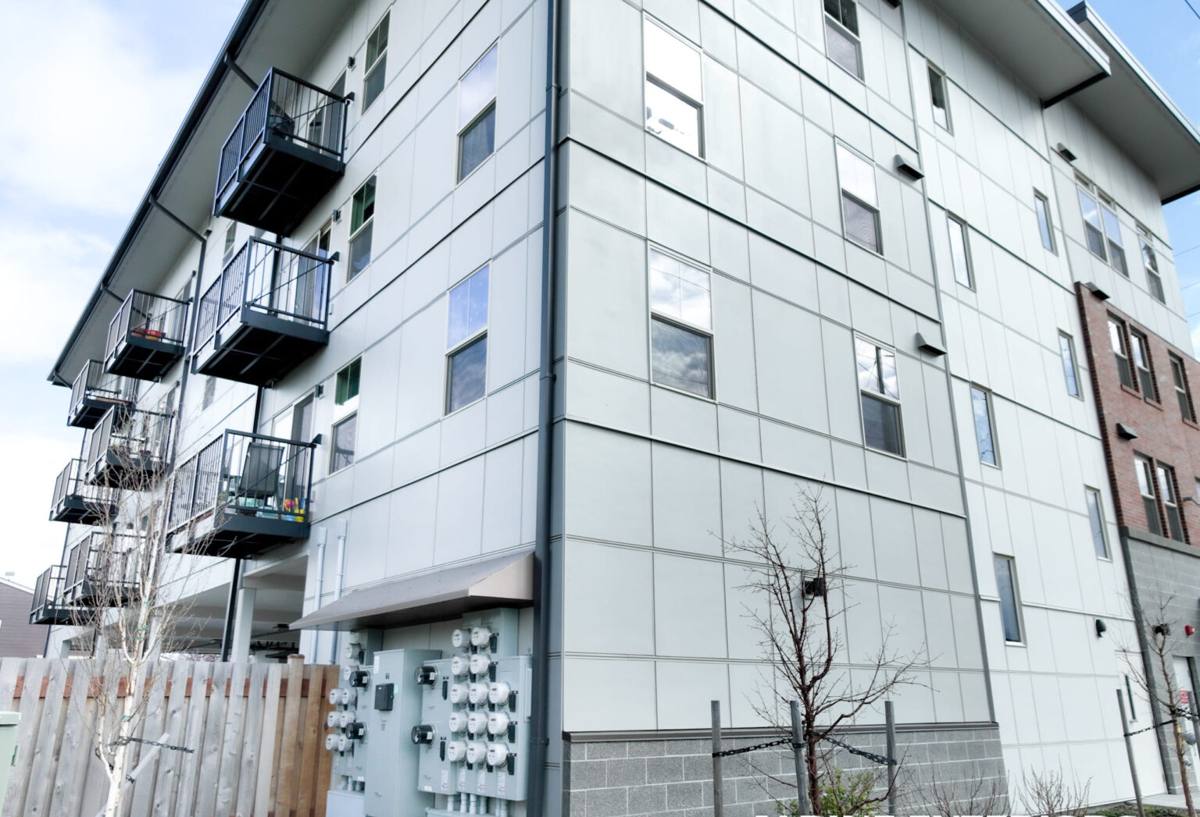
What Salt Air, Driving Rain, and Moss Season Actually Do to Siding
Salt Air
Airborne salt is hygroscopic — it pulls moisture out of the air and holds it against whatever surface it lands on. On wood-based sidings, that means constantly damp fibers even on days it isn't raining. On fasteners and trim, it accelerates rust and corrosion, which shows up first as staining and eventually as failed connections. Paint film also breaks down faster under a steady salt load, which is why homes closer to the water need repainting more often than homes just a mile or two inland.
Driving Rain
Anacortes doesn't get the heaviest rainfall totals in Western Washington, but wind off the water turns rain sideways, driving it under laps, around window and door trim, and into any seam that isn't properly flashed and sealed. Siding systems rated for calmer climates are often tested and installed assuming rain falls mostly straight down. Near Cap Sante, that assumption doesn't hold, which is why lap exposure, flashing detail, and caulking quality matter more here than in a typical inland install.
Moss and Algae Season
Shaded north and west-facing walls, tree cover, and the extended damp season common to this part of Skagit County give moss and algae a long runway to establish themselves. Once organic growth gets a foothold in a siding surface — especially a porous one — it holds moisture against the wall, which speeds up rot in wood-based products and accelerates paint failure on nearly everything else.
Why We Only Install James Hardie Fiber Cement
We install James Hardie fiber cement siding exclusively — we don't install vinyl, LP SmartSide, primed wood, cedar, or other fiber cement brands. That's a deliberate standard, not a sales pitch, and it matters more here than in most places we work.
Fiber cement is a blend of cement, sand, and cellulose fiber. It doesn't absorb water the way wood-based siding does, it isn't a food source for moss and algae the way organic materials are, and it holds up to UV and temperature swings without warping or cracking the way vinyl can over time. James Hardie also builds region-specific formulations — their HardieZone system — and the Pacific Northwest falls into the HZ5 climate zone, engineered specifically for high-moisture, variable climates like ours. That's a meaningful distinction: not every fiber cement product on the market is climate-zoned the same way.
Hardie's ColorPlus factory-applied finish is also relevant to a salt-air environment. It's baked on in a controlled facility rather than field-applied, which gives it better adhesion and more consistent UV resistance than most job-site paint jobs — and it comes backed by its own finish warranty separate from the substrate warranty. For homes taking a steady beating from salt and sun reflection off the water, that finish durability is not a minor detail.
How Fiber Cement Compares for This Climate
| Factor | Fiber Cement (James Hardie) | Vinyl | Wood / LP SmartSide |
|---|---|---|---|
| Moisture absorption | Very low — cement-based, not organic | Doesn't absorb, but seams can trap water behind it | Absorbs moisture; prone to swelling and rot |
| Salt air resistance | Strong — non-organic, factory-finished | Fair — can chalk and become brittle over time | Weak — finish breaks down faster near water |
| Moss/algae resistance | High — not an organic food source | Moderate — surface growth is common | Low — organic material feeds growth |
| Fire resistance | Non-combustible | Combustible, can melt/warp near heat | Combustible |
| Typical repaint interval | 15+ years (ColorPlus factory finish) | Doesn't repaint; fades and can't be color-matched | 5-10 years depending on exposure |
What a Correct Fiber Cement Install Actually Involves
Fiber cement performs the way it's supposed to only when it's installed to manufacturer specification — and in a high-exposure area like Cap Sante, the margin for shortcuts is thinner than it is inland. A correct install includes:
- Proper weather-resistive barrier and rainscreen or drainage plane behind the siding, so any moisture that does get past the cladding has somewhere to go
- Correct flashing at every window, door, roofline, and penetration — this is where driving rain finds its way in if it's done wrong
- Manufacturer-specified fastener type, spacing, and embedment, using corrosion-resistant fasteners appropriate for a salt-air environment
- Proper lap exposure and clearance from grade, decks, and roof lines to keep splash-back and standing water away from the bottom edge of the siding
- Caulking only where Hardie specifies it — over-caulking or caulking the wrong joints can trap moisture instead of shedding it
- Field-cut edges primed or sealed per spec, since a raw cut edge is the one place factory finish protection doesn't reach
Every one of those steps is inspectable, and every one of them is a place where a rushed or unfamiliar crew can create a callback years down the road — usually right around the time the homeowner has forgotten who installed it.
Our Process on a Cap Sante Project
The process itself isn't dramatically different from any Hardie install we do elsewhere in Skagit County, but the sequencing and attention shift based on what we already know about waterfront exposure.
1. On-Site Assessment
We look at wall orientation relative to prevailing wind and water exposure, existing moisture damage, current flashing condition, and any moss or algae staining that tells us where water has been sitting longest. Homes closer to the water often need more attention to drainage plane and flashing detail than the siding material itself.
2. Tear-Off and Sheathing Check
Once the old siding is off, we inspect sheathing for hidden rot or moisture damage — common on older homes in this area where the original siding may have been trapping water for years without visible signs from the outside.
3. Weather Barrier and Drainage Plane
We install a proper weather-resistive barrier and drainage gap suited to the wall's exposure, giving incidental moisture a path out instead of a place to sit.
4. Flashing and Trim
All windows, doors, and penetrations get flashed before siding goes on — this step gets more scrutiny on exposed walls than it would on a sheltered inland elevation.
5. Hardie Installation
Panels or lap siding go on to manufacturer spec: correct fastener pattern, correct exposure, correct clearances from grade and hardscape.
6. Final Detailing
Caulking only where specified, touch-up of any field-cut edges, and a final walk-through so you understand what maintenance, if any, the finish will need going forward.
What Cost Depends On
We don't publish blanket per-square-foot pricing because it genuinely depends on the condition of what's underneath and the complexity of the home, but these are the real drivers of cost on a Cap Sante project:
| Factor | Why It Matters |
|---|---|
| Condition of existing sheathing | Hidden rot from past moisture intrusion means repair before new siding goes on |
| Wall exposure and height | Waterfront-facing and taller walls need more flashing detail and access equipment |
| Siding profile chosen | Lap, panel, and shingle-style Hardie products carry different material and labor costs |
| Trim and detail complexity | Homes with more windows, corners, and rooflines require more flashing and cutting |
| Removal and disposal | Tear-off of old siding, especially layered or damaged material, adds labor |
Living With Fiber Cement Near the Water
Fiber cement is close to maintenance-free compared to the alternatives, but "close to" isn't "zero." Homeowners near Cap Sante should expect to occasionally rinse siding to clear salt residue and slow moss establishment, keep gutters and downspouts clear so water isn't sheeting down walls, and keep an eye on caulking at trim joints over the years, since caulk is the one component in the system with a shorter service life than the siding itself. None of this compares to the sanding, repainting, and rot repair that wood-based siding demands in this same location — but it's worth setting honest expectations rather than pretending any exterior product is truly zero-maintenance in a marine climate.
What to Check Before Hiring Any Siding Contractor Here
- Do they carry current Washington contractor licensing and insurance, and will they provide proof without hesitation?
- Have they installed Hardie products specifically in salt-air or waterfront conditions, not just inland jobs?
- Will they explain their flashing and drainage plane approach in plain language, not just "we use the standard method"?
- Do they use manufacturer-specified fasteners and installation methods, or generic hardware?
- Do they offer a written scope that specifies siding line, color, and installation details — not just a total price?
Why Local Experience in Cap Sante Matters
A crew that already works this area knows which walls take the worst of the wind-driven rain, which exposures grow moss fastest, and how the salt air here compares to what you'd see even a few miles inland in Anacortes. That's not something you learn from a manufacturer's install manual — it's learned by doing the work on homes like yours, in this exact microclimate, and seeing what holds up and what doesn't five and ten years later. It also means we're not guessing at permitting requirements or typical construction in the area; we're already familiar with it.
If you're weighing a siding replacement on a Cap Sante home, we're glad to come take a look, walk the exterior with you, and give you a straight assessment of what your walls actually need — no pressure, no obligation. Fill out the form below to schedule a free estimate.