 Anacortes Window
 Edison's Climate Is Harder on Siding Than Most Homeowners Realize
Edison sits low in Skagit County, surrounded by farmland and tidal flats, close enough to saltwater that airborne salt is a constant factor in how exterior materials age here. Add in the long wet season common to the Anacortes area, driving rain off the water, and months of damp, low-light conditions that favor moss and algae growth, and you have a climate that is genuinely tough on siding. This isn't the dry-summer, mild-winter climate that a lot of siding products are designed and marketed for. It's a wet, salty, shaded, freeze-thaw climate that punishes anything with a weak moisture strategy.
Homeowners in Edison often don't notice the damage until it's advanced — a soft spot behind a downspout, a stretch of siding that's stayed dark and mossy long after the rest of the wall dried out, paint that's chalking and peeling on the north-facing wall years before the south side. These aren't random failures. They're the predictable result of siding that wasn't built, or wasn't installed, for this specific combination of moisture, salt, and shade.
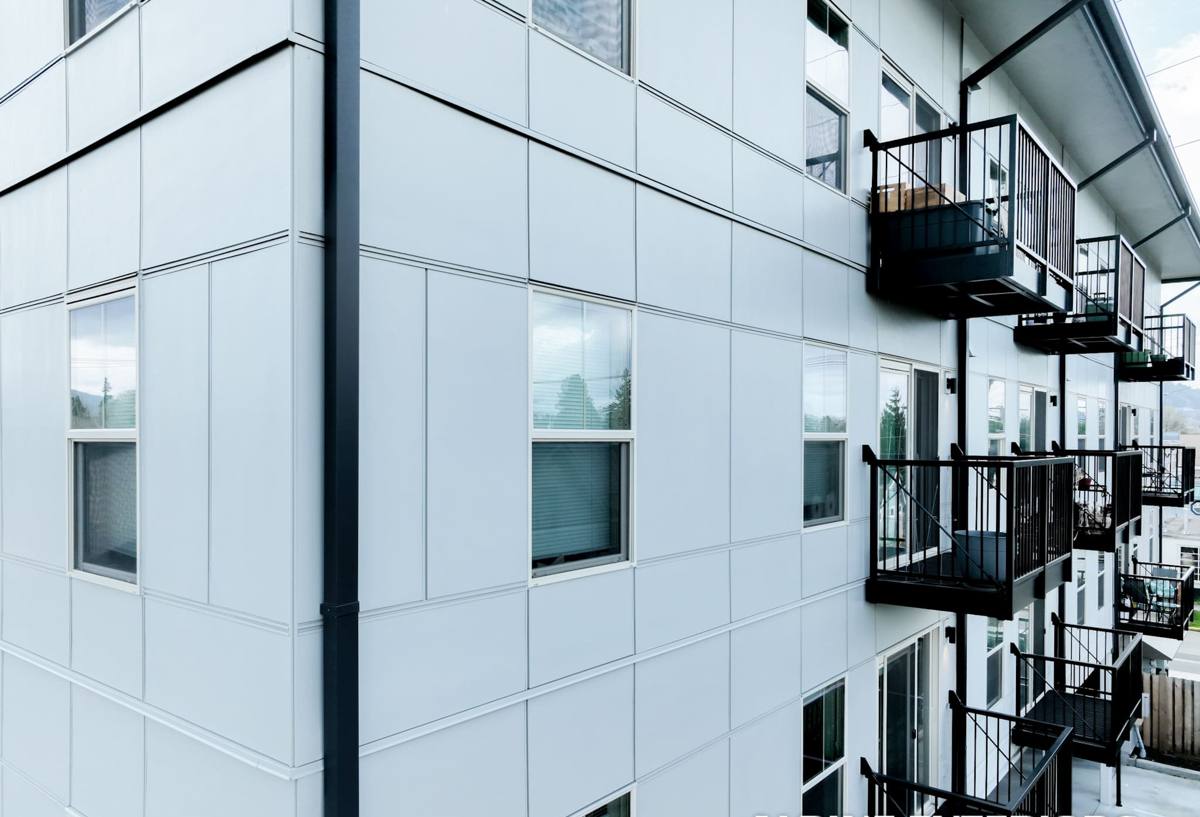
What Siding Actually Needs to Do in This Environment
Handle Salt Air Without Corroding or Degrading
Salt-laden air accelerates corrosion of fasteners and trim, and it breaks down cheaper coatings and finishes faster than inland exposure would. Siding material and the hardware behind it both need to be chosen with that in mind — this isn't optional in a Skagit County coastal environment.
Shed Driving Rain, Not Just Vertical Rain
Wind-driven rain off the water pushes water sideways into laps, seams, and penetrations that a purely vertical rain design would never test. The siding profile, the flashing details, and the water-resistive barrier behind the siding all have to work together to keep that water moving out and down, not in.
Resist Moss and Algae Without Constant Chemical Treatment
Long moss season in the Pacific Northwest means anything with a porous or textured surface, or anything installed too tight to the ground or under heavy tree cover, is going to grow moss and algae faster than homeowners want to deal with. A durable factory finish and correct clearances matter more here than they would in a drier climate.
Survive Freeze-Thaw Cycling Without Cracking
Skagit County gets enough freeze-thaw activity, especially on cold, damp nights, that any siding material holding moisture in its substrate is at risk of cracking, spalling, or delaminating over years of cycling. Material that stays dimensionally stable through those swings lasts longer with less maintenance.
Why We Install Only James Hardie Fiber Cement
We made a deliberate decision to install one siding system — James Hardie fiber cement — rather than offering a menu of products. That's not because alternatives are worthless. Vinyl, LP SmartSide, primed wood, and other fiber cement brands all have legitimate uses and loyal customers elsewhere. It's because, for the climate homes in Edison and the broader Anacortes area actually face, we found the trade-offs on those other products harder to justify than the trade-offs on Hardie.
| Material | What It Gets Right | The Trade-Off in This Climate |
|---|---|---|
| Vinyl siding | Low upfront cost, minimal maintenance in mild climates | Can warp or become brittle with age and temperature swings; seams and panels give wind-driven rain more paths inward; not fire-rated |
| LP SmartSide (engineered wood) | Workable, budget-friendly, decent impact resistance | Wood-based substrate is more moisture-sensitive than fiber cement; edge sealing and maintenance schedule are less forgiving in a wet climate |
| Primed spruce / cedar | Natural look, long tradition in the Northwest | Highest maintenance burden — repainting, caulking, and moisture monitoring are ongoing costs, not one-time ones, especially under moss-prone shade |
| Other fiber cement brands (Cemplank, Allura) | Similar core material to Hardie, generally solid performers | Different factory finish systems and warranty structures; we standardized on one system so our crews install it the same correct way every time |
| James Hardie fiber cement | Non-combustible, dimensionally stable, factory-cured ColorPlus finish, climate-engineered HZ5 formulation, strong transferable warranty | Higher material and labor cost upfront; installation quality matters more than with forgiving materials |
James Hardie also engineers its siding by climate zone. The HZ5 formulation used in the Pacific Northwest is built specifically for regions with freeze-thaw cycling and sustained moisture exposure — it isn't a generic product sold the same way in Phoenix and Anacortes. That climate-specific engineering, combined with a factory-applied ColorPlus finish that resists fading and doesn't need field painting for years, is a big part of why we standardized on it.
What a Correct Fiber Cement Installation Actually Involves
Fiber cement is only as good as its installation. The material can handle Edison's weather; a rushed or generic install can't. Correct installation includes:
Weather-Resistive Barrier and Flashing First
Before a single piece of siding goes up, the wall needs a continuous water-resistive barrier, correctly lapped and taped, with flashing integrated at every window, door, and penetration so water is directed out and down rather than trapped behind the cladding.
Proper Clearances
Fiber cement needs a minimum gap from grade, roof lines, decks, and other horizontal surfaces so it isn't sitting in standing water or splash-back. This clearance is one of the most commonly skipped details on rushed jobs, and it's a direct contributor to moss and rot at the bottom courses.
Correct Fastening
Fasteners have to be the right type, spaced and set to manufacturer specification — not overdriven, not underdriven, and corrosion-resistant given the salt exposure. Poor fastening is a leading cause of premature siding failure and voided warranty claims.
Sealed and Painted Cut Edges
Any field cut into a Hardie board exposes raw material that needs to be sealed before installation. Skipping this step is invisible at handoff and shows up as moisture damage years later.
Butt Joints and Caulking Done Right
Joints need correct gapping, backer material where called for, and quality sealant — not a bead of caulk slapped over a tight-fit joint that will fight against the material's natural expansion and contraction.
Our Process for an Edison Siding Project
- On-site assessment — we look at existing siding, sheathing condition, moisture history, sun and shade exposure, and drainage around the foundation before recommending anything.
- Tear-off and sheathing check — old siding comes off and we inspect the sheathing underneath for rot or existing moisture damage before closing the wall back up.
- Weather barrier and flashing installation — a continuous, correctly lapped barrier with integrated flashing at every opening and penetration.
- Hardie installation to manufacturer spec — correct clearances, fastening, joint treatment, and sealed cut edges throughout.
- Final walkthrough — we review the completed work with the homeowner and go over basic care so the siding performs the way it's designed to.
Cost Factors for Edison Homes
Every home is different, but a few factors consistently move the price on a fiber cement siding project in this area:
| Factor | Why It Matters |
|---|---|
| Home size and wall complexity | More corners, dormers, and trim details mean more cutting, flashing, and labor time |
| Existing siding removal | Tear-off and disposal of old material adds labor beyond a straightforward re-side |
| Sheathing repair | Moisture damage found during tear-off has to be addressed before new siding goes on |
| Board profile and finish selection | Lap width, texture, and ColorPlus color options carry different material costs |
| Site access | Steep grades, tight lot lines, or limited staging area can affect labor efficiency |
We won't quote a number without seeing the home, but we'll walk through these factors with you so the estimate makes sense rather than arriving as a mystery total.
Maintaining Fiber Cement Siding in Edison's Climate
James Hardie siding with a ColorPlus finish is genuinely low-maintenance compared to wood, but "low-maintenance" doesn't mean "no maintenance" in a climate this wet and salty. A simple annual routine keeps it performing for the long haul:
- Rinse siding annually with a garden hose to clear salt residue and organic buildup, especially on north- and shade-facing walls
- Keep gutters clear so overflow isn't running down the siding face
- Trim back vegetation and tree cover that keeps siding shaded and damp longer than it needs to be
- Check caulking at joints, trim, and penetrations every year or two and re-seal where it's cracked or pulled away
- Watch for moss starting at the bottom courses or under eaves and address it early with a gentle wash rather than pressure washing, which can force water behind the boards
- Inspect after major windstorms for loose fasteners or displaced trim
Why It Matters to Hire a Crew That Already Works in Edison and Skagit County
Siding crews that mostly work inland or in milder climates don't always plan for salt exposure, driving rain, or the moss cycle the way a crew that works this specific stretch of Skagit County does. Knowing which side of a house takes the worst of the weather off the water, how deep to set clearances given local rainfall patterns, and which fastening and flashing details actually hold up here isn't something you get from a spec sheet — it comes from doing the work in this climate repeatedly. A crew already familiar with Edison and the surrounding Anacortes area also understands local permitting expectations and typical site conditions, which keeps a project moving instead of stalling on avoidable surprises.
If you're weighing your siding options for a home in Edison or elsewhere in the Anacortes area, we're happy to take a look and talk through what your house actually needs. Reach out for a free, no-pressure estimate using the form below.