 Anacortes Window
 Building a Deck for Bow's Coastal-Rural Climate
Bow sits in that part of Skagit County where farmland, timber, and tidal shoreline are never far apart. A deck built here has to deal with more than just rain. It's exposed to salt-laden air drifting in off Samish Bay and the surrounding waterways, long stretches of driving rain off the Sound, and a moss season that can run from fall through spring. None of that is unusual for western Washington, but it's more concentrated in low-lying, wooded, and waterside properties like the ones common around Bow than it is a few miles inland.
A deck that's framed, fastened, and finished without those conditions in mind will show it within a few years — corroding hardware, soft spots at the ledger, and a green film underfoot that never fully goes away. A deck built for this specific environment holds up quietly for decades instead.
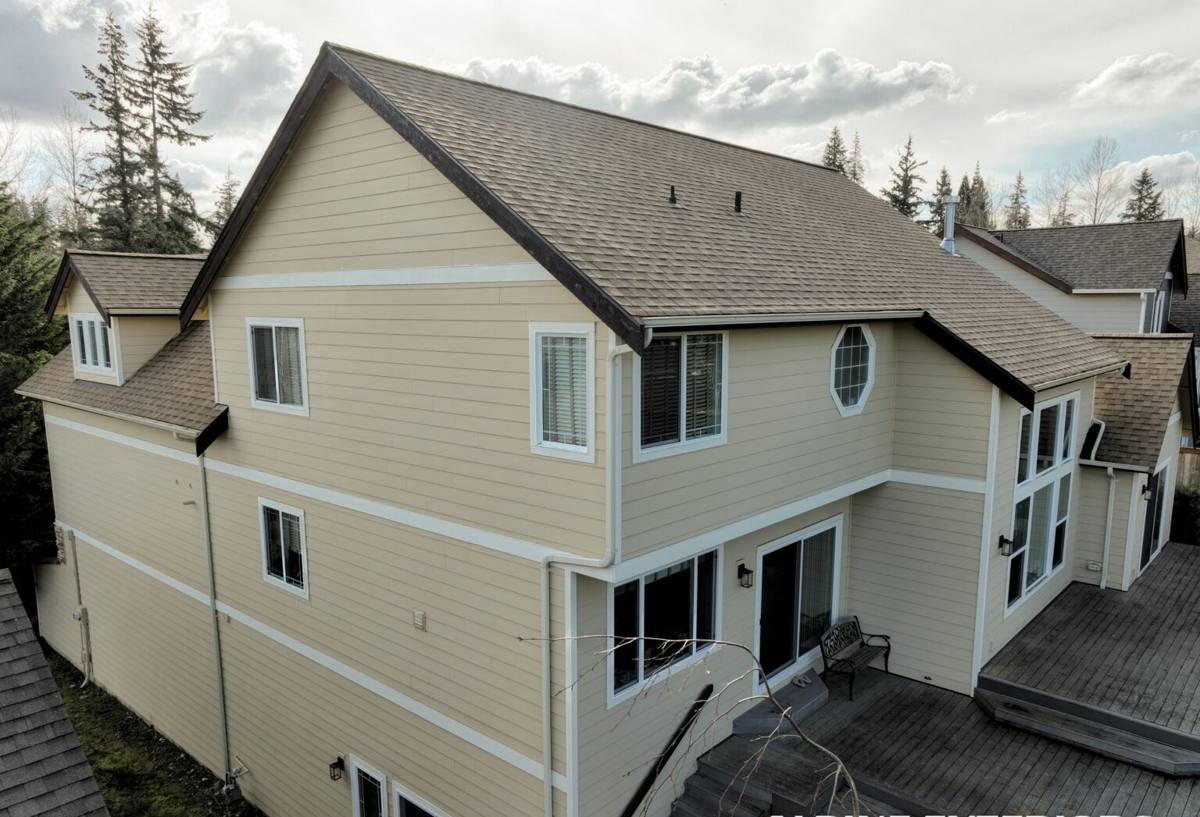
What Salt Air, Rain, and Moss Actually Do to a Deck
Each of these three factors attacks a deck in a different way, and a correct build accounts for all three at once, not just one.
Salt Air
Airborne salt accelerates corrosion on anything metal — nails, screws, joist hangers, bolts, and railing brackets. Standard galvanized hardware that would last decades further inland can start rusting and staining decking boards within a few seasons this close to the water.
Driving Rain
Wind-driven rain doesn't just fall straight down — it gets pushed sideways into ledger connections, under flashing, and into any gap in the framing that isn't properly sealed or sloped away from the house. Over time, that's how rot starts at the point where a deck meets the building, usually long before it's visible from the surface.
Moss and Algae
Shade, moisture, and mild temperatures for most of the year are exactly what moss needs to establish itself. On a deck, that means slippery boards, staining, and — on wood decking especially — moisture trapped against the surface that keeps the wood wet far longer than it should be between rain events.
Choosing the Right Decking Material
There's no single "best" decking material for every property in Bow — it depends on how close you are to the water, how much shade the site gets, and how much upkeep you're willing to do. Here's an honest comparison of the main options we install.
| Material | Moisture & Moss Resistance | Maintenance | Typical Lifespan |
|---|---|---|---|
| Pressure-treated wood | Fair — needs sealing to perform well | Annual cleaning and re-sealing recommended | 10–15 years |
| Cedar | Good natural resistance, but surface still hosts moss without upkeep | Periodic cleaning and finish renewal | 15–20 years |
| Composite | Very good — won't rot, but can still grow surface moss/algae film in shade | Occasional washing, no sealing | 25–30 years |
| PVC/capped composite | Excellent — fully sealed surface | Low — occasional washing | 25–30+ years |
We'll walk you through the real trade-offs for your specific site — a shaded, tree-covered lot near the water has different needs than an open, sunnier lot a mile inland. The right choice is the one that matches your maintenance tolerance and your budget, not just the longest warranty on paper.
Getting the Foundation Right: Footings and Framing
Everything above ground depends on what's below it. In and around Bow, soil conditions vary quite a bit from lot to lot — some ground drains well, some holds water longer, especially on lower-lying parcels closer to the flats. Footings need to be sized and set to the correct frost depth and bear on solid, undisturbed soil, not just poured to a standard depth regardless of what's actually underneath.
On framing, we look at:
- Joist spacing appropriate to the decking material and expected loads (including hot tubs or heavy furniture, if planned)
- Beam sizing that accounts for actual span, not just a rule-of-thumb number
- Proper post-to-beam and beam-to-footing connections rated for the exposure
- Positive drainage away from the house at the ledger connection
Cutting corners at the framing stage is invisible on day one and expensive to fix once decking, railings, and stairs are already installed on top of it.
Moisture Management: Flashing, Fasteners, and Drainage
The single most common failure point on a deck isn't the decking boards — it's the ledger board, where the deck attaches to the house. If flashing isn't installed correctly there, driving rain works its way behind it over time, and by the time you see staining or soft trim on the siding above, there's often already rot in the framing below.
A correct ledger installation includes proper flashing integrated with the house's water-resistive barrier or siding, not just caulk over a gap. We also run structural screws or through-bolts rather than relying on nails alone at this connection, since it's carrying real structural load in addition to dealing with moisture exposure.
For hardware and fasteners across the whole deck, we specify stainless steel or coated fasteners rated for coastal exposure. It costs more up front than standard galvanized hardware, but it's one of the cheapest ways to add years to a deck's life in an area with this much salt air — replacing corroded fasteners later means pulling up boards that are otherwise still good.
Railings, Stairs, and Skagit County Code
Guardrails, stair rise and run, baluster spacing, and handrail requirements are all governed by Washington building code, and Skagit County enforces them through the standard permitting process. This isn't paperwork for its own sake — the spacing and height rules exist because they're the numbers that actually prevent falls, especially with kids or on a deck built above grade near sloped or wooded ground, which describes a fair number of Bow properties.
We handle permit submission and inspection scheduling as part of the job, and we build to pass inspection the first time — not to the bare minimum, but to a standard that holds up over the life of the deck.
Our Deck Building Process, Start to Finish
The process is the same whether it's a modest ground-level deck or a larger multi-level structure, just scaled to the project:
- Site visit and consultation — we look at sun exposure, drainage, soil, and how the deck will actually be used before talking design
- Design and material selection — sizing, layout, and an honest conversation about decking material trade-offs for your specific site
- Permitting — we prepare and submit the permit package and coordinate inspections with the county
- Footings and framing — set to code, sized for real loads, with fasteners and flashing rated for this climate
- Decking, railings, and stairs — installed to manufacturer spec where applicable, with attention to board spacing and drainage
- Final walkthrough — we go over care and maintenance specific to whatever material you chose
Why a Crew That Already Works Bow Makes a Difference
A deck built by a crew unfamiliar with this specific stretch of Skagit County will often use the same generic specs they'd use anywhere in the state — standard hardware, standard flashing details, standard assumptions about soil. That approach isn't wrong exactly, but it's not matched to what actually holds up here.
Working regularly in and around Bow means we've already seen how salt air treats unprotected hardware within a couple of winters, which decking surfaces stay slippery under tree cover through moss season, and which framing details actually keep driving rain out of a ledger connection instead of just meeting the minimum code requirement. It also means we already have a working relationship with the county permitting and inspection process, so there are fewer surprises and delays once the project is underway.
Before you hire anyone for a deck project in this area, it's worth checking a few things:
- Are they licensed and insured in Washington, and can they show it?
- Do they pull permits themselves, or leave that step to you?
- Will they specify stainless or coated fasteners for a coastal-exposure site, or default to standard hardware?
- Do they talk through decking material trade-offs honestly, including maintenance, or just push one product?
- Can they explain how they'll flash and seal the ledger connection, specifically?
- Have they built decks in Bow or similar nearby areas before, and do they understand the site conditions?
A contractor who can answer all of those clearly, without hesitation, is a good sign. One who brushes past them isn't.
Let's Talk About Your Deck
If you're planning a new deck or replacing one that's showing its age, we're happy to take a look and give you a straightforward, no-pressure estimate. There's a short form below — tell us a bit about your property and what you have in mind, and we'll go from there.