 Anacortes Window
 Custom Windows for Edison Homes, Built by a Crew That Works This Area
Edison sits in the low, wet flats of Skagit County, close enough to the water that salt air is just part of daily life and far enough from town that a lot of homes here are older, farm-era buildings that were never built with today's window technology in mind. When we go out to a job in Edison, we're not guessing at what the climate does to a window over twenty years — we've already seen it, on the house down the road or the one before it. That matters more than most homeowners realize, because a window that performs fine in a dry inland town can fail early out here, and the failure is usually slow enough that nobody notices until the frame is soft and the glass has fogged for good.
This page is about one thing: custom windows, sized and installed correctly for Edison homes, given what the local climate actually does to a house over time. Not a general sales pitch — a straight look at what this job involves and what to expect.
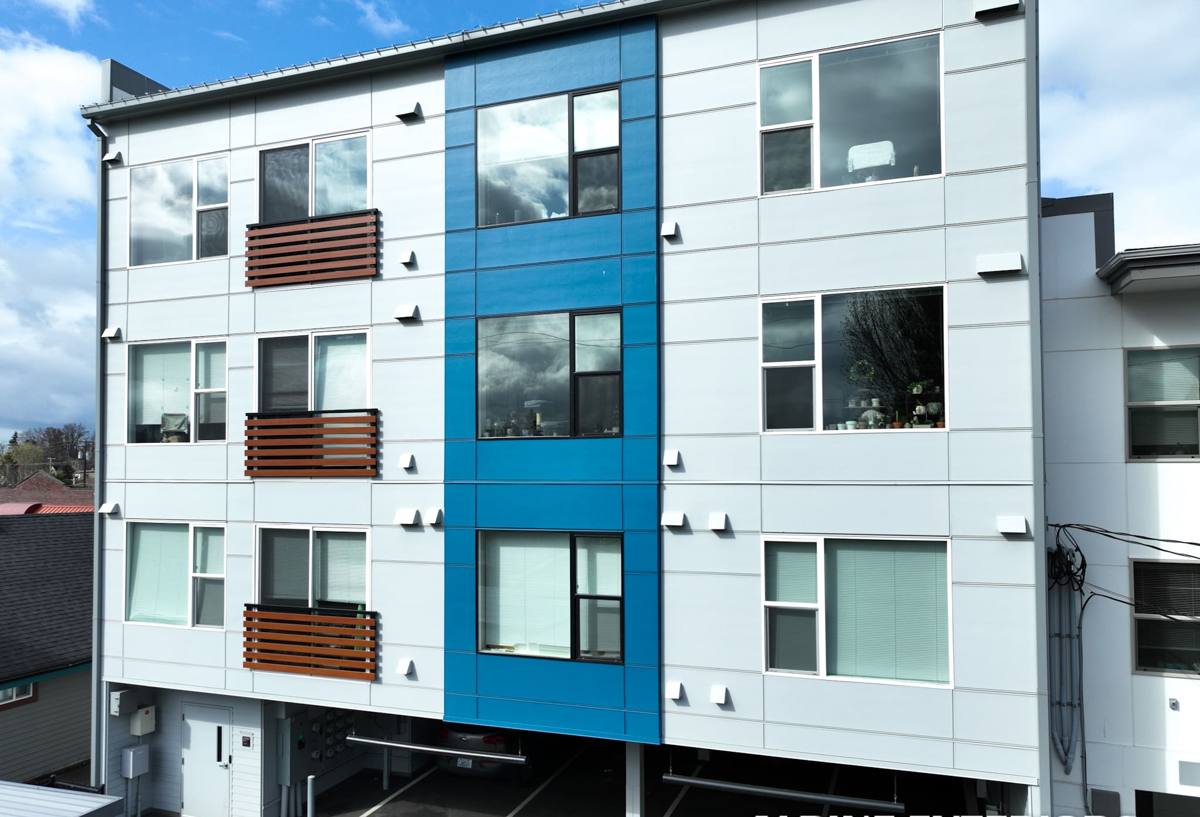
What Salt Air, Driving Rain, and Moss Season Actually Do to a Window
Three things define window wear in this part of Skagit County, and they compound each other.
Salt Air
Airborne salt from the bay doesn't need a storm to do damage — it settles on hardware, weep holes, and metal fasteners on calm days too. Over years it corrodes cheap latches and hinges, pits aluminum that isn't properly coated, and slowly degrades the seals on lower-quality vinyl. It's a slow process, which is exactly why it gets ignored until a window won't latch or a lock mechanism seizes up.
Driving Rain
Storms here don't just fall straight down — wind-driven rain gets pushed sideways into wall assemblies, which means the flashing and sealant detail around a window matters as much as the window itself. A perfectly good window installed with sloppy flashing will leak. We see this more often than a window product actually failing on its own.
Moss Season
The long stretch of damp, low-light months means anything wood — sills, trim, older wood-frame sashes — stays wet longer than it would in a drier climate. Moss and algae hold moisture against the surface, which accelerates rot in untreated or aging wood far faster than most homeowners expect.
None of this is dramatic on its own. It's cumulative, and it's exactly why window choices that work fine elsewhere in Washington sometimes underperform in Edison.
Choosing the Right Frame Material for This Climate
There's no single "best" window material — there's a best fit for a given house, budget, and exposure. Here's how the common options actually hold up under salt air, rain, and prolonged dampness:
| Frame Material | Salt Air / Moisture Resistance | Maintenance Needs | Best Fit |
|---|---|---|---|
| Vinyl | Good — won't rot or corrode, but lower-grade vinyl can become brittle over decades | Low — occasional cleaning | Budget-conscious replacements, rental or secondary properties |
| Fiberglass | Excellent — very stable in temperature swings and moisture, resists warping | Low | Homes with direct water/wind exposure, long-term ownership |
| Wood (unclad) | Poor without diligent upkeep — attractive but vulnerable to moss-season rot | High — regular painting/sealing | Historic-character homes where appearance is the priority and upkeep is planned for |
| Wood-clad / Aluminum-clad | Good — exterior cladding protects the wood core, but cladding seams need inspection | Moderate | Homes wanting a wood interior look with better exterior durability |
For most Edison homes we work on, fiberglass or a well-built vinyl unit gives the best balance of durability and cost. Where a house has real historic character worth preserving, wood-clad options let you keep that look without taking on full wood maintenance.
Matching Windows to Older and Historic-Character Homes
A fair number of the homes in and around Edison are older farmhouses or converted buildings with real architectural character — narrower sightlines, divided-lite patterns, or proportions that a generic modern replacement window doesn't match. Custom windows exist for exactly this reason: instead of forcing a house into a standard size and grid pattern, we build to the opening and the look of the house.
This is where "custom" earns its name rather than just being a marketing word. It means:
- Matching the original sightlines and grid pattern instead of defaulting to a stock look
- Sizing to the actual rough opening rather than resizing the opening to fit a stock window
- Choosing exterior color and trim profile that fits the home's existing character
- Selecting hardware finishes that will hold up to salt air rather than just look good on install day
What a Correct Window Installation Actually Involves
The window unit itself is maybe half the job. The other half — the part that determines whether you get twenty problem-free years or a callback in eighteen months — is the installation detail. In a driving-rain climate, this is non-negotiable:
- Removing the old unit and inspecting the rough opening for hidden rot before anything new goes in
- Correcting any soft framing or water damage found behind the old window rather than covering it up
- Installing flashing in the correct shingle-lap order so water is directed out, not in
- Sealing with materials rated for the exposure, not just whatever's on the truck
- Shimming and squaring the unit so it operates smoothly and seals evenly for its full life
- Confirming weep holes and drainage paths are clear, especially on lower-story or exposed walls
Skipping any one of these steps is how a good window ends up with a bad reputation. It's rarely the product's fault — it's the installation.
Our Process, Start to Finish
1. On-Site Assessment
We look at existing openings, check for water damage or rot already present, and talk through what you actually want — energy performance, appearance, maintenance level you're willing to take on.
2. Custom Measurement and Ordering
Each opening gets measured individually. Older homes are rarely perfectly square, and a custom window built to the real opening avoids the gaps and shimming problems that come with forcing a stock size to fit.
3. Removal and Opening Inspection
We don't install over a problem. If there's soft wood or old water intrusion behind the existing window, we address it before the new unit goes in.
4. Installation and Flashing
This is where the driving-rain climate gets respected — correct flashing sequence, appropriate sealants, and careful attention to drainage.
5. Final Walkthrough
We check operation, seals, and finish work with you before we call the job done, and we're straightforward about what to expect from the product and the installation going forward.
Keeping Custom Windows Performing in Edison's Climate
A well-installed window in a good material still benefits from basic upkeep in a climate like this one. A short seasonal checklist:
- Rinse hardware and tracks periodically to clear salt residue, especially on homes closer to the water
- Clear moss and debris from sills and nearby gutters before the wet season sets in, not after
- Check caulking and exterior sealant yearly for cracking or gaps
- Operate locks and latches through the seasons rather than leaving them untouched for months
- Watch for condensation between panes, which signals a failed seal on an insulated glass unit
None of this is heavy maintenance — it's the difference between a window that reaches its full lifespan and one that quietly degrades because nobody was watching for the early signs.
Why Working With a Crew That Already Knows Edison Matters
A lot of window problems in this area trace back to installers who treated the job like it was happening in a dry inland suburb — standard flashing, standard sealant, standard timeline, no real accounting for salt air or moss-season dampness. We work this stretch of Skagit County regularly, which means we're not learning the local conditions on your project. We know what to check for in an older Edison-area home before we ever pull the first window, and we build the installation around what this climate actually demands, not a generic checklist.
Being local also means we're not disappearing after the invoice is paid. If a question comes up six months or six years later, we're still working in the area and reachable — not a crew that drove in from out of town for one job and moved on.
If you're weighing custom windows for a home in Edison or the surrounding area, we're happy to take a look and give you a straight, no-pressure estimate — what your home actually needs, what it'll cost, and what to expect. Use the form below to get started.