 Anacortes Window
 Why Conway Siding Wears Differently Than Siding Inland
Conway sits low in the Skagit River delta, close to Skagit Bay and the tidal flats that separate Fir Island from the mainland. That geography matters more than most homeowners realize when it comes to exterior siding. Air moving in off the saltwater carries fine salt particles that settle on exterior surfaces, and the surrounding delta land holds moisture longer than higher, better-drained ground. Add the driving rain that comes through Skagit County in the fall and winter storm cycle, and you have a combination that is genuinely tougher on siding than what a home fifteen miles inland deals with.
The result shows up as a longer moss and algae season on north- and west-facing walls, more persistent surface dampness after storms, and faster breakdown of any siding product that depends on paint film or sealed seams to keep water out. None of this means a Conway home is doomed to constant siding problems — it means the siding has to be chosen and installed with this specific exposure in mind, not treated the same as a house in a dry upland neighborhood.
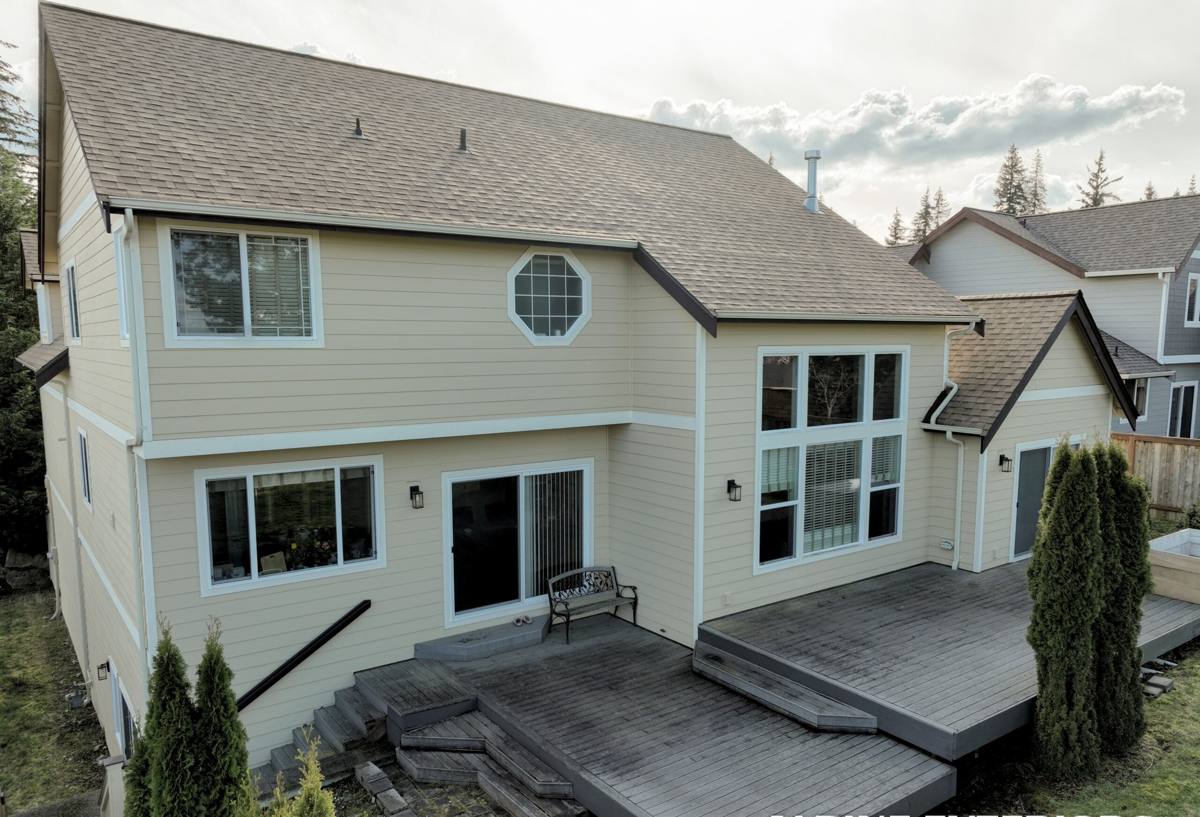
Signs a Conway Home Needs Siding Replacement, Not Just Repair
Siding failure in this area rarely announces itself with one obvious symptom. It's usually a combination of smaller signs that, together, point to a system that's no longer doing its job.
- Soft or spongy spots when you press on siding near the bottom courses, corners, or under window sills
- Paint that's peeling, bubbling, or needing repainting far more often than it used to
- Moss or algae that comes back within weeks of being cleaned, especially on shaded or north-facing walls
- Visible gaps, warping, or cupping in board siding, particularly at butt joints
- A musty smell near exterior walls inside the home, which can indicate moisture getting past the siding
- Siding that's more than 20-25 years old and made of wood, hardboard, or an older composite product
Any one of these on its own might just need a repair. Several of them together, especially on a home that's due for its next full repaint anyway, usually means the smarter long-term move is a full siding replacement rather than another round of patching.
What a Correct Siding Replacement Actually Involves
New siding is only as good as what's behind it. In an area with Conway's moisture load, the parts homeowners can't see matter as much as the finished look.
Weather-Resistive Barrier and Flashing
Every job should start with removing the old siding down to the sheathing, checking for hidden rot or water damage, and installing a proper weather-resistive barrier. Flashing at windows, doors, and any horizontal trim needs to be integrated correctly so water sheds outward rather than working its way behind the cladding. This is the step that's easy to shortcut and hardest to inspect once the new siding is up — which is exactly why it deserves the most attention.
Drainage Gap and Ventilation
Modern siding installation in wet climates typically includes a drainage plane or rain-screen gap that lets any moisture that does get behind the siding drip out and lets the wall assembly dry. In a delta climate like Conway's, where the air itself stays damp longer after a storm, giving the wall a way to dry out is not optional — it's the difference between siding that lasts decades and siding that traps moisture against the sheathing.
Fastening and Joint Treatment
Fastener spacing, joint treatment, and caulking all need to follow the manufacturer's specification, not a generic "close enough" standard. Under-fastened siding moves in wind and rain, opening tiny gaps that let water in over time. Butt joints that aren't properly flashed or sealed become one of the most common entry points for moisture in board siding.
Why We Install Only James Hardie Fiber Cement
We don't offer vinyl, LP SmartSide, primed spruce, cedar, or other fiber cement brands. That's a deliberate standard, not a lack of options. For a climate like this one — salt air, long wet seasons, heavy moss pressure — the trade-offs of those other products show up faster and cost homeowners more over time.
James Hardie fiber cement is non-combustible, resists moisture-driven swelling and rot far better than wood-based products, and holds paint and factory finish longer than vinyl or hardboard siding exposed to this kind of weather. Hardie's ColorPlus finish is baked on at the factory under controlled conditions, which gives it better fade and wear resistance than field-applied paint — a real advantage on a coastal-adjacent property where UV, salt, and moisture are all working against a finish at once. Hardie also engineers specific product lines (its HZ5 line, for example) for climates with more moisture exposure, which is directly relevant to a delta location like Conway.
The warranty structure matters too. Hardie's product warranty is transferable and backed by a large, established manufacturer — not a small mill or regional brand — which gives homeowners real recourse if something goes wrong with the material itself. We stand behind our installation on top of that, but starting with a product warranty we actually trust is part of why we made this our standard.
Hardie Compared to Other Siding Options in a Climate Like This
| Factor | James Hardie Fiber Cement | Vinyl | Wood / Primed Spruce / Cedar |
|---|---|---|---|
| Moisture and rot resistance | High — engineered for wet climates | Doesn't rot, but can trap moisture behind it if installed poorly | Vulnerable to rot without diligent maintenance |
| Salt air performance | Strong; factory finish resists fade and wear | Can chalk, fade, and become brittle over time | Finish breaks down faster near salt exposure |
| Fire resistance | Non-combustible | Combustible, can melt or warp near heat | Combustible |
| Maintenance | Repaint/recaulk on a long cycle; ColorPlus needs little upkeep | Low maintenance but limited repair options if damaged | Frequent repainting and moisture monitoring required |
| Typical lifespan when installed to spec | Decades, with strong manufacturer warranty | Long, but finish and rigidity degrade with UV/temperature swings | Shorter without consistent maintenance |
This isn't a knock on every homeowner who has vinyl or wood siding today — plenty of those products perform reasonably well in the right conditions. But for the specific combination of salt air, driving rain, and extended moss season that Conway homes deal with, fiber cement with a factory finish gives the most predictable, long-term performance, which is why it's what we put on homes.
Our Siding Replacement Process
- On-site evaluation of your current siding, sheathing condition, and any moisture or rot found during a walk-around
- A written estimate that spells out material, prep work, flashing details, and timeline — no vague allowances
- Careful removal of old siding and inspection of the sheathing underneath, with any damaged sections repaired before new siding goes on
- Installation of weather-resistive barrier, flashing, and drainage gap per manufacturer specification
- Installation of James Hardie siding and trim, fastened and finished to Hardie's published installation requirements
- Final walk-through so you understand what was done and what maintenance, if any, to expect going forward
We don't skip the prep steps to move faster. In a wet climate like this one, the prep work is usually what determines whether siding lasts 10 years or 40.
What Drives the Cost of a Siding Replacement
| Cost Factor | Why It Matters |
|---|---|
| Home size and wall complexity | More corners, gables, and trim details mean more labor and material |
| Sheathing condition | Rot or water damage found during tear-off adds repair work before new siding can go on |
| Siding profile and accessories | Lap width, trim style, and any accent details affect material cost |
| Access and site conditions | Landscaping, grade, and how close the home is to property lines affect setup and scaffolding |
| Existing siding removal | Full tear-off versus siding over existing material (which we generally don't recommend) changes labor scope |
We give a written, itemized estimate before any work starts, so you know exactly what's driving the number — not a lump-sum figure with no explanation behind it.
Why It Matters to Hire a Crew That Already Works in Conway
Skagit County's low-lying delta communities aren't identical to Anacortes proper or to drier parts of the county further from the water. A crew that regularly works Conway and the surrounding delta area already understands how much drainage detail and moisture protection a given wall needs, has a feel for how fast moss returns on shaded elevations here, and isn't learning the local climate on your home. That local experience shows up in fewer callbacks and siding that performs the way it's supposed to for the long haul, not just for the first couple of dry summers.
Questions Worth Asking Any Siding Contractor
- Will you inspect and repair the sheathing before installing new siding, or just cover what's there?
- What weather-resistive barrier and drainage gap do you use, and why?
- Is your fastening schedule based on the manufacturer's written specification?
- Is the warranty backed by the manufacturer, the installer, or both — and is it transferable if you sell the home?
- Have you worked on homes in this specific part of Skagit County before?
If a contractor can't give clear, specific answers to those questions, that's worth noting before you sign anything.
If your Conway home's siding is showing its age or you just want an honest read on its condition, we're happy to take a look. Fill out the form below for a free, no-pressure estimate — no obligation, just a straight answer about what your siding needs.