 Anacortes Window
 Siding Built for Conway's Stretch of the Skagit Valley
Conway sits low in the Skagit River delta, close enough to Skagit Bay and Puget Sound that salt-laden air is a fact of life, and open enough to the weather moving up the valley that driving rain off the water is routine for a good chunk of the year. Add the shade, humidity, and slow-drying surfaces that come with a long Pacific Northwest moss season, and you have a combination that is genuinely harder on exterior siding than what a lot of manufacturers test for. Homes here don't fail because owners neglected them. They fail because the siding installed on them was never built for this specific mix of salt, moisture, and shade.
We work throughout Skagit County out of Anacortes, and Conway is part of our regular service area. This page covers what fiber cement siding needs to do here, what a correct installation looks like, and why we install exclusively James Hardie fiber cement rather than the alternatives you'll see marketed for less.
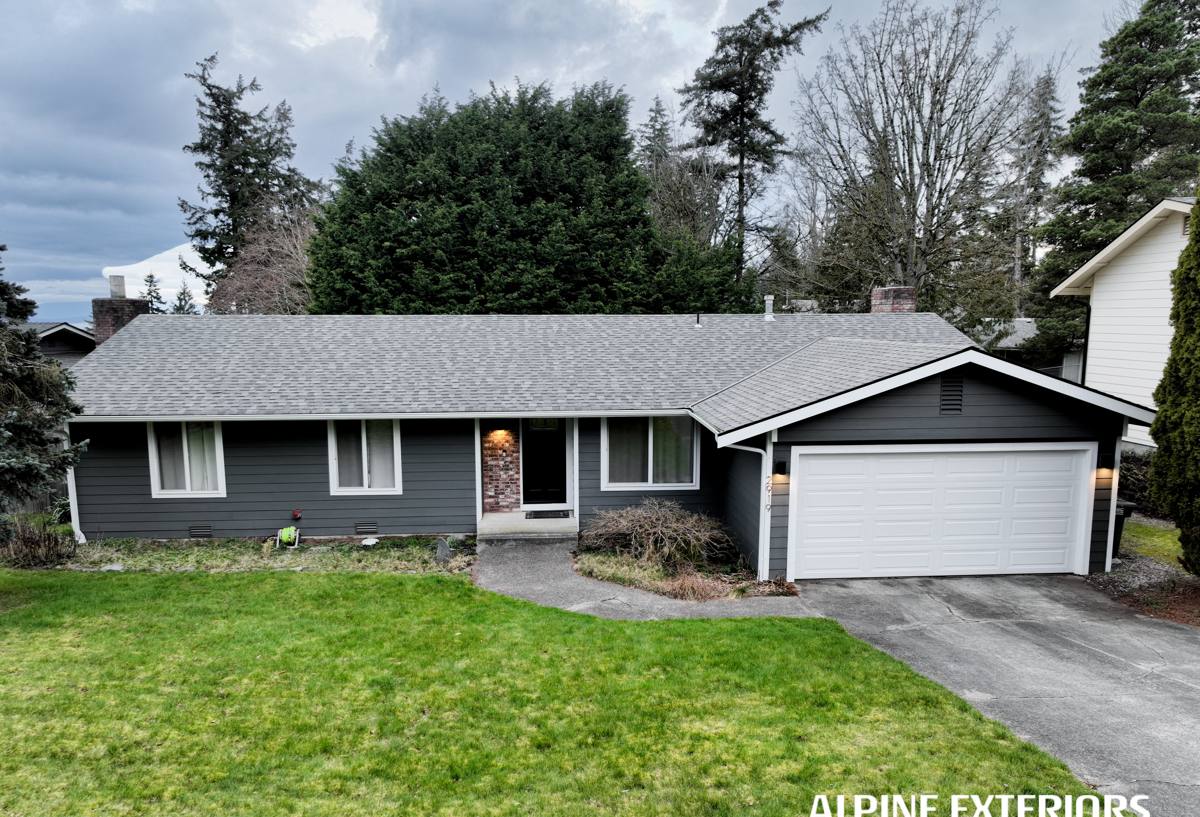
What the Local Climate Actually Does to Siding
Salt Air
Airborne salt from Skagit Bay accelerates corrosion on fasteners, flashing, and any metal trim that isn't rated for coastal exposure. It also degrades some paint films and coatings faster than manufacturers' standard warranties assume, which is why the coating system on your siding matters as much as the substrate underneath it.
Driving Rain
Rain that comes in sideways off the delta doesn't just wet a wall — it drives moisture up under laps, into unsealed joints, and behind trim that isn't flashed correctly. Siding that relies on face-sealing alone (caulk and paint doing all the work, with no drainage plane behind it) is the most common failure point we see on older Conway homes.
A Long Moss Season
Shaded walls, north-facing elevations, and anything near mature trees or dense landscaping stay damp longer here than in drier parts of the state. Moss and algae take hold on surfaces that hold moisture, and once established they trap even more water against the wall, which accelerates rot in wood-based products and paint failure on lower-grade coatings.
What Correct Fiber Cement Installation Involves
A Drainage Plane, Not Just Caulk
Correctly installed fiber cement siding is not a single barrier against water — it's a system. That means a weather-resistive barrier, properly lapped flashing at every horizontal transition, and in most cases a rainscreen gap that lets any moisture that does get behind the siding drain and dry instead of sitting against the sheathing.
Fastening and Clearances
James Hardie specifies fastener type, spacing, and penetration depth for a reason — get it wrong and you create stress points where the board can crack or the seal can fail years down the road. Ground clearance and roof-line clearance matter just as much; siding installed too close to grade, a deck, or a roof surface stays wet longer and invites the moss and algae growth that's already a challenge in this climate.
Caulking and Trim Details
Every joint, corner, and penetration (hose bibs, vents, light fixtures) is a place water can find its way in. We treat these as installation details, not finishing touches — sealed correctly the first time, with materials rated for sustained damp exposure, not general-purpose caulk that shrinks and cracks within a few seasons.
Why We Install Only James Hardie Fiber Cement
We don't install vinyl, LP SmartSide, Cemplank, Allura, or bare cedar or primed spruce siding, and that's a deliberate standard, not a matter of availability. Vinyl expands, contracts, and can become brittle with age and UV exposure, and it doesn't stand up structurally the way fiber cement does. Engineered wood products and cedar depend on an intact factory or field coating to keep moisture out of a wood-fiber or solid-wood substrate — once that coating is compromised, in a climate that gives moisture every opportunity to find a way in, the material underneath is vulnerable in a way non-combustible fiber cement simply isn't.
James Hardie fiber cement is non-combustible, dimensionally stable in wet-dry cycling, and available with a factory-applied ColorPlus finish that's baked on and color-matched — not a field-applied paint job that starts weathering the day it goes up. It's also engineered in formulations tuned to regional climate conditions like ours, and it carries a transferable warranty backed by a manufacturer with decades in this specific product category. That combination is why it's the only siding we put our name behind.
Our Process for a Conway Siding Project
- Site walkthrough and assessment — we look at current siding condition, moisture damage, trim and flashing details, and any elevations with heavier moss or shade exposure.
- Product and profile selection — lap width, texture, and color (including ColorPlus factory finishes) chosen to fit the home and the neighborhood.
- Tear-off and substrate check — old siding removed, sheathing inspected for hidden rot before anything new goes up.
- Weather barrier and drainage plane installation — the part that does the real long-term work, installed before a single piece of siding is hung.
- Siding installation to manufacturer spec — correct fastening, clearances, and flashing at every transition.
- Trim, caulking, and final detailing — joints and penetrations sealed with materials suited to sustained coastal moisture.
- Walkthrough and punch list — final review before we consider the job finished.
Comparing Siding Options for This Climate
| Factor | James Hardie Fiber Cement | Vinyl | Wood / Engineered Wood (LP-style) |
|---|---|---|---|
| Salt air / coastal exposure | Stable; factory finish resists fading and chalking | Can become brittle and fade faster under UV and salt exposure over time | Depends entirely on coating integrity; salt accelerates coating breakdown |
| Driving rain resistance | Strong when installed with proper drainage plane and flashing | Prone to water intrusion at seams and penetrations if not detailed carefully | Vulnerable once moisture reaches the wood-fiber or solid-wood substrate |
| Moss / algae resistance | Non-organic substrate; growth stays surface-level and is washable | Non-organic, but can trap moisture behind loose panels | Organic substrate can support rot once moss holds moisture against it |
| Fire performance | Non-combustible | Combustible | Combustible |
| Ongoing maintenance | Occasional wash, periodic caulk check | Low, but damage (cracking, warping) is often not repairable in place | Regular coating maintenance is not optional |
Maintenance Through Moss Season
Fiber cement is low-maintenance compared to the alternatives, but "low" isn't "none," especially on shaded Conway lots. A short annual routine keeps siding performing the way it was installed to:
- Rinse siding (garden-hose pressure, not a pressure washer aimed directly at joints) to remove built-up grime and organic growth before it gets established
- Check caulk joints at trim, corners, and penetrations for cracking or separation
- Trim back vegetation and landscaping that's shading walls or holding moisture against the siding
- Look closely at north-facing and heavily shaded elevations, where moss and algae take hold first
- Confirm gutters and downspouts are clear so roof runoff isn't sheeting down the wall
- Watch for any hairline cracking or coating wear on older siding and address it before it becomes a moisture path
Why a Crew That Already Works Conway Matters
Siding installation quality depends on details that don't show up in a brochure — how a crew flashes a window head, whether they respect clearance requirements at grade and roofline, and whether they understand that a wall shaded by trees on a Conway lot needs different attention than a wall in full sun a few miles away. A crew that already works this part of Skagit County has seen the failure patterns specific to this climate and builds around them from the first day of the job, rather than learning on your house.
Local familiarity also means fewer surprises with permitting and inspection timelines, and a crew that's realistic about scheduling around the region's wetter stretches instead of rushing installation during a weather window that isn't actually dry enough to do the job right.
What Affects the Cost of a Fiber Cement Siding Project
We don't quote pricing without seeing the home, but a few factors consistently drive cost up or down on projects in this area:
| Factor | Why It Matters |
|---|---|
| Existing siding removal | Tear-off adds labor, especially if hidden rot is found once old siding comes off |
| Home size and wall complexity | More corners, dormers, and trim details mean more cutting, flashing, and labor time |
| Substrate repair | Rotted sheathing found during tear-off needs to be replaced before new siding goes up |
| Siding profile and finish | Lap width, texture, and ColorPlus finish selection affect material cost |
| Site access | Tight lots, landscaping, or limited staging area can add time to the job |
If you're weighing a siding project in Conway, we're glad to walk the house with you, take a look at what's driving any current issues, and put together a straightforward, no-pressure estimate. Use the form below to get started.