 Anacortes Window
 Deck Repair Built for Cap Sante's Waterfront Exposure
Decks in Cap Sante sit close to the water, which is exactly why homeowners here love them — and exactly why those same decks take more abuse than a deck ten miles inland. Elevated lots overlooking the harbor catch wind off the water, salt-laden air, and driving rain that a more sheltered property never sees. Over years, that combination works on every part of a deck: the boards, the railings, the hardware, and the framing underneath that nobody sees until something gives way. A deck repair here isn't just cosmetic sanding and a new coat of stain — it's addressing what the marine climate has actually done to the structure.
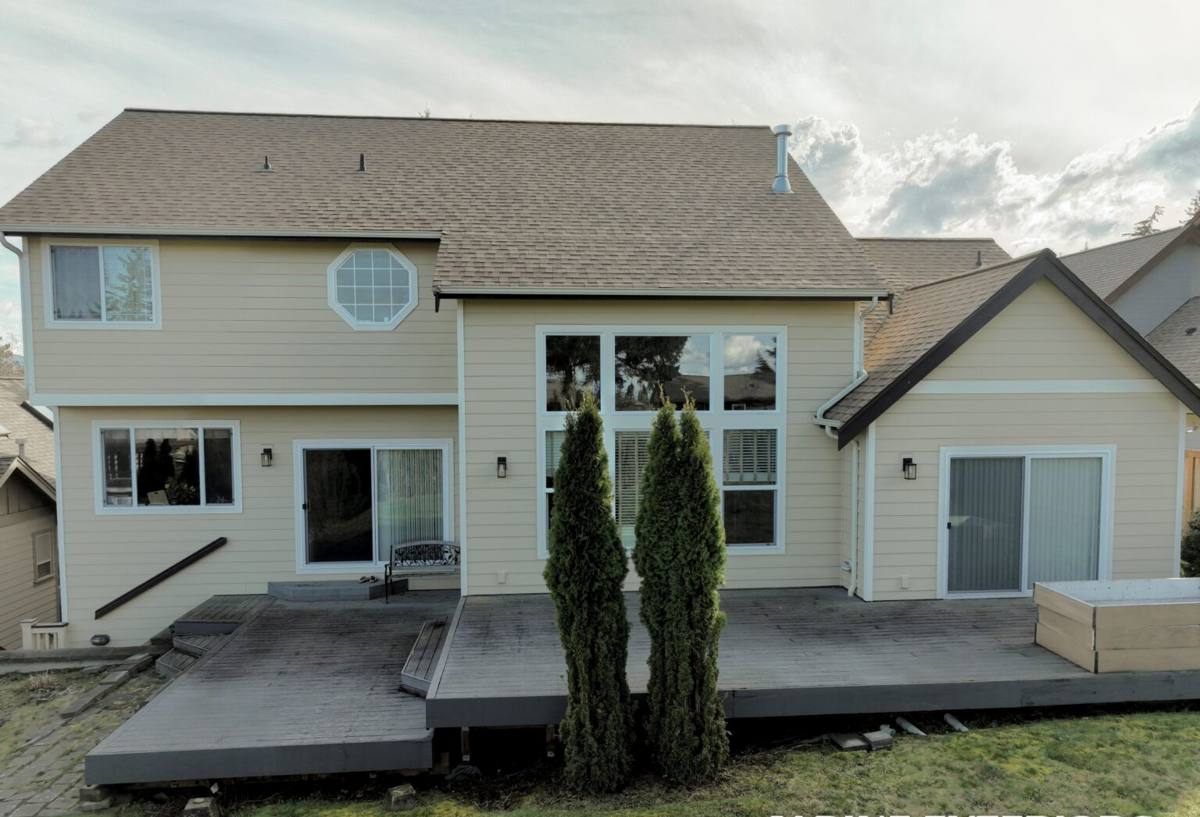
What Anacortes' Marine Climate Does to a Deck Over Time
Salt Air and Corrosion
Salt in the air settles on metal surfaces and speeds up corrosion, especially on fasteners, joist hangers, and railing hardware that weren't rated for coastal exposure to begin with. Standard zinc-coated screws and nails that would last for years in a drier, inland yard can start rusting, staining the wood around them, and losing their grip within a much shorter window near Cap Sante. Rusted fasteners are one of the most common reasons a deck that looks fine from a distance turns out to have loose boards or a wobbly railing on closer inspection.
Driving Rain and Moisture Intrusion
Storms coming off the water don't just fall straight down — wind pushes rain sideways, into gaps, under flashing, and behind ledger boards where the deck attaches to the house. That's a different kind of exposure than a covered patio gets, and it means water finds its way into joints and end grain that a builder in a calmer location might not have detailed as carefully. Once moisture gets trapped against wood or steel, rot and rust follow, often from the inside out — which is why a deck can look sound on top while the framing underneath is already compromised.
The Long Moss Season
Skagit County's wet season runs long, and shaded or north-facing decks in Cap Sante can stay damp for weeks at a stretch. That's exactly the environment moss and algae need to take hold. Beyond the green film being unattractive, moss holds moisture directly against the deck surface, accelerates wood decay underneath it, and turns boards and stair treads slick — a real slip hazard on stairs and ramps, not just an eyesore.
Signs Your Cap Sante Deck Needs Attention
Most deck problems don't announce themselves loudly. They show up as small details that are easy to write off until they aren't. Walk your deck and look for:
- Boards that feel soft, spongy, or flex more than they used to underfoot
- Rust streaks running down from screw heads or metal connectors
- Green or black film building up faster than you can clean it off, especially in shaded corners
- Railings or guard posts that wobble or shift when you lean on them
- Gaps opening up where the deck framing meets the house (the ledger board)
- Nail heads popping up or fasteners that spin freely instead of holding tight
- Discoloration or a musty smell near the base of support posts
- Stair stringers or treads that feel less solid than the rest of the deck
Any one of these on its own might be minor. Several at once, or anything involving the railing or the ledger connection, is worth having looked at before it becomes a safety issue rather than a maintenance one.
What a Correct Deck Repair Actually Involves
Inspecting the Substructure, Not Just the Surface
A deck repair that only addresses what's visible from the top is a temporary fix. New boards over a compromised frame just hide the problem for a season or two. A proper repair starts underneath — checking joists, beams, and posts for soft spots, checking that post bases aren't sitting in standing water or buried soil, and confirming that footings are still doing their job. Only once the frame is confirmed sound does it make sense to address the decking surface itself.
The Ledger Board — the Most Important Connection on the Deck
The ledger board, where the deck attaches to the house, carries a large share of the deck's structural load and is also the single most common point of water intrusion and failure on decks in wet climates. Flashing at this connection needs to actually shed water away from the house rather than trap it against the rim joist. This is also a building code item, not just a preference — proper ledger attachment is what keeps a deck from pulling away from the house under load, which is a safety issue, not a cosmetic one.
Hardware and Fasteners That Hold Up Near Salt Water
Given the corrosion issues described above, repair work in Cap Sante calls for stainless steel or hot-dip galvanized fasteners and connectors rated for coastal and treated-lumber use, not the standard hardware that's fine for a sheltered inland deck. It costs a bit more up front. It's also the difference between hardware that's still solid in ten years and hardware that's rust-streaking your deck boards in three.
Repair or Replace? Weighing Your Options
Not every deck problem calls for a full rebuild, and not every deck is worth patching. The honest answer usually comes down to how much of the structure is still sound.
| Factor | Repair Often Makes Sense | Replacement Often Makes Sense |
|---|---|---|
| Framing condition | Joists and posts test solid, only isolated soft spots | Widespread rot or repeated soft spots across the frame |
| Ledger board | Attachment and flashing are sound | Ledger is rotted or flashing has failed for years |
| Deck age | Under 15-20 years, built to a reasonable standard | Original construction is old or undersized for current use |
| Surface boards | A portion are worn, cracked, or fastener-stained | Most boards are cupping, splitting, or soft throughout |
| Railings | Loose but posts and connections are structurally intact | Posts are rotted at the base or undersized for code |
A short list like this is a starting point, not a diagnosis — the only reliable way to know which column your deck falls into is a hands-on inspection.
Material Choices When You Repair
When boards or railings do need replacing, the material decision matters more here than in a drier part of the state. Pressure-treated lumber is affordable and familiar, but it needs regular cleaning, sealing, and moss control to hold up against the salt air and long wet season. Composite decking costs more upfront and resists rot and moss growth far better, but it still needs proper fastening, gapping, and ventilation underneath to perform well — composite isn't maintenance-free, it just shifts what the maintenance looks like. Cedar is another option some homeowners prefer for its natural look, though it requires more upkeep than composite to keep its resistance to moisture and decay. We'll walk through the honest trade-offs for your specific deck rather than pushing one product across the board.
Our Deck Repair Process in Cap Sante
- Inspection. We check the surface, the framing, the ledger connection, and the hardware — not just what's visible from the top.
- Written scope. You get a clear breakdown of what's actually wrong, what needs to be repaired versus replaced, and why.
- Material selection. We use fasteners and materials suited to salt air and coastal moisture exposure, not generic inland-grade hardware.
- Repair work. Framing and structural issues get addressed first, then surface boards, railings, and stairs.
- Finish and protection. Sealing or finishing as appropriate to help the repair hold up through the next wet season.
- Walk-through. We go over the completed work with you before calling the job done.
Why a Crew That Already Works Cap Sante Matters
A contractor who works decks across Skagit County day in and day out knows what wind-driven rain off the water actually does to a ledger board, which fasteners rust out early in this air, and how fast moss builds back in a shaded corner near the harbor. That's different from general familiarity with deck repair — it's specific knowledge of how this particular stretch of Washington coastline treats an outdoor structure. It also means realistic timelines and material recommendations based on what's actually held up on decks like yours, not generic advice pulled from a manual written for a different climate.
Timing Your Repair Around the Wet Season
Late spring through early fall is the most practical window for deck repair in this area, since it gives materials and finishes time to cure properly before the long stretch of Pacific Northwest rain sets in. Waiting until problems are obvious in the middle of winter often means a deck sits exposed to moisture longer than it should, letting a small repair grow into a bigger one. If you've noticed early warning signs, addressing them before the wet season is generally the more cost-effective move.
If your deck in Cap Sante is showing rust stains, soft boards, stubborn moss, or a railing that doesn't feel as solid as it used to, we're happy to take a look and give you a straightforward assessment. Reach out for a free, no-pressure estimate using the form below.