 Anacortes Window
 Siding Installation for Burlington Homes
Burlington sits in a stretch of Skagit County where marine air off Puget Sound meets valley moisture, and that combination is hard on exterior walls. Homes here deal with driving rain that finds every gap in a siding system, salt-tinged air that accelerates corrosion on fasteners and trim, and a long moss season where shaded, damp siding stays wet for weeks at a time. Siding installation in this area isn't just a cosmetic upgrade — it's the single biggest factor in whether a home's walls stay dry, sound, and free of rot for the next few decades.
We install James Hardie fiber cement siding exclusively. That's not a marketing angle — it's a standard we hold to because we've seen what this climate does to lesser materials over time, and we'd rather put one product on a home and get it right than juggle several and hope.
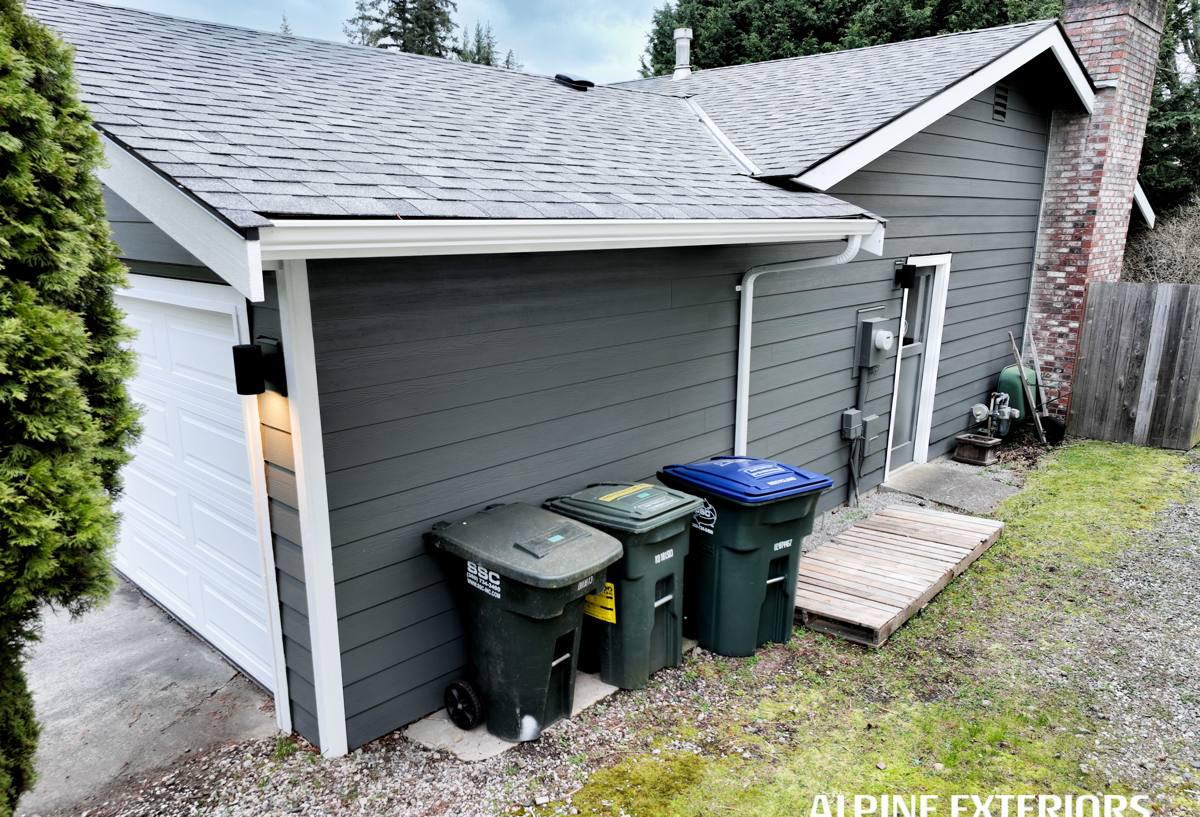
What Burlington's Climate Actually Does to Siding
Driving Rain and Wind-Driven Moisture
Burlington doesn't get hurricane-force storms, but it gets something arguably tougher on siding: long stretches of steady, wind-pushed rain. That kind of weather drives water sideways into laps, seams, and butt joints rather than letting it simply run down the face of the wall. Any siding system with weak seams, poor flashing details, or materials that swell when wet is going to lose that fight eventually.
Salt Air and Metal Fatigue
Proximity to the Sound means a low but constant level of salt in the air, especially on west- and south-facing walls that catch prevailing weather. Salt air is rough on unprotected fasteners, thin trim coatings, and any metal flashing that isn't properly detailed. Over years, this shows up as streaking, corrosion spots, and premature failure at fastener heads — small issues that, if ignored, become entry points for water.
Moss, Shade, and Slow-Drying Walls
Many Burlington properties sit under mature trees or in valley locations that don't get strong, drying sun on every side of the house. Combined with our wet season, that creates ideal conditions for moss and algae growth on siding that stays damp too long. Some materials tolerate this fine. Others — especially wood-based products — can start to soften or delaminate under sustained moss coverage and trapped moisture.
Why We Install Only James Hardie Fiber Cement
We made a deliberate decision not to install vinyl, LP SmartSide, cedar, primed spruce, or other fiber cement brands. Each of those products has legitimate uses somewhere, but for the specific combination of rain, salt air, and moss exposure that Burlington homes face, we consider Hardie the more reliable long-term choice. Here's the honest comparison:
| Material | How It Handles This Climate | Long-Term Consideration |
|---|---|---|
| Vinyl siding | Sheds rain reasonably well but relies on lapped joints that can allow moisture behind the panel | Can warp or crack in temperature swings; trapped moisture behind panels goes unnoticed |
| Wood-based siding (cedar, primed spruce, LP SmartSide) | Attractive, but wood fiber is naturally more vulnerable to sustained moss and moisture exposure | Requires more diligent maintenance and repainting to prevent softening at seams and bottom edges |
| Other fiber cement brands | Similar core material to Hardie, but factory finish quality and product engineering vary | Warranty terms and climate-specific product lines differ by manufacturer |
| James Hardie fiber cement | Non-combustible, dimensionally stable, engineered HZ product lines for Pacific Northwest moisture exposure | ColorPlus factory finish resists fading and doesn't require repainting on the same schedule as wood |
Hardie's HZ5 product line in particular is engineered for climates like ours — freeze-thaw cycles, sustained damp weather, and the kind of moisture exposure that's routine in Skagit County. The ColorPlus factory-applied finish also matters here: a factory-baked finish holds up to UV and moisture more consistently than field-applied paint, which reduces one of the biggest maintenance burdens on wood siding.
What Correct Installation Actually Involves
Siding is a system, not just a face material. A Hardie board installed without proper water management behind it will fail regardless of how good the board itself is. Correct installation for a Burlington home includes:
- A weather-resistive barrier installed and lapped correctly, with all penetrations sealed before siding goes on
- Proper rainscreen or drainage gap detailing so any moisture that does get behind the siding can drain and dry rather than sit against the sheathing
- Correct flashing at every window, door, and roof-to-wall intersection — the most common failure points on any home
- Manufacturer-specified fastener spacing, type, and placement, since improper nailing is one of the leading causes of premature siding problems
- Proper clearance at the foundation and grade line to keep the bottom edge of the siding out of standing water and splash-back
- Correctly caulked and sealed joints using products compatible with fiber cement, not generic sealants that break down under UV
Every one of these details matters more in a climate that stays wet for months at a time than it would somewhere dry. Skipping any of them doesn't show up as a problem in year one — it shows up in year eight or ten, as rot, staining, or a soft spot that turns into a much bigger repair.
Old Siding Removal and What We Look For
Before new siding goes up, tearing off the old material gives us a direct look at the sheathing and framing underneath — something you can't get from an exterior inspection alone. On Burlington homes, especially ones that have carried wood-based or older vinyl siding for years, we're specifically checking for water staining, soft or delaminating sheathing, and any signs that moss or trapped moisture has been sitting against the wall longer than it should have. Catching and addressing that now, before new siding goes over it, is far cheaper than discovering it after the fact.
Our Installation Process
We keep the process straightforward and communicate at each stage so there are no surprises:
- On-site assessment: We walk the exterior, check current siding condition, note problem areas (moss buildup, past water intrusion, damaged trim), and take measurements.
- Product and color selection: We go over the appropriate Hardie product line and HZ rating for the home's exposure, plus ColorPlus color options.
- Written estimate: A clear, itemized quote — no vague allowances, no surprise change orders for work we could have identified up front.
- Tear-off and sheathing check: Old siding comes off, sheathing is inspected and repaired where needed before anything new goes on.
- Weather barrier and flashing installation: This is the step that determines how the house performs in twenty years, and we don't rush it.
- Hardie siding installation: Installed to manufacturer specification for fastening, spacing, and joint treatment.
- Trim, caulking, and final detailing: Corners, window trim, and transitions get sealed correctly the first time.
- Final walkthrough: We go over the finished work with you directly before calling the job done.
Signs a Burlington Home Needs New Siding Soon
Not every siding problem is obvious from the street. Some of the clearer warning signs worth acting on:
- Persistent moss or algae staining that comes back shortly after cleaning
- Soft spots, bubbling, or visible warping anywhere on the siding face
- Paint that's peeling or blistering repeatedly in the same spots, which often points to moisture trapped behind the surface
- Gaps or separation at seams, corners, or trim boards
- Rising energy bills that may point to a compromised weather barrier letting conditioned air escape
- Visible rot or discoloration near the foundation line, a common spot for splash-back damage
If you're seeing more than one of these, it's worth having someone look at the wall assembly itself, not just the surface.
Cost Factors for Burlington Siding Projects
Every home is different, but the same handful of factors drive most of the cost variation we see on local siding jobs:
| Factor | Why It Matters |
|---|---|
| Home size and wall complexity | More corners, dormers, and transitions mean more cutting, flashing, and labor time |
| Condition of existing sheathing | Rot or moisture damage found during tear-off adds repair scope before new siding can go on |
| Siding profile and trim selection | Lap width, trim style, and accessory boards affect material cost |
| Number of stories and access | Second-story and steep-site work requires more staging and time |
| Scope of window and door trim work | Full trim replacement alongside siding is more involved than siding alone |
We walk through all of these during the on-site estimate so there's no guesswork in the number we give you.
Why a Crew That Already Works Burlington Matters
Siding installed correctly in a dry climate can get away with shortcuts that simply don't hold up here. A crew that regularly works Burlington and the surrounding Skagit Valley knows which walls take the worst of the weather, understands how moss and shade patterns on a given lot affect drying time, and details flashing and drainage with our actual rain patterns in mind rather than a generic installation manual. That local knowledge shows up in the details you don't see once the job is finished — the flashing behind the trim, the drainage gap behind the panel, the fastener pattern — which are exactly the details that determine whether the siding lasts 10 years or 40.
Maintaining Hardie Siding After Installation
Part of why we standardized on James Hardie is how little ongoing maintenance it demands compared to wood siding, but "low maintenance" isn't "no maintenance." A simple annual routine keeps it performing as designed:
- Rinse the exterior with a garden hose (not a pressure washer aimed directly at seams) to clear moss spores and organic buildup before it takes hold
- Check caulking at trim and joints yearly and re-seal if it's cracked or pulling away
- Keep gutters clear so overflow isn't running down the wall face repeatedly
- Trim back vegetation and tree cover that keeps a wall section shaded and damp longer than the rest of the house
None of that requires repainting every few years the way wood siding typically does, which is a real, ongoing cost difference over the life of the siding.
If your Burlington home's siding is showing its age, or you're planning ahead of a moss season that's only going to get worse, we're happy to come take a look. The estimate is free, there's no pressure, and you'll get a straight answer about what your home actually needs.