 Anacortes Window
 Why Siding in Bow Wears Differently Than Siding Inland
Bow sits close enough to the salt water of Skagit County that homes here take on a different kind of weather stress than a house twenty miles inland. The combination of salt-laden air, driving rain off the water, and a long, damp moss season means siding problems in Bow rarely show up the way a textbook describes them. A crack that would sit dormant for years in a dry climate becomes a moisture entry point here in a single wet winter. A section of trim that looks fine from the ground may already be soft underneath a healthy coat of moss.
We repair siding across Skagit County, and Bow calls consistently follow a pattern: damage concentrates on north- and west-facing walls, around window and door trim, and low along the foundation where splashback and standing moisture do the most work. Understanding that pattern is most of what separates a repair that lasts from one that fails again in two years.
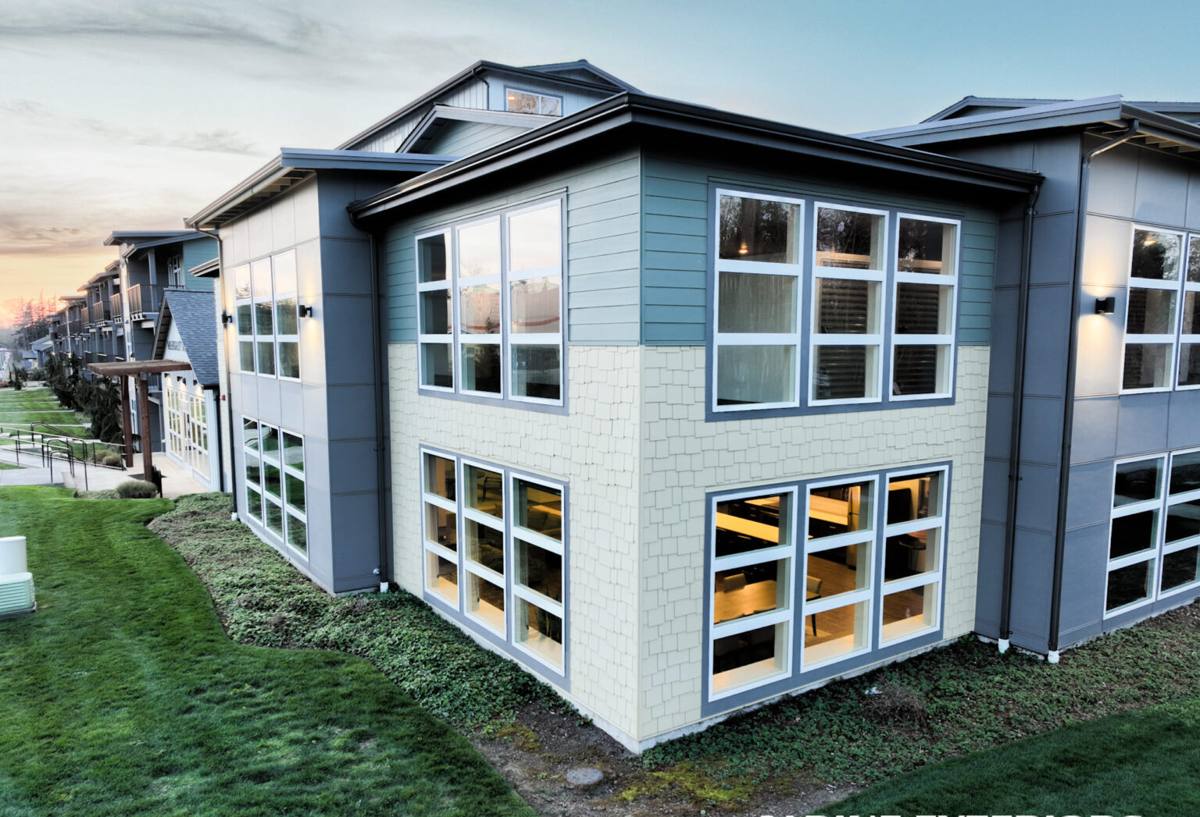
How Salt Air, Rain, and Moss Actually Damage Siding
Salt Air
Airborne salt from nearby saltwater accelerates corrosion on fasteners, flashing, and any exposed metal trim. Once a fastener starts to rust, it swells slightly, loosens its grip on the siding, and creates a small gap that water can work into. This is slow, quiet damage — it rarely announces itself until a panel starts to move or a streak of rust bleeds through paint.
Driving Rain
Wind-driven rain doesn't fall straight down — it gets pushed sideways into laps, seams, and trim joints that were only ever designed to shed water moving vertically. Over enough storms, that sideways pressure finds every weak seal, every under-caulked joint, and every place where flashing was installed a little short.
Moss Season
Skagit County's long wet season keeps north-facing and shaded siding damp for months at a stretch. Moss and algae hold that moisture directly against the surface, which is exactly what wood substrates, exposed OSB, and poorly sealed cut edges don't want. It's not the moss itself doing the damage so much as the moisture it traps in place.
Signs Bow Homeowners Should Watch For
Some siding damage is obvious. Most of it isn't, at least not until you know where to look.
- Soft or spongy spots when you press on siding near the bottom courses or below windows
- Paint that's bubbling, peeling, or has a chalky texture in patches rather than evenly
- Visible gaps or separation at trim joints, corner boards, or where siding meets the foundation
- Rust streaking below nail heads or metal flashing
- Moss or dark green-black staining concentrated on shaded or north-facing walls
- A musty smell near an exterior wall inside the house, which often means moisture has already gotten past the siding
- Warping, cupping, or visible waviness across a panel or board
What a Correct Siding Repair Actually Involves
Finding the Cause, Not Just the Symptom
The most common mistake in siding repair is treating the visible damage as the problem instead of the symptom. A rotted board at a window corner is usually a flashing or caulking failure, not a defect in the board itself. Replace the board without fixing the flashing, and the new board fails on the same timeline as the old one. Every repair we do starts with figuring out how water got in, because that answer changes what the repair needs to include.
Matching Material and Finish
A patch that doesn't match the surrounding siding's profile, reveal, or finish stands out for the life of the house and can also create a new water-entry seam if the match is off dimensionally. Where we can source an exact match, we do. Where the existing product is discontinued or no longer made to the same spec, we'll tell you honestly and talk through whether a repair, a partial section replacement, or a full re-side makes more sense.
Sealing and Flashing Details
Proper repair means re-flashing any window, door, or penetration in the repair area, using compatible sealants (not just caulk over the old bead), and making sure water has a path to shed outward rather than getting trapped behind the new work. This is the part of a repair that's invisible once it's done — and it's the part that determines whether the repair lasts five years or fifteen.
Repair Options by Siding Material
What a repair involves — and how well it holds up against Bow's salt air and rain — depends heavily on what siding is already on the house.
| Siding Type | Typical Repair Approach | Long-Term Outlook in This Climate |
|---|---|---|
| Cedar / wood | Cut out and replace damaged boards, re-seal joints, repaint or re-stain | Repeat repairs likely; wood remains vulnerable to moisture and moss regrowth without ongoing maintenance |
| Vinyl | Snap-in panel replacement where color match is available | Panels can warp or fade unevenly over time; color matching gets harder as products age off the market |
| LP SmartSide (engineered wood) | Section replacement, re-sealing of cut edges and joints | Cut edges and seams need diligent sealing; failures often trace back to moisture at an edge |
| Fiber cement (James Hardie) | Section or plank replacement using matching ColorPlus or field-finished product | Non-combustible and dimensionally stable; holds paint and color long-term when installed and repaired to spec |
Our Process for a Bow Siding Repair
- Inspection: We walk the exterior, check suspect areas by hand, and look for the underlying moisture source, not just the visible damage.
- Assessment: We'll tell you plainly whether this is a straightforward repair, a larger section replacement, or a case where repair would just be delaying a replacement you'll need soon anyway.
- Material sourcing: We source matching material where possible, or discuss honest alternatives if an exact match isn't available.
- Repair: Damaged material comes out, flashing and moisture barriers get corrected, and new material goes in sealed and finished to match.
- Final check: We walk the repair with you before we consider the job done.
Repair vs. Replace: How to Think About It
Not every damaged section needs a full re-side, and we're not going to tell you it does. A localized repair makes sense when the damage is contained, the cause has a clear fix, and the surrounding siding is otherwise sound. Full or partial replacement starts to make more sense when damage shows up in multiple unrelated areas, when the siding material itself is failing (not just one bad install detail), or when repeated repairs to the same wall haven't held. In Bow specifically, we see this decision point most often on older wood or engineered-wood siding that's been through several wet seasons without a repaint or recaulk cycle — at some point, patching a substrate that's chronically absorbing moisture stops making financial sense compared to replacing it with something built for the exposure.
Why We Recommend James Hardie When Repair Isn't Enough
When a repair conversation turns into a replacement conversation, our answer is James Hardie fiber cement siding — and only that. We don't install vinyl, LP SmartSide, Cemplank, Allura, or unprimed wood siding, and we're upfront about why: fiber cement doesn't absorb moisture the way wood-based products can, it's non-combustible, and Hardie's ColorPlus factory finish is engineered to hold its color and resist the kind of cracking and peeling that salt air and UV exposure cause over time. Hardie also makes climate-specific HZ product lines built around moisture and temperature conditions like ours, backed by a strong transferable warranty. None of that means other products are junk — plenty of them perform reasonably when installed and maintained well. It means that after years of doing repair work on all of them in this climate, fiber cement is what we're willing to put our name behind and what we install on our own projects.
Why a Crew That Already Works Bow Matters
Siding repair done right depends on understanding how a specific house sits relative to weather exposure — which walls take the worst of the driving rain, which corners hold moss longest, where salt air does the most work on fasteners and flashing. A crew that regularly works Skagit County's coastal communities has already seen the failure patterns specific to this stretch of Washington, rather than applying generic assumptions from a drier or more inland climate. That familiarity shows up in faster, more accurate diagnosis and in repairs that account for what's actually going to hit that wall next winter.
Questions to Ask Before Hiring Anyone for a Siding Repair
- Will you tell me what caused the damage, not just replace the visible material?
- Will the repair include new flashing and sealant at the damage site, or just a patch over the old?
- Can you match the existing siding profile, reveal, and finish?
- Are you being honest with me about repair vs. replace, or defaulting to whichever is more profitable for you?
- What warranty applies to the repair work itself, separate from any material warranty?
If you're seeing soft spots, moss buildup, or peeling paint on your Bow home's siding, we're glad to take a look and give you a straightforward assessment — no pressure, no upsell, just an honest read on what your siding actually needs. Request a free estimate using the form below.