 Anacortes Window
 What Bow's Climate Does to Exterior Siding
Bow sits in the low, agricultural stretch of Skagit County between Anacortes and Burlington, close enough to the Samish Bay shoreline that homes here catch salt-carrying wind off the water on top of the region's normal rain load. That combination is harder on siding than most homeowners realize. Salt air accelerates corrosion of fasteners and hardware, driving rain finds its way into any gap or seam that isn't detailed correctly, and the tree cover common on Bow properties — fir, cedar, big-leaf maple — keeps walls shaded and damp long after a storm has passed. Add in a moss and algae season that runs most of the year in western Washington, and you get a climate that punishes any siding material with a weak spot in its moisture management.
None of that means siding is doomed to fail here. It means the material and the installation both have to be matched to the conditions, not just installed to a generic national spec and hoped for the best.
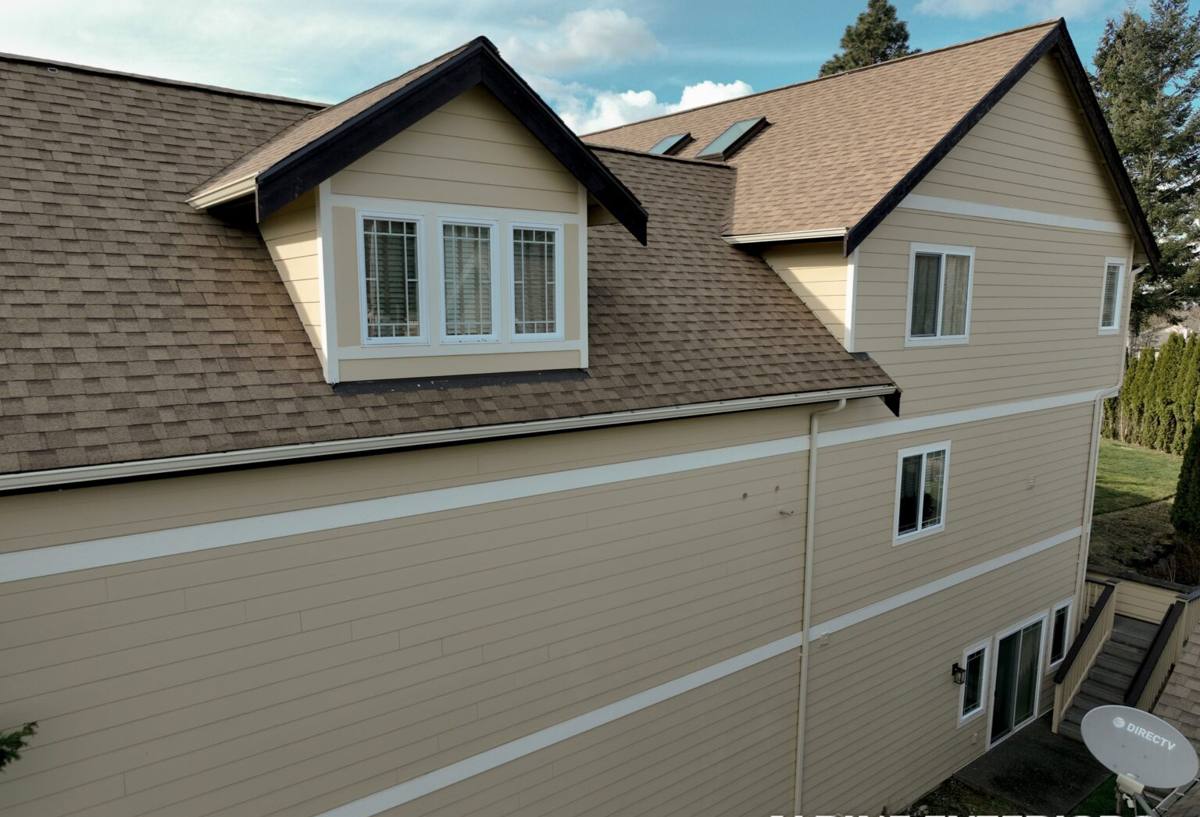
Why We Install Only James Hardie Fiber Cement
We don't install vinyl, LP SmartSide, Cemplank, Allura, or primed spruce or cedar siding. That's a deliberate standard, not a lack of options. James Hardie fiber cement is a non-combustible, cement-based product that doesn't rot, doesn't provide a food source for fungal growth the way wood and wood-fiber products can, and holds its shape in the wet-dry cycling that's constant in a coastal Skagit County winter. Its factory-applied ColorPlus finish is baked on under controlled conditions, which gives it more consistent fade resistance than a product that gets primed at the factory and field-painted on site.
Hardie also engineers its boards by climate zone. The HZ5 formulation used in our region is built specifically for wetter, harsher weather patterns than the HZ10 product sold in the Southeast. That distinction matters less on a sales sheet and more on a house that sits fifteen minutes from tidewater. We standardized on Hardie because we got tired of watching engineered wood and vinyl products underperform in this specific climate corridor, and because a strong transferable warranty only means something if the product behind it actually holds up.
What a Correct Fiber Cement Installation Involves
Fiber cement siding is only as good as the assembly behind it. A bundle of boards nailed to a wall is not a weatherproof system — the water management layers underneath do most of the real work.
Drainage Plane and Weather-Resistive Barrier
Every job starts with a continuous weather-resistive barrier over the sheathing, lapped correctly so water sheds downward and outward instead of behind the barrier. On homes exposed to wind-driven rain, we install a drainage gap between the barrier and the siding so any moisture that does get past the cladding has somewhere to go besides your wall sheathing.
Flashing at Windows, Doors, and Penetrations
Most siding failures we get called out to inspect trace back to flashing, not the siding material itself. Every window, door, hose bib, vent, and light fixture penetration needs flashing detailed so water is directed out and away, never trapped behind the cladding.
Fastening and Clearances
Hardie specifies fastener type, placement, and spacing for a reason — under-driven or over-driven nails, or fasteners in the wrong location, void the warranty and create early entry points for water. We also hold proper clearance between the bottom of the siding and grade, decks, patios, and roof lines, since ground-level splash-back and roof runoff are two of the most common causes of premature damage on any siding material.
Joints, Caulking, and Paint Touch-Up
Butt joints get sealed correctly, factory-cut edges get field-primed and painted to match, and every joint is caulked with a product rated for the movement and moisture cycling of this climate. Skipping this step is one of the fastest ways to shorten a siding job's life, regardless of what material is on the wall.
Our Process, Start to Finish
- On-site assessment — we walk the exterior, check existing siding and trim condition, and measure for material.
- Tear-off and sheathing inspection — old siding comes off and we inspect the sheathing underneath for rot or moisture damage before anything new goes up.
- Weather-resistive barrier installation — a continuous, properly lapped barrier goes over the sheathing.
- Flashing — windows, doors, and penetrations get flashed before siding installation begins.
- Hardie board installation — boards are fastened to spec, with correct clearances and reveal.
- Caulking and finish work — joints are sealed, cut edges are touched up, trim is finished.
- Final walkthrough — we go over the completed job with you before calling it done.
Signs Your Current Siding Is Already Losing the Fight
A lot of siding problems in Bow's climate develop slowly, under the surface, before they show up as an obvious failure. Watch for these signs:
- Soft, spongy spots when you press on the siding, especially near the bottom courses
- Green or black staining that returns within weeks of being cleaned off
- Paint or finish peeling in the same spots year after year
- Visible gaps opening up around trim, windows, or corner boards
- Boards that have started to cup, bow, or warp
- Musty smell or soft drywall on an interior wall that backs up to an exterior wall
- Fascia or trim rot near where siding meets the roofline
Any one of these is worth a closer look before it turns into a sheathing or framing repair.
Fiber Cement vs. Other Siding Options in This Climate
Every siding material handles Skagit County's moisture, salt air, and moss season differently. Here's an honest comparison of how the main options stack up:
| Material | Moisture Behavior | Salt Air Tolerance | Maintenance | Finish Longevity |
|---|---|---|---|---|
| James Hardie fiber cement | Does not rot or absorb moisture like wood | Cement substrate is unaffected by salt; fasteners spec'd for coastal use | Occasional rinse; caulk inspection | Factory ColorPlus finish, long fade resistance |
| Vinyl | Sheds water but can warp or buckle with heat/cold cycling | Hardware and trim pieces can corrode over time | Low, but limited repair options if damaged | Color is molded in but can chalk and fade |
| Primed wood or cedar | Absorbs moisture; prone to rot without diligent upkeep | Salt accelerates finish breakdown and grain-raising | Frequent repainting/staining and caulk maintenance | Field-applied finish, shortest repaint cycle |
| LP SmartSide / engineered wood | Engineered strand product; edge and cut-end swelling is a known risk if not sealed correctly | Moderate; sensitive to sustained moisture exposure | Moderate; edge sealing and caulk upkeep matter | Factory-finished, but performance depends heavily on install detailing |
None of these products are without their advocates, and each has situations where it performs fine. Our position is simply that for the moisture and salt exposure Bow homes deal with, fiber cement's non-combustible, moisture-stable substrate gives it the widest margin for error over the life of the siding.
What Drives the Cost of a Fiber Cement Job in Bow
Every home is different, so we don't quote prices without seeing the property, but these are the factors that move a bid up or down:
| Factor | Why It Matters |
|---|---|
| Home size and number of stories | More wall area and taller elevations mean more material and labor, and multi-story work often needs staging or lift equipment |
| Siding profile chosen | Lap siding, shingle-style panels, and vertical board-and-batten all have different material and labor costs |
| Condition of existing siding and sheathing | Rot or moisture damage found during tear-off means sheathing repair before new siding can go up |
| Trim and detail complexity | Homes with lots of corners, dormers, and window trim take more time to flash and finish correctly |
| Color selection | Factory ColorPlus finishes and custom field-painted colors are priced differently |
| Site access | Tight lots, slopes, and landscaping close to the house can add setup time |
Maintenance in a Moss-Prone, Salt-Air Environment
Fiber cement is low-maintenance compared to wood, but "low-maintenance" doesn't mean "no maintenance," especially this close to the water. A yearly rinse-down keeps salt residue and airborne grime from building up on the surface. Trimming back overhanging branches and shrubs improves airflow and sun exposure along walls, which shortens how long moisture sits on the siding after rain — the single biggest factor in how fast moss and algae take hold. It's also worth a yearly look at caulking around windows, doors, and trim joints, since caulk is a maintenance item on any siding system and is far cheaper to renew than to deal with the water damage that follows a failed joint. Keep an eye on gutters and downspouts too — a clogged or misaligned gutter dumping water down a wall will overwhelm even a well-installed siding job over time.
Why Hire a Crew That Already Works in Bow
A crew that's put up siding on other homes in and around Bow already knows which elevations on this side of Skagit County take the worst of the wind and rain off Samish Bay, what typical sheathing condition looks like on homes of a certain age in this area, and how local permitting and inspection expectations run. That local familiarity shows up in the details — where extra flashing attention gets paid, how clearances are handled around decks and grade, and which parts of a job need the most care given how this specific stretch of coastline behaves. It's the difference between a generic install and one built for the house it's actually going on.
If you're dealing with aging siding in Bow, or planning ahead for a home that's showing early wear, we're happy to come take a look. There's no cost and no pressure for an on-site estimate — just a straight assessment of what your home needs and what a correct James Hardie fiber cement installation would involve.