 Anacortes Window
 Asphalt Shingle Roofing Built for the Oak Harbor Climate
Oak Harbor sits close enough to the water that the same conditions shaping roofs across Fidalgo Island and the wider Anacortes area apply here too, just across Deception Pass: salt-laden air, wind-driven rain off the Salish Sea, and short, low-angle winter daylight that lets moss and moisture sit on a roof for months at a time. Asphalt shingle roofing can absolutely hold up to that environment for its full service life, but only when the install accounts for those conditions from day one. A shingle roof that would perform fine in a dry inland climate can fail early here if the underlayment, ventilation, and flashing details weren't built for marine exposure.
This page covers what an asphalt shingle roof needs to hold up on an Oak Harbor home specifically, what a correct installation actually includes, and how we approach these jobs as a crew that already works this stretch of Skagit and Island County coastline.
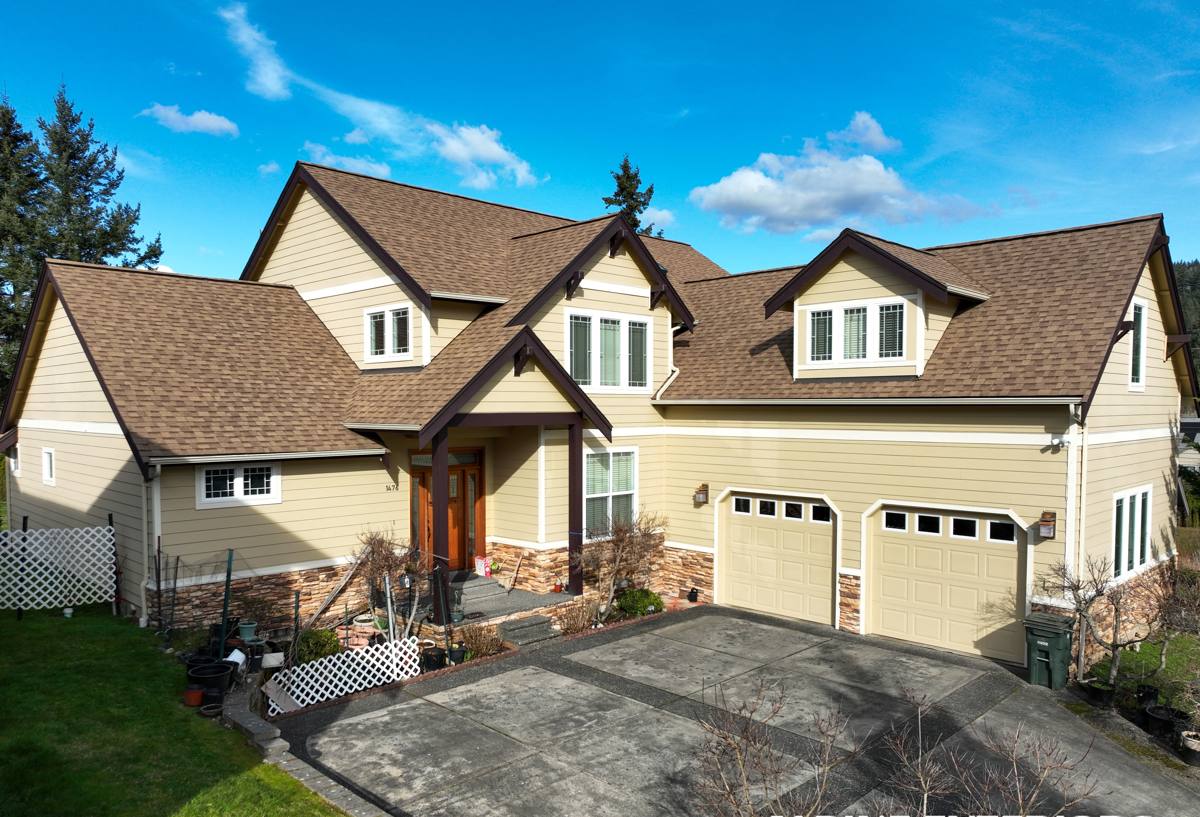
Why Asphalt Shingles Still Make Sense Here
Asphalt shingles remain the most common roofing material in this region for good reason. They're cost-effective, they come in a wide range of styles and colors, they're well understood by insurers and inspectors, and a properly installed shingle roof has a long, predictable track record in Pacific Northwest coastal conditions. The material itself isn't the weak point in most premature roof failures we see — poor ventilation, inadequate underlayment at vulnerable areas, or rushed flashing work is almost always the actual cause.
That means the value in an asphalt shingle roof in Oak Harbor comes less from which exact shingle line you pick and more from whether the crew installing it understands what this climate does to a roof over time.
What Salt Air, Rain, and Moss Actually Do to a Shingle Roof
Salt Air
Airborne salt from the Sound accelerates corrosion on exposed metal — flashing, fasteners, vent stacks, and gutter hardware. Standard fasteners or bargain flashing can start showing rust streaks and pinhole corrosion years before the shingles themselves are due for replacement. Once flashing corrodes, water finds a path underneath it, and the shingles above it can look fine while the roof deck underneath is already compromised.
Driving Rain
Storms here don't just fall straight down — wind pushes rain sideways and up under shingle tabs, especially at ridges, valleys, and any place two roof planes meet. A roof that relies only on the shingles themselves to shed water, without proper underlayment backing them up, is vulnerable exactly where wind-driven rain concentrates.
Moss and Prolonged Moisture
Shaded, north-facing, and low-slope sections of a roof stay damp longer through the fall and winter here, which is exactly what moss needs to take hold. Moss doesn't just look bad — as it grows, it lifts shingle edges, holds moisture against the granule surface, and works its way into fastener lines. Left unaddressed for a few seasons, moss growth shortens shingle life noticeably, particularly on the shaded sides of a roof that get less sun to dry out between rain events.
What a Correct Installation Actually Involves
A shingle roof that's built to handle this climate isn't a different product than a shingle roof anywhere else — it's the same product installed with more attention to the details that matter here:
- Ice and water shield at vulnerable zones: eaves, valleys, and roof penetrations get a self-adhering waterproof membrane underneath the shingles, not just standard felt.
- Synthetic underlayment across the field: a durable, water-resistant layer under the entire roof so the deck stays protected even if wind drives moisture under a shingle edge.
- Balanced attic ventilation: intake at the eaves and exhaust at the ridge, sized correctly for the attic volume, so moisture doesn't condense against the underside of the deck.
- Corrosion-resistant fasteners and flashing: hardware rated to hold up to salt air exposure instead of standard-grade steel that starts rusting within a few seasons.
- Properly stepped and counter-flashed details at chimneys, walls, and roof-to-roof transitions, where the vast majority of leaks actually originate.
- Algae-resistant shingle options where moss and moisture exposure is a known issue on the property.
None of this is exotic. It's standard trade practice done correctly and not skipped to save time or material cost.
Shingle Options: What the Differences Actually Mean
Most residential reroofs in this area come down to a choice between a few tiers of asphalt shingle. Here's how they generally compare:
| Shingle Type | Wind Rating | Best Fit | Trade-Off |
|---|---|---|---|
| 3-tab (standard) | Lower wind rating | Budget-conscious reroofs | Shorter lifespan, less resistant to wind and impact |
| Architectural / dimensional | Higher wind rating | Most Oak Harbor homes | Higher upfront cost, longer service life and better appearance |
| Algae-resistant (AR) coating | Same as base shingle line | Shaded or moss-prone roof sections | Slightly higher cost; reduces but doesn't eliminate moss risk |
| Impact-rated (Class 4) | Highest available | Homes wanting maximum durability | Highest cost; may qualify for insurance discounts in some cases |
For most homes in this area, an architectural shingle with an algae-resistant coating is the practical middle ground — it costs more than 3-tab up front but holds up better to both wind exposure and the moss pressure that comes with shaded, damp conditions.
Our Process for Oak Harbor Roofing Jobs
- On-site inspection: we look at the existing roof deck, flashing, ventilation, and any moss or moisture damage before quoting anything.
- Honest scope: we tell you what genuinely needs replacing versus what can be repaired, and we explain why — no upselling a full tear-off when a targeted repair will do the job.
- Written estimate: materials, labor, and any deck repair contingencies spelled out before work starts, not discovered mid-project.
- Tear-off and deck check: old roofing removed and the deck inspected for rot or soft spots, which are common under long-neglected moss growth.
- Underlayment and flashing first: the waterproofing layer goes in correctly before a single shingle is nailed down.
- Shingle installation to manufacturer spec: correct nail placement, exposure, and pattern — the details that determine whether a warranty is actually valid if you ever need it.
- Final walk-through: we go over the finished roof, ventilation, and any gutter or trim work with you before calling the job done.
Maintenance: What Keeps an Oak Harbor Roof Performing
A well-installed shingle roof still needs occasional attention in this climate to reach its full lifespan. A simple annual checklist:
- Clear moss and debris from shaded roof sections before it builds up thick enough to lift shingle edges
- Keep gutters and downspouts clear so water isn't backing up under the eave line
- Check flashing around chimneys, vents, and skylights for early rust or lifting
- Trim back overhanging branches that keep sections of roof shaded and slow to dry
- After major windstorms, do a visual check for lifted or missing shingles rather than waiting for a leak to show up inside
- Confirm attic ventilation isn't blocked by insulation, which traps moisture against the deck from underneath
What Affects the Cost of a Reroof
| Factor | Why It Matters |
|---|---|
| Roof size and pitch | More surface area and steeper slopes increase labor time and safety requirements |
| Number of layers to remove | Tear-off of existing layers adds labor and disposal cost |
| Deck condition | Rotted or soft sheathing found during tear-off requires replacement before shingles go on |
| Roof complexity | Valleys, dormers, and multiple roof planes mean more flashing and detail work |
| Shingle tier chosen | 3-tab, architectural, and impact-rated products carry different material costs |
| Ventilation upgrades | Adding or correcting intake/exhaust venting is worth doing at the same time as a reroof |
We don't quote a roof over the phone or from a satellite photo — pricing depends on what we actually find on the deck and around the flashing points once we're up there.
Why a Crew That Already Works Oak Harbor Matters
Roofing crews that work all over Western Washington aren't wrong about roofing in general, but they don't always internalize what a specific stretch of coastline does to a roof year after year. A crew that regularly works Oak Harbor and the surrounding Anacortes area has already seen which flashing details fail first in this salt air, which roof orientations grow moss fastest, and which underlayment choices actually hold up to driving rain off the water instead of just meeting minimum code. That local pattern recognition shows up in the details — the ones you don't notice until they either hold up for twenty years or don't.
It also means a shorter distance for warranty callbacks, storm-damage checks, or a quick look if something seems off after a bad windstorm — not a multi-hour drive that makes a small fix feel like a hassle for everyone involved.
Get a Straightforward Estimate
If your Oak Harbor home is due for a reroof, showing early signs of moss damage, or you just want an honest read on how much life is left in your current roof, we're happy to take a look. The estimate is free, there's no pressure, and you'll get a clear explanation of what we see and what it would take to fix it — use the form below to get started.