 Anacortes Window
 Why Cap Sante Homes Are Hard on Windows
Cap Sante sits close to the water, which means the homes up on the bluff and down near the marina take a different kind of weather beating than houses further inland in Skagit County. Salt-laden air off Fidalgo Bay works its way into aluminum hardware, steel fasteners, and even some vinyl components over the years, causing corrosion and pitting you won't see on a window twenty miles east. Add in Anacortes' driving rain — the kind that comes in sideways during a fall or winter blow — and any weak point in a window's flashing or seal becomes a slow leak instead of a dramatic one.
Then there's moss. The long, wet stretch of the Pacific Northwest season keeps north-facing walls and shaded trim damp for months at a time, and moss doesn't need much of a foothold to start holding moisture against wood trim and sills. On a lot of Cap Sante homes, especially older ones with original wood-frame windows, that combination of salt exposure, wind-driven rain, and prolonged dampness is what eventually causes rot, fogged glass, and hardware that won't latch anymore.
None of this means Cap Sante is a bad place to own windows — it just means the job has to be done with that exposure in mind, not treated the same as a replacement on a sheltered lot inland.
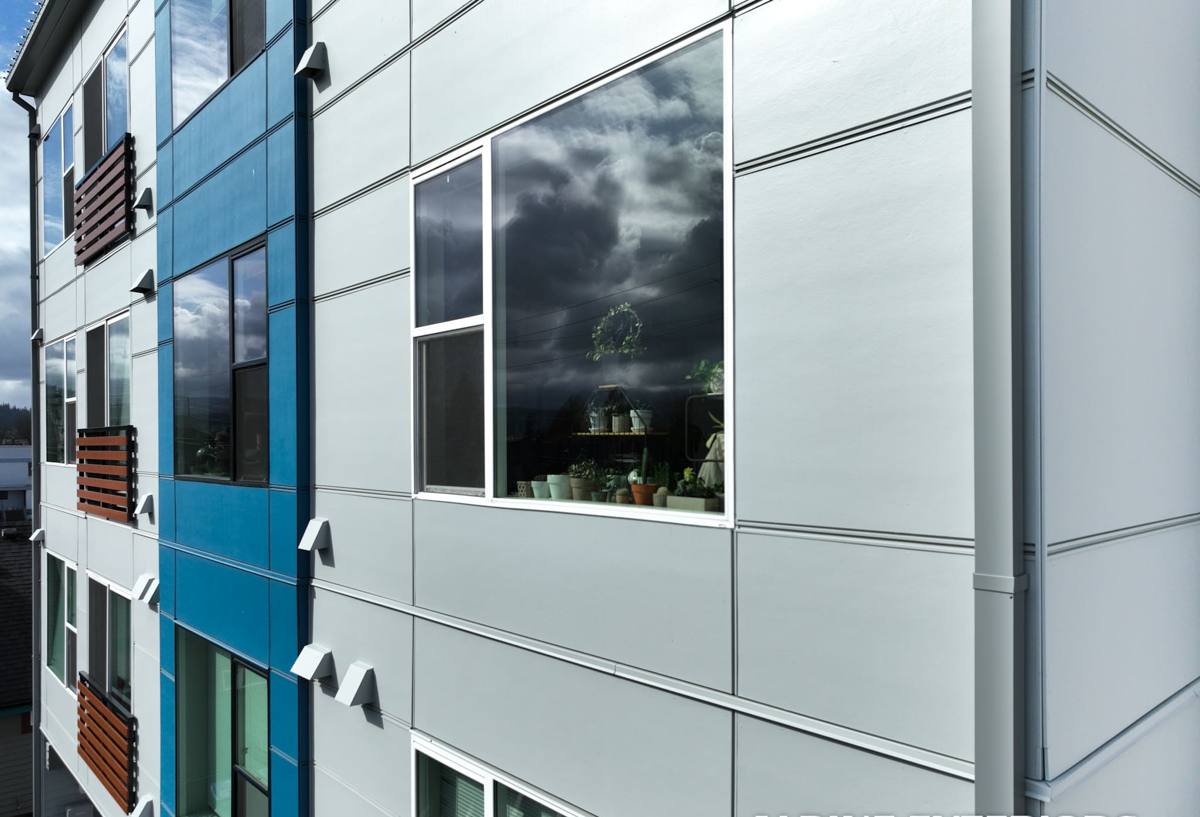
Signs a Cap Sante Home Needs Window Replacement
Some of these show up gradually, so it's easy to get used to a problem before you notice it's actually a problem. Worth checking for:
- Fogging or a hazy film between the panes — the seal has failed and the insulating gas is gone
- Wood sills or lower corners that feel soft, spongy, or show paint bubbling
- Windows that are hard to open, won't stay up, or won't latch tight anymore
- Visible corrosion or a gritty white residue on aluminum frames or hardware
- A noticeable draft near the frame even with the window closed and locked
- Moss or dark staining building up on the sill or lower sash that keeps coming back after cleaning
- Condensation forming on the inside of the glass regularly during cold, damp stretches
- Street or marina noise that seems louder than it should be through a closed window
One or two of these on their own might just mean a repair or a re-caulk. Several at once, especially on the weather-facing side of the house, usually means the window itself has reached the end of its useful life.
What a Correct Replacement Job Actually Involves
Removal and Inspection
Pulling the old window is where problems get found, not created. We check the framing, sill, and sheathing behind the old unit for rot or moisture damage before anything new goes in. On a salt-air, high-rain site like Cap Sante, this step matters more than usual — a window can look fine from outside while the framing behind it has been quietly absorbing moisture for years. If we find damage, we deal with it before installing the new window, not after.
Flashing and Water Management
This is the single most important part of a window installation and the part that's easiest to rush. Proper flashing tape and a correctly lapped water-resistive barrier direct any water that gets past the window itself back out, rather than letting it pool behind the trim. Given how much wind-driven rain Anacortes sees off the Sound, a window that's air-sealed but not properly flashed will eventually leak — it's just a matter of time.
Insulation and Air Sealing
The gap between the new window frame and the rough opening needs to be filled with a proper low-expansion foam or backer rod and sealant — not stuffed with fiberglass, which does little to stop air movement. This is what actually stops the draft you feel standing near an old window.
Trim and Finish Work
Interior and exterior trim gets reinstalled or replaced to match, caulked at the right joints (and left open where it needs to breathe), and painted or finished to blend with the house. A window installed correctly on the water-management side but finished sloppily still looks like a bad job — the trim work is what the homeowner actually sees every day.
Choosing the Right Window for a Cap Sante Property
Frame material matters more here than it would on a sheltered inland lot, because of the salt air and moisture exposure. Here's how the common options actually compare for this kind of site:
| Frame Material | Salt Air / Moisture Behavior | Maintenance | Typical Lifespan |
|---|---|---|---|
| Vinyl | Won't corrode; performs well near saltwater | Low — occasional cleaning | 20-30+ years |
| Fiberglass | Excellent — dimensionally stable, resists moisture and salt | Low | 30-40+ years |
| Wood (unclad) | Vulnerable — needs consistent upkeep to avoid rot | High — regular painting/sealing | Varies widely with maintenance |
| Wood-clad (vinyl or aluminum-clad) | Good on the exterior face; interior wood still needs some care | Moderate | 25-35 years |
| Aluminum | Prone to corrosion and pitting in salt air over time | Moderate | Varies; corrosion shortens lifespan near water |
We generally steer Cap Sante clients away from bare aluminum frames and unclad wood on the more exposed sides of a house — not because either product is bad in the right setting, but because the maintenance burden and corrosion risk are higher this close to the water. Vinyl and fiberglass tend to be the more honest long-term choice for a low-maintenance result out here.
Glass Packages Worth Considering
A double-pane window with a good low-E coating and argon fill handles our climate fine for most homes. If the house faces the water directly or gets a lot of wind noise off the bay, a triple-pane or upgraded acoustic laminate glass option can be worth the added cost — it's a real difference in comfort and noise, not just a sales upsell.
What Affects the Price
Every house is different, so we won't quote a number without seeing the job, but here's what generally moves the price up or down:
| Factor | Effect on Cost |
|---|---|
| Frame material (vinyl vs. fiberglass vs. wood-clad) | Fiberglass and wood-clad run higher than standard vinyl |
| Standard replacement vs. full-frame replacement | Full-frame costs more but is often necessary where rot is found |
| Number and size of windows | Larger openings and picture windows cost more per unit |
| Glass package (double vs. triple pane, acoustic laminate) | Upgraded glass adds cost but improves comfort and noise control |
| Trim and exterior finish complexity | Custom trim profiles or matching older siding details add labor |
| Hidden framing repair discovered at removal | Rot or water damage found behind old windows adds to the scope |
As a broad range, most straightforward vinyl window replacements in this area land somewhere in the low-to-mid hundreds per window installed, with fiberglass, larger openings, and any needed framing repair pushing that higher. A written estimate after we've actually looked at your windows is the only way to get a real number.
Our Process
- On-site assessment — we look at each window, the framing condition, and how the house is oriented to wind and rain before recommending anything
- Written estimate — a clear scope of work and pricing, no pressure to decide on the spot
- Product selection — we walk through frame material and glass options suited to your specific exposure on the property
- Installation — proper removal, framing repair if needed, flashing, insulation, and finish work as outlined above
- Walkthrough — we go over the finished work with you before calling the job done
Why Local Experience in Cap Sante Matters
A crew that's worked windows all over Skagit County knows the difference between a window failing on a dry, sheltered lot and one failing on an exposed, salt-air site near the water. That shows up in small decisions — which flashing tape holds up long-term in this climate, where moss buildup tends to start, which frame materials actually hold up versus which ones just look fine at first. It also means we're not learning on your house. We've seen how these homes age in this specific environment, and we plan the installation around that, not around a generic install checklist written for a different climate.
After Installation: Keeping Windows Performing
New windows still need basic upkeep, especially in a moss-prone, salt-air environment. A rinse of frames and sills a couple times a year clears salt residue before it can sit and corrode hardware. Keeping gutters and nearby vegetation from dumping runoff directly onto a window helps prevent the moss and staining that plague shaded, damp walls. And checking exterior caulk lines once a year — reapplying where it's cracked or pulled away — keeps the water-management system doing its job long after installation day.
If you're seeing drafts, fogged glass, or sticking hardware on windows facing the water or the weather side of your Cap Sante home, it's worth having them looked at before a small issue turns into a framing repair. We're happy to come out, take a real look, and give you a straightforward, no-pressure estimate — just fill out the form below to get started.