 Anacortes Window
 Storm Damage Roof Repair for Flounder Bay
Flounder Bay sits right on the water on Fidalgo Island, and that location cuts both ways. It's part of what makes the area a great place to live, but it also means the homes here take a harder beating from weather than houses further inland in Skagit County. Wind off the water, salt-laden air, and driving rain during winter storms all put extra stress on a roof over time. When a storm passes through and leaves behind lifted shingles, a leak, or debris damage, waiting rarely makes things better — a small entry point for water almost always turns into a bigger repair if it sits through another wet season.
This page is about one thing: storm damage roof repair for homes in and around Flounder Bay. Not a general roofing overview, not a sales pitch for a full tear-off you don't need — just what storm damage actually looks like out here, what a proper repair involves, and how to tell if you're dealing with a quick fix or something bigger.
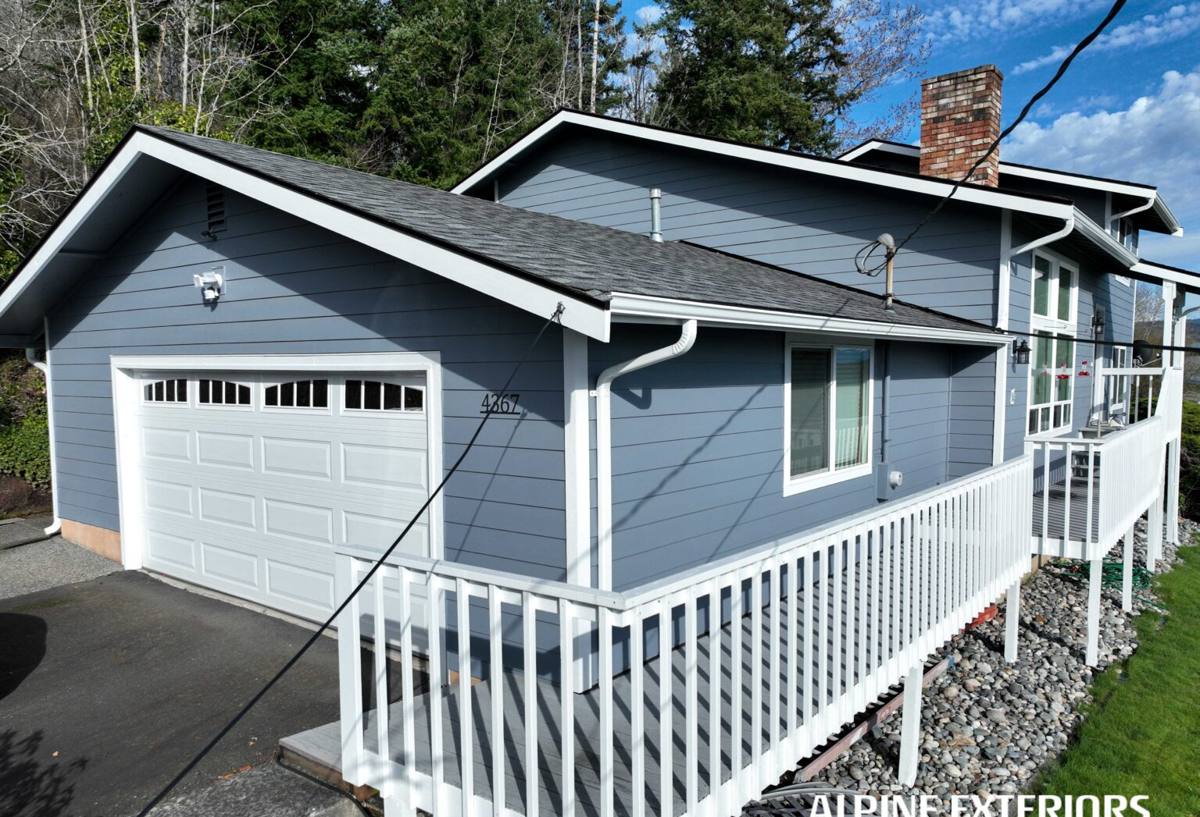
Why Flounder Bay's Weather Is Hard on Roofs
Anacortes and the rest of Skagit County get a fair amount of rain most winters, but waterfront neighborhoods like Flounder Bay deal with a few extra factors that inland roofs don't have to handle as often.
Salt Air
Being close to the water means airborne salt settles on roofing materials and metal components over time. It doesn't destroy a roof by itself, but it does accelerate corrosion on exposed fasteners, flashing, and vents, and it can shorten the working life of lower-grade metal roofing accessories. It's one more reason we pay attention to what metal and hardware we use on repairs out here.
Driving Rain and Wind
Storms coming off the water tend to drive rain sideways instead of straight down, which pushes water into places a roof isn't necessarily built to shed water from — under shingle tabs, around flashing edges, and into any gap that's already started to open up. Wind gusts during winter storms are also what typically lift shingles or tear off ridge caps in the first place.
A Long Moss Season
Cool, damp conditions for much of the year make this a strong growing environment for moss on north-facing and shaded roof slopes. Moss holds moisture against the roofing material, works its way under shingle edges, and can lift them just enough that wind and rain finish the job. A lot of the "storm damage" calls we get actually started months earlier as moss growth that went unaddressed.
Common Storm Damage We See in This Area
- Lifted or missing shingles along ridges, edges, and any area where moss had already loosened the seal
- Flashing damage around chimneys, skylights, and roof-to-wall transitions, where wind-driven rain finds its way in first
- Gutter and downspout damage from wind or falling branches, which then backs water up under the roof edge
- Granule loss and bruising on composition shingles from wind-blown debris
- Small punctures or soft spots from limbs or debris, especially on roofs with overhanging trees
- Interior leaks that show up days after a storm, once enough water has worked through
Some of this is obvious from the ground. A lot of it isn't — a few lifted shingles or a compromised flashing seam can be nearly invisible from the driveway and still be letting water in.
What a Correct Storm Repair Actually Involves
A Real Inspection, Not a Guess
The repair has to match the actual damage, which means getting on the roof (or using a ladder and camera when conditions call for it) rather than eyeballing it from the yard. We check the obvious damage area first, then look at the surrounding roof — storms rarely damage just one spot, and a repair that ignores the shingles or flashing right next to the problem area tends to fail again in the next storm.
Matching Materials
Mismatched shingles or flashing that doesn't tie into the existing roofing correctly is one of the most common causes of repeat leaks after a "repair." We match shingle type, color, and profile as closely as possible, and we don't cut corners on flashing just because it's a smaller job — a poorly lapped flashing detail will leak eventually, storm or no storm.
Underlayment and Deck Condition
If water has been getting in for a while, the underlayment and roof deck underneath may be damaged even if the shingles above look mostly fine. Part of a proper repair is checking for soft or discolored decking once the damaged shingles are pulled back, not just laying new shingles over a compromised deck.
Ventilation and Moisture Path
On homes near the water, we also look at whether poor attic ventilation is contributing to moisture problems — trapped humid air can make roof decking more vulnerable to rot and can accelerate moss growth from underneath as well as above.
Our Process
1. Assessment and Documentation
We walk the roof, document the damage with photos, and give you a straight answer on whether you're looking at a targeted repair or something more extensive. If the damage is storm-related and you're planning to file an insurance claim, this documentation is also what your adjuster will want to see.
2. A Written Scope
You get a clear description of what's being repaired, the materials being used, and a price before any work starts — no open-ended "we'll see what we find" billing on a job this size.
3. The Repair
We remove and replace only the damaged materials, tie new flashing and shingles into the existing roof correctly, and check the deck underneath before closing everything back up.
4. Cleanup and Walkthrough
Debris and old materials are cleared from the property, and we walk you through what was done and what to watch for going forward — particularly if moss or tree overhang was part of what caused the damage in the first place.
Repair or Replacement? Honest Cost Factors
Not every storm-damaged roof needs to be replaced, and not every roof can be responsibly patched. Here's how we think through it:
| Factor | Repair Usually Makes Sense | Replacement Should Be Considered |
|---|---|---|
| Roof age | Under 15-20 years, good condition elsewhere | Near or past expected lifespan |
| Extent of damage | Localized to one area or slope | Widespread across multiple slopes |
| Underlying deck | Solid, no rot found | Soft, stained, or rotted decking |
| Moss/algae history | Minor, treatable growth | Long-term buildup with shingle degradation |
| Prior repairs | First or second repair on this roof | Repeated patches in the same areas |
We'll tell you honestly which category your roof falls into. A roof with one wind-damaged area and otherwise sound shingles doesn't need a full replacement, and we're not going to sell you one.
Insurance Claims and Storm Damage
Many storm repairs in this area are covered, at least in part, by homeowners insurance, though coverage details vary by policy and by how the damage occurred. We're happy to provide the documentation and photos your insurer's adjuster will ask for, and we can walk you through what we're seeing on the roof so you understand the scope before you file. We don't handle the claim itself — that's between you and your carrier — but we won't leave you guessing about what needs to be fixed.
Signs You Should Have Your Roof Checked After a Storm
- Shingles visible in the yard or gutters after wind
- A new water stain on a ceiling or upper wall
- Visible gaps, curling, or missing shingles from the ground
- Sagging or discoloration in the gutter line
- Daylight visible through the attic roof deck
- Moss buildup that's noticeably thicker than last season
- A recent storm with sustained wind or heavy limb fall nearby
If any of these sound familiar, it's worth having someone look before the next round of weather moves through.
Why Hire a Crew That Already Works Flounder Bay
Roofing crews that mostly work inland don't always account for what salt exposure and marine wind do to fasteners, flashing, and shingle wear over time. Working regularly in waterfront Skagit County neighborhoods means we're used to what actually fails here versus what fails on a roof twenty miles inland — and we build repairs accordingly, rather than applying a one-size-fits-all fix. That familiarity also means less time spent diagnosing and more time spent fixing.
If a recent storm left you with damage, or you're just not sure whether that patch of moss and a few loose shingles add up to a real problem, we're glad to take a look. Reach out for a free, no-pressure estimate using the form below — we'll give you a straight read on what's going on and what it would take to fix it right.