 Anacortes Window
 Skyline Homes Face a Tougher Climate Than Most
Skyline sits on the west side of Fidalgo Island, close enough to open water that homes here take a different kind of weather than siding was designed for in most of the country. Salt-laden air moves off Rosario Strait and settles onto siding, trim, and fasteners day after day. Wind-driven rain doesn't just fall straight down — it gets pushed sideways into wall assemblies, gaps, and seams that would stay dry in a more sheltered part of Skagit County. And the long, wet Pacific Northwest shoulder seasons mean moss, algae, and mildew get months at a time to take hold on any surface that stays damp.
None of that is unusual for this stretch of Anacortes. But it does mean that siding installed without those conditions in mind tends to fail early — not always dramatically, but through slow, steady problems: swelling seams, staining, soft spots at the bottom courses, and paint that needs redoing years ahead of schedule. A correct installation in Skyline has to account for salt exposure, wind-driven moisture, and moss from day one, not as an afterthought.
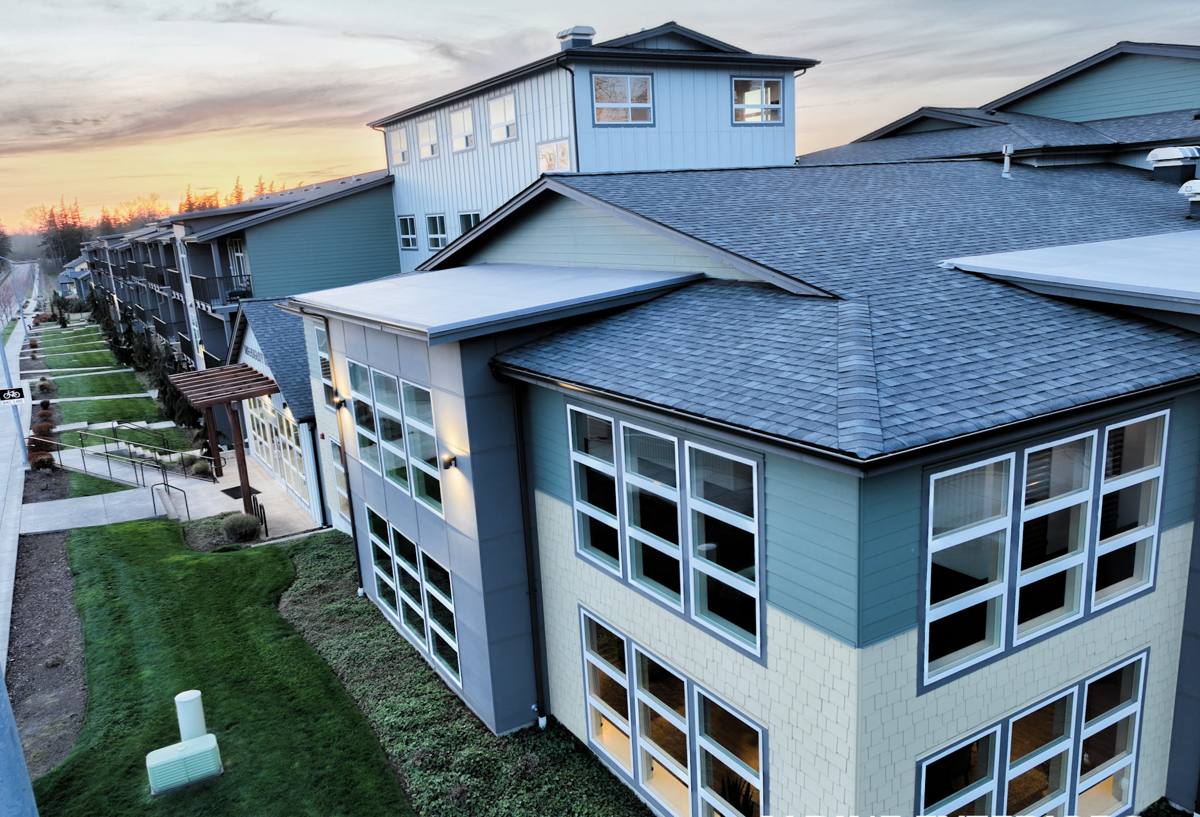
What Salt Air, Driving Rain, and Moss Actually Do to Siding
Salt Air
Airborne salt is corrosive to metal fasteners, flashing, and trim if the wrong materials are used, and it accelerates the breakdown of coatings that aren't formulated to resist it. Over years, this shows up as rust streaking, pitted hardware, and finishes that chalk or fade faster than they should.
Driving Rain
Wind off the water pushes rain into laps, corners, and penetrations rather than letting it simply run off the wall. If the water-resistive barrier, flashing, and panel overlaps aren't installed to spec, that moisture finds its way behind the siding — where it can sit against sheathing and framing long enough to cause rot, even though the surface still looks fine.
Moss and Organic Growth
Shaded north- and west-facing walls, tree cover, and the sheer number of damp days each year give moss, algae, and mildew a long runway. Materials that hold moisture at the surface — or that have soft spots where spores can gain a foothold — will show green and black staining well before the siding is actually worn out.
Why We Only Install James Hardie Fiber Cement
We standardized on James Hardie fiber cement siding for every project, including here in Skyline, and we don't install vinyl, LP SmartSide, or other fiber cement brands. That's a deliberate call, not a sales preference. Fiber cement is inherently non-combustible and dimensionally stable — it doesn't expand and contract with moisture the way wood-based products can, which matters directly in a climate that alternates between soaking wet and salty dry air.
James Hardie's ColorPlus finish is baked on at the factory under controlled conditions, which gives it better fade and moisture resistance than a field-applied coat of paint, and it comes with its own finish warranty. Hardie also builds region-specific HZ product lines engineered for exactly the kind of climate zone Anacortes sits in — wetter, more humid, more exposed to marine air than the interior of the state. Combined with a strong transferable warranty, that combination is why we put Hardie on homes instead of the alternatives, and it's why our other pages go into more detail on the specific trade-offs of vinyl and engineered wood siding if you want to compare.
What a Correct Siding Installation Actually Involves
Siding is a system, not just a surface. The panel is the part you see, but most of what determines whether it lasts is hidden underneath it. On a Skyline home, we pay particular attention to:
- Water-resistive barrier: a continuous, properly lapped weather barrier behind the siding, with seams taped and penetrations sealed before a single panel goes up.
- Flashing at every opening: windows, doors, and roof-to-wall transitions get flashed so wind-driven rain is directed out and down, not sideways into the wall.
- Correct clearances: siding held off the roofline, deck surfaces, and grade per manufacturer spec, so splashback and standing moisture don't sit against the bottom courses.
- Fastener choice: corrosion-resistant fasteners appropriate for coastal exposure, driven at the correct depth and spacing — overdriven or misplaced fasteners are one of the most common causes of early siding failure.
- Panel gaps and caulking: proper gapping at butt joints and trim, sealed with a high-quality, flexible sealant rated for exterior use — not just whatever tube is on the truck.
- Field-cut edge sealing: any cut edge of a Hardie panel gets sealed so it doesn't wick moisture at the cut.
Skip any one of these steps and the siding can still look fine on install day. The problems show up two, five, or ten years later — usually as rot or staining that costs far more to fix than it would have to do right the first time.
Our Installation Process
- On-site assessment: we walk the exterior, check the current siding and sheathing condition, note exposure direction, moss patterns, and any moisture damage already present.
- Scope and product selection: we recommend the Hardie product line and profile that fits the home's style and exposure, and put together a clear, itemized estimate.
- Tear-off and inspection: old siding comes off and we inspect the sheathing underneath for hidden rot or damage before covering it back up.
- Weather barrier and flashing: a new, continuous water-resistive barrier goes on, with flashing detailed at every window, door, and transition.
- Siding installation: panels are installed to manufacturer spec — correct fastening, clearances, and sealing at every joint and edge.
- Trim, caulking, and cleanup: trim work is finished, all seams and penetrations are sealed, and the site is cleaned up before we walk it with you.
- Final walkthrough: we go over the finished work together so you know exactly what was done and how to maintain it.
What Siding Installation Typically Costs
Every home is different, and we'll always give you a specific number after seeing the project, but these are the main factors that move the price up or down on a Skyline job:
| Cost Factor | Why It Matters |
|---|---|
| Home size and wall area | More square footage of wall means more material and labor |
| Number of stories | Second-story and steep-site work requires more staging, scaffolding, and time |
| Existing siding removal | Tear-off, disposal, and sheathing repair add labor beyond a straightforward re-side |
| Trim, corners, and window/door count | More cuts and detail work around openings increases labor time |
| Panel profile chosen | Lap, shingle, and panel styles vary in material and installation cost |
| Site access and exposure | Waterfront and hillside lots can require extra staging or protective measures during install |
As a general rule, a full re-side costs more than new construction siding on bare sheathing, because of the demolition, disposal, and any hidden repair work that turns up once old siding comes off.
Signs a Skyline Home May Need New Siding
Because of the exposure this area gets, it's worth checking your siding more often than a homeowner further inland might. Watch for:
- Persistent moss, algae, or dark staining that comes back soon after cleaning
- Soft, spongy spots when you press on the siding, especially near the bottom courses
- Paint that's peeling, bubbling, or wearing unevenly, particularly on the sides facing the water or prevailing wind
- Warping, buckling, or visible gaps between panels
- Rust streaking around fasteners or trim
- Rising utility bills or drafts that suggest the wall assembly isn't sealing the way it should
Any one of these can be minor on its own. Several showing up together, or moisture damage found once you look behind the siding, usually means it's time to talk about a full replacement rather than another round of patching.
Why It Matters That We Already Work Skyline
A crew that only occasionally works this close to the water can miss things that are obvious to one that does it regularly — which fastener grade actually holds up against salt air here, which walls in this specific microclimate take the worst of the wind-driven rain, and how much clearance really needs to be built in around grade and roof lines given how wet this part of Skagit County stays. We also know the practical side: what Anacortes permitting looks like for a re-side, and how to sequence a job around this area's weather windows so panels and sealants are installed in the conditions they're rated for.
That local familiarity doesn't replace doing the work correctly — it just means fewer surprises, and a finished install built for the specific conditions your home actually faces rather than a generic installation done the same way it would be anywhere else in the state.
Get a Straightforward Estimate
If your Skyline home's siding is showing its age, or you're planning ahead before the next wet season sets in, we're happy to take a look and give you an honest read on where things stand. Reach out for a free, no-pressure estimate using the form below — there's no obligation, and no upsell into a product we wouldn't put on our own homes.