 Anacortes Window
 Building Decks for Skyline's Exposure
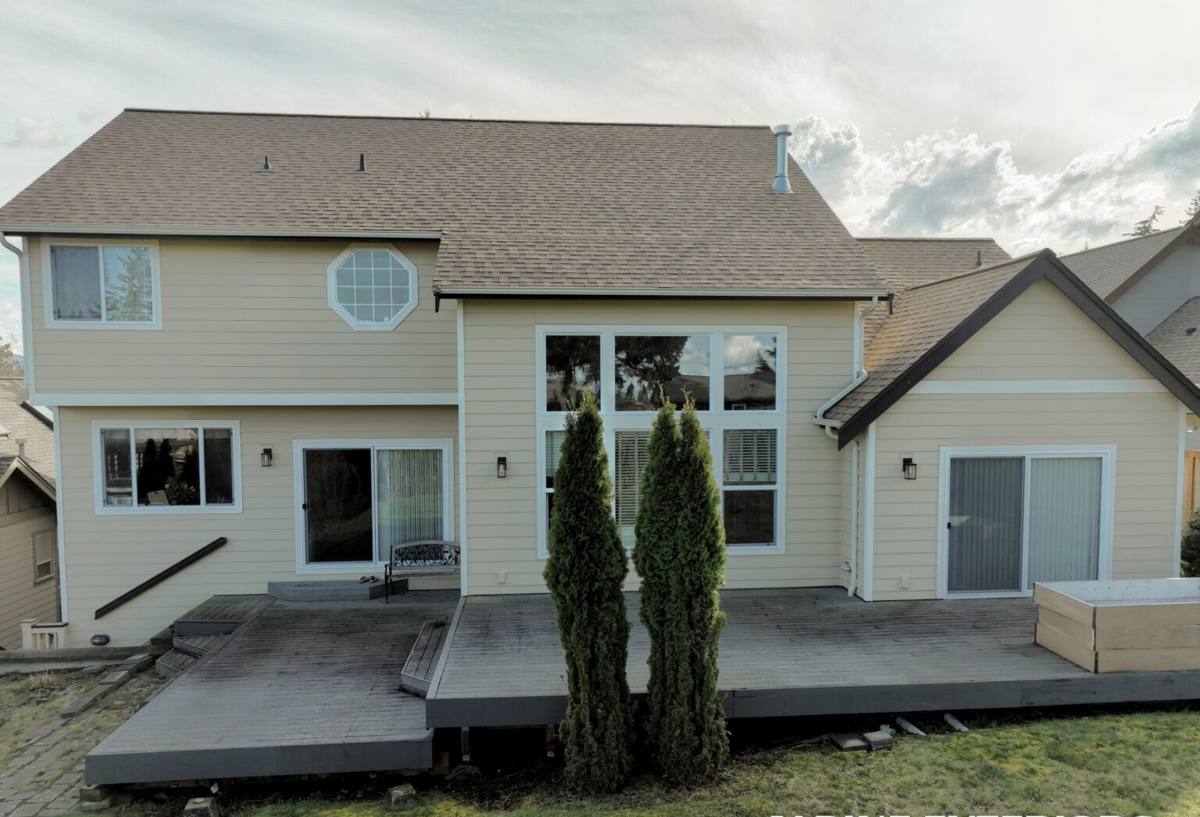
Skyline sits up on the higher ground above Anacortes, which means more open exposure to wind and weather moving in off the water than you'd find in a more sheltered part of town. That elevation is part of what makes the views worth having, but it also means decks up here take a harder hit from salt-laden air, wind-driven rain, and the moss that colonizes anything shaded and damp for half the year. A deck built the way you'd build one in a dry inland climate will show it within a few seasons — cupped boards, rust streaks running down the siding, soft spots where the ledger meets the house. Building for Skyline means building for the exposure that comes with the site, not just filling in square footage off a plan.
What Skagit County's Climate Actually Does to a Deck
None of this is exotic weather. It's the ordinary combination of salt air, driving rain, and a moss season that runs long through fall, winter, and spring — but that combination is exactly what wears out decks that weren't detailed with it in mind. The failures we see are predictable, and predictable failures are the ones you can build around.
Salt Air and Hardware
Airborne salt accelerates corrosion on anything metal — fasteners, joist hangers, post bases, railing brackets. Standard coated deck screws can start bleeding rust into the surrounding wood or composite within a couple of years on an exposed Skyline lot. Once a fastener starts corroding, it loses grip strength before it ever looks obviously bad, which is the part homeowners usually don't see coming.
Driving Rain and the Ledger Connection
Where a deck attaches to the house — the ledger board — is the single most common point of hidden rot on any deck in this region, and wind-driven rain makes it worse here than in a calmer inland yard. Water pushed sideways by wind finds its way behind poorly flashed ledger boards and sits there, out of sight, until the framing underneath is compromised.
Moss, Shade, and Standing Water
Anacortes' moss season isn't just a cosmetic problem. Moss and algae hold moisture against decking surfaces long after a storm has passed, which keeps wood fibers wet and speeds up rot, and turns any board without decent slip resistance into a hazard once temperatures drop. Decks tucked under trees or on the shaded side of a Skyline home need drainage and airflow considered from the start, not power-washed away after the fact every spring.
Decking Material Options for a Skyline Build
There's no single right material for every project — it depends on budget, how much maintenance you're willing to do, and how much sun or shade the deck actually gets. Here's how the common options hold up under this area's conditions specifically.
| Material | Upfront Cost | Maintenance | How It Handles Salt Air & Moisture |
|---|---|---|---|
| Pressure-treated wood | Lowest | Annual cleaning, re-staining every 2–3 years | Good if maintained; prone to splintering and graying fast if neglected |
| Cedar | Moderate | Regular sealing to keep its color and resist moisture | Naturally rot-resistant but still needs upkeep near salt air |
| Composite decking | Higher | Occasional washing, no staining or sealing | Very stable in wet/damp cycles; won't rot, but can stay damp-looking under heavy moss buildup if not rinsed |
| PVC decking | Highest | Lowest — mostly just washing | Fully moisture-proof; best resistance to salt air and standing water of the group |
We'll walk through these trade-offs against your actual budget and how much of the yard is exposed versus shaded — a full-sun deck on an open Skyline lot behaves differently than one tucked under fir cover, and the right material for one isn't automatically right for the other.
Framing and Substructure: Where Decks Actually Fail First
The decking boards are what you see and stand on, but the substructure underneath is what determines whether the deck is still solid in fifteen years. Our standard on Skyline builds includes joist tape over framing lumber to keep fasteners from sitting in standing moisture, corrosion-resistant hardware rated for the exposure, and post bases set to keep wood off grade contact entirely. None of that is visible once the deck is finished, which is exactly why it's worth asking a contractor about before the boards go down — it's the part that's hard to inspect later and expensive to fix if it's done wrong the first time.
Ledger flashing gets particular attention on every job we build here. A properly flashed ledger sheds water away from the house rather than trapping it against the rim joist, and it's one of the cheapest details to get right at the time of the build and one of the most expensive to repair once rot has set in behind the siding.
Railings, Stairs, and Site-Specific Layout
Skyline lots often have real elevation change, which means stairs, multi-level decks, and railing height requirements come into play more often than on a flat in-town lot. Wind exposure also factors into railing choice — solid or semi-solid railing sections can block a view as much as they block wind, so there's a real trade-off between keeping sightlines open and cutting down on the wind load a deck's edge takes in a storm. Cable rail and open baluster designs let more wind and view through but need corrosion-resistant hardware to hold up here long-term. We talk through this with every homeowner rather than defaulting to one style, because the right answer depends on which side of the house the deck sits on and how exposed that side actually is.
Permits and Code Around Anacortes and Skagit County
Most attached or elevated decks in and around Anacortes require a permit, and setback and height rules can vary depending on where the lot sits and what's already built on it. We handle the permit application and inspection scheduling as part of the job rather than leaving it for the homeowner to sort out, but it's worth knowing going in that a deck built without the right permit can turn into a real problem at resale — buyers' agents and inspectors both check for it. If you're not sure whether your project needs one, that's a five-minute question worth asking before any lumber is ordered.
Our Process, Start to Finish
- Site visit and design: we walk the lot, look at sun/shade exposure, slope, and how the deck will connect to the house, and talk through material and layout options.
- Written quote: a clear breakdown of materials, labor, and timeline — no vague allowances that turn into surprises later.
- Permitting: we submit and manage the permit through the city so you're not the one chasing it down.
- Build: substructure first, with every hidden detail — flashing, hardware, drainage — done to the same standard whether or not it'll ever be seen again.
- Final walkthrough: we go over the finished deck with you, including basic care so it holds up through its first moss season and beyond.
Why a Crew That Already Works Skyline Matters
A contractor who's built decks on Skyline before already knows the exposure this neighborhood gets, has a feel for how the elevation and tree cover on a given street affect drainage and wind, and isn't guessing at what hardware or flashing detail actually holds up here versus what looks fine on paper. That familiarity shows up less in the sales pitch and more in the parts of the job you don't see — the fastener spec, the flashing detail, the slope built into the substructure — which are exactly the things that determine whether a deck is still solid in ten years or needs its ledger rebuilt in five.
Keeping a Skyline Deck in Good Shape Year-Round
Even a well-built deck needs a little seasonal attention in this climate. A short checklist goes a long way toward getting the full lifespan out of the materials you paid for:
- Sweep debris and needles out of gaps between boards before fall rains set in — trapped organic material is what feeds moss growth
- Rinse off moss and algae buildup before it gets a real foothold, rather than waiting for a heavy power-wash once a year
- Check railing posts and stair connections for movement once a year — loose hardware is easier to catch early than after it's failed
- Keep gutters and downspouts near the deck clear so runoff isn't draining directly onto or under it
- Re-seal or re-stain wood decking on schedule rather than waiting until it visibly grays
- Look underneath the deck once a year for standing water or signs of rot at the ledger connection
If you're weighing a new deck for a Skyline property or wondering whether an existing one is holding up the way it should, we're happy to take a look and put together a free, no-pressure estimate — just fill out the form below.