 Anacortes Window
 Metal Roofing Built for Sedro-Woolley's Climate
Sedro-Woolley sits far enough inland from the water that people sometimes assume the coastal weather problems belong to Anacortes and the islands, not to them. That's only partly true. Skagit County's marine air still reaches Sedro-Woolley, the valley catches its own share of driving rain off the foothills, and the shaded, tree-lined lots common in and around town keep roofs damp longer than homes out in the open. Add a long, mild moss season and you have a set of conditions that will find every weakness in a roofing system, slowly, over years, rather than all at once. A roof that's a good match for a dry climate is not automatically a good match for this one.
This page is about one job in one place: installing metal roofing on homes in Sedro-Woolley. Not a general overview of metal roofing everywhere, and not a pitch for every roofing product we carry. Just what actually matters here, what a correct installation looks like, and how we approach the work.
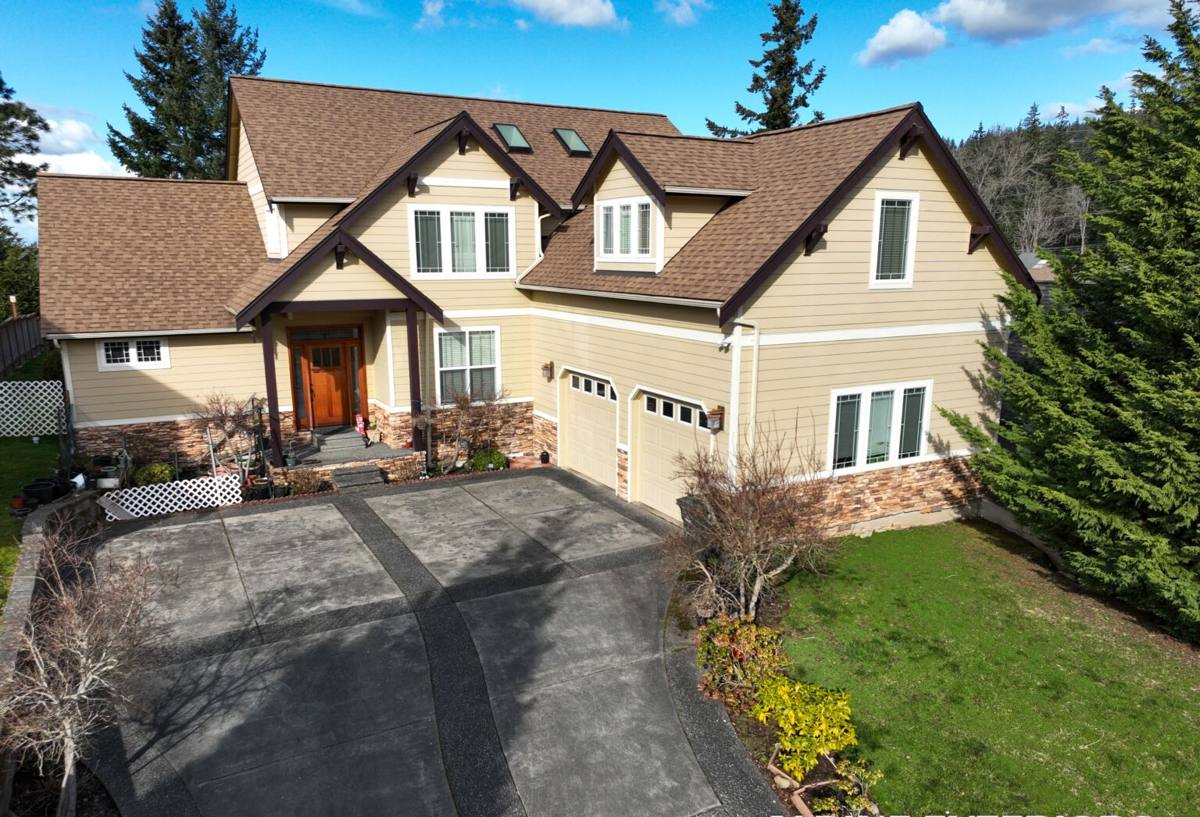
What the Local Climate Does to a Roof Over Time
Understanding the failure modes specific to this area is the whole reason to plan a roof around them instead of installing whatever's standard elsewhere.
Moisture That Doesn't Leave
Sedro-Woolley gets a steady volume of rain across fall, winter, and spring, and a lot of that rain lands on roofs shaded by mature trees or set into hillside lots. Shade slows drying. A roof surface that stays damp for days at a stretch, rather than drying out between storms, is exactly the environment moss, moss, and algae need to establish.
Moss Season
Western Skagit County's moss season runs long — realistically most of the year on shaded or north-facing slopes. Moss isn't just cosmetic. It holds water against roofing material, works into seams and laps, and on some roofing types it lifts edges and accelerates granule or coating loss. A roofing system's resistance to moss establishment, and how easy it is to keep clean, should be part of the decision, not an afterthought.
Driving Rain and Wind-Driven Water
Storms moving through the valley often bring rain at an angle, not straight down. Wind-driven rain finds its way under improperly lapped panels, undersized flashing, and fastener penetrations that weren't sealed correctly. A roof that performs fine in calm rain can still leak under wind-driven conditions if the details weren't built for it.
Salt-Tinged Air
Sedro-Woolley is inland, but Skagit County as a whole sits close enough to Puget Sound and Bellingham Bay that airborne salt is a real, if lower-grade, factor compared to a landlocked climate. It's a slower corrosion driver here than it is right on the water in Anacortes, but it still matters for metal fasteners, flashing, and panel coatings over a 30-, 40-, or 50-year roof life.
Temperature Swings
Cold, damp winter mornings followed by warmer afternoons, and the reverse in shoulder seasons, put roofing material through repeated expansion and contraction. Fastener holes, panel laps, and sealant joints all take that cycling. A roof detailed for a stable climate can loosen up faster here.
Why Metal Roofing Is a Strong Fit for This Area
Metal isn't the right roofing choice for every homeowner or every budget, and we'll say so honestly if it isn't the right fit for yours. But for the conditions above, it has real, specific advantages:
- A hard, smooth, continuous surface gives moss and algae far less to grab onto than a granulated or porous surface, and what does establish is easier to rinse off.
- Correctly installed metal sheds wind-driven rain efficiently because of steep panel profiles and fewer horizontal seams than a shingled roof.
- Quality coated steel and aluminum panels resist corrosion well in a mixed inland/coastal climate like Skagit County's, especially with the right fastener and flashing metals matched to the panel.
- Metal roofing typically outlasts asphalt shingles by decades, which matters on a roof that's also dealing with near-constant damp exposure and slow material fatigue.
- Steep-profile panels and proper snow-and-ice detailing handle the valley's occasional heavy winter rain and cold snaps without the freeze-thaw wear asphalt can show over time.
Panel Types: What We're Actually Comparing
"Metal roofing" isn't one product. The panel type and installation method make a real difference in how a roof performs in this specific climate.
| Panel Type | How It's Fastened | Best Fit For | Trade-Off to Know |
|---|---|---|---|
| Standing Seam | Concealed clips, no exposed fasteners through the panel face | Long-term weathertightness, low-slope sections, homes prioritizing longevity | Higher material and labor cost than exposed-fastener systems |
| Exposed-Fastener Panel | Screws driven through the panel face into the deck or purlins | Budget-conscious projects, simpler roof shapes, outbuildings | Fasteners and their washers age and need periodic inspection; more penetration points to seal correctly |
| Metal Shingle / Shake Panel | Interlocking panels resembling shingle or shake profiles | Homeowners who want a metal roof's durability with a more traditional look | More seams and laps than standing seam, so installation detail quality matters more |
For most Sedro-Woolley homes we recommend standing seam or a well-engineered metal shingle system, because fewer exposed penetrations means fewer places for wind-driven rain and moss to work their way in over a multi-decade roof life. Exposed-fastener panels aren't wrong — they're a legitimate, cost-effective option, especially on secondary structures — but they carry a higher long-term maintenance burden in a climate this damp, and we say that plainly rather than upselling around it.
What a Correct Metal Roof Installation Actually Involves
The panels themselves get most of the attention, but on a roof built for this climate, the details underneath and around the panels are what actually determine whether it performs for decades or develops problems in five to ten years.
Deck Inspection and Prep
Before any panel goes down, the existing roof deck needs to be checked for rot, soft spots, and prior water damage — common on older Sedro-Woolley homes with a history of moss buildup or slow leaks. Installing new roofing over a compromised deck just hides the problem under new material.
Underlayment
A high-quality synthetic or self-adhered underlayment, not a bargain-grade felt, is the roof's real backup water barrier. In a climate with this much wind-driven rain and shaded-roof moisture, underlayment quality and coverage at seams and penetrations matters as much as the panel choice on top of it.
Fasteners and Flashing
Fastener and flashing metal needs to be compatible with the panel metal to avoid galvanic corrosion, and gasketed fasteners need to be driven correctly — not overdriven, which crushes the seal, and not underdriven, which leaves a gap. Flashing at valleys, chimneys, skylights, and wall transitions is where the majority of roof leaks actually originate, on any roofing material, and it's the part of the job that separates a careful installer from a fast one.
Ventilation
Metal roofing needs proper attic and roof-deck ventilation to manage condensation, especially given the region's damp, mild winters. Poor ventilation can cause moisture problems from underneath the roof that have nothing to do with the panels themselves.
Panel Layout and Seaming
Panel runs should be laid out to minimize seams in the paths where water concentrates, and standing seam panels need to be mechanically seamed correctly and consistently — a rushed or inconsistent seam is a future leak point, even if it looks fine on installation day.
How Our Process Works in Sedro-Woolley
A roofing job in Sedro-Woolley isn't identical to one in downtown Anacortes or out on Fidalgo Island, and treating it that way is how climate-specific details get missed. Our process for this area:
- On-site assessment. We look at the existing roof, deck condition, tree cover and shading, slope, and any existing moss or moisture damage before recommending a system.
- Panel and system recommendation. Based on the roof's exposure and your budget, we recommend a panel type and gauge suited to this climate — not a one-size-fits-all default.
- Detailed, written estimate. Material, labor, flashing, ventilation, and any deck repair are itemized so you know what you're paying for and why.
- Deck prep and repair. Any rot or soft decking gets addressed before new roofing goes down — never covered over.
- Installation with attention to flashing and seams. This is where most of the crew's time and care actually goes, not just laying panels.
- Final walkthrough. We go over the finished roof with you, including what routine maintenance to expect given the local moss and moisture pattern.
Maintenance: What Sedro-Woolley Homeowners Should Actually Expect
Metal roofing is low-maintenance compared to shingles, but "low-maintenance" isn't "no-maintenance" in this climate. A simple, realistic checklist:
- Clear gutters and valleys of needles and debris at least twice a year — shaded Sedro-Woolley lots tend to accumulate more organic debris than open sites.
- Rinse off moss or algae growth as soon as it's visible, rather than waiting for it to spread, using a soft wash approach that won't damage panel coatings.
- Trim back overhanging branches where practical to reduce shading and debris load on the roof.
- Have flashing and seams visually checked every few years, especially after a particularly hard windstorm.
- Watch for any staining on interior ceilings near valleys or penetrations, which is often the first sign of a flashing issue rather than a panel failure.
Cost Factors Worth Understanding
Metal roofing costs more upfront than asphalt shingles, and homeowners deserve a straight explanation of what drives that cost rather than a single flat number that doesn't reflect their actual roof.
| Factor | Why It Affects Cost |
|---|---|
| Panel system (exposed-fastener vs. standing seam) | Standing seam requires more precise fabrication and labor time |
| Roof complexity | More valleys, dormers, and penetrations mean more flashing work and cut panels |
| Deck condition | Rot or soft decking found during tear-off adds repair cost before installation can proceed |
| Panel gauge and coating | Heavier gauge steel and higher-grade coatings cost more but last longer in damp, salt-tinged air |
| Accessibility and roof pitch | Steep or hard-to-access roofs take longer and require more safety setup |
We'd rather walk you through these factors on your specific roof than quote a number that doesn't hold up once we're actually up there.
Why It Matters That We Already Work This Area
A crew that mainly works drier, inland climates can install a technically correct roof and still miss the details that matter specifically here — how much extra attention flashing needs given the rain angle in this valley, how aggressively moss establishes on shaded Sedro-Woolley lots, or which fastener and coating combinations hold up under Skagit County's blend of damp inland weather and lingering coastal air influence. None of that is exotic knowledge, but it's the kind of thing you only really internalize by working roofs in this specific area repeatedly, season after season, and seeing what actually happens to them five and ten years out.
If you're considering a metal roof for your Sedro-Woolley home, we're happy to take a look and give you a straightforward, no-pressure estimate — no obligation, just an honest read on your roof and what it actually needs. Use the form below to get started.