 Anacortes Window
 Deck Repair Built for March Point's Shoreline Exposure
March Point sits out on the water, with Fidalgo Bay on one side and Padilla Bay on the other. That location is part of what makes it a great place to have a deck — and part of what makes decks out there wear faster than decks a few miles inland in Anacortes proper. Salt-laden air, wind off the water, and the long gray stretch of Skagit County's fall and winter push moisture into every joint, fastener hole, and board gap on a deck. We repair decks in this specific environment regularly, and the failure patterns we see on March Point are consistent enough that we can usually tell what's wrong before we even get a ladder out.
This page is about deck repair specifically — not new deck builds, and not a general "decking 101" overview. If your deck is structurally sound but showing its age, or if something on it has started to fail, this is what you need to know before you call anyone.
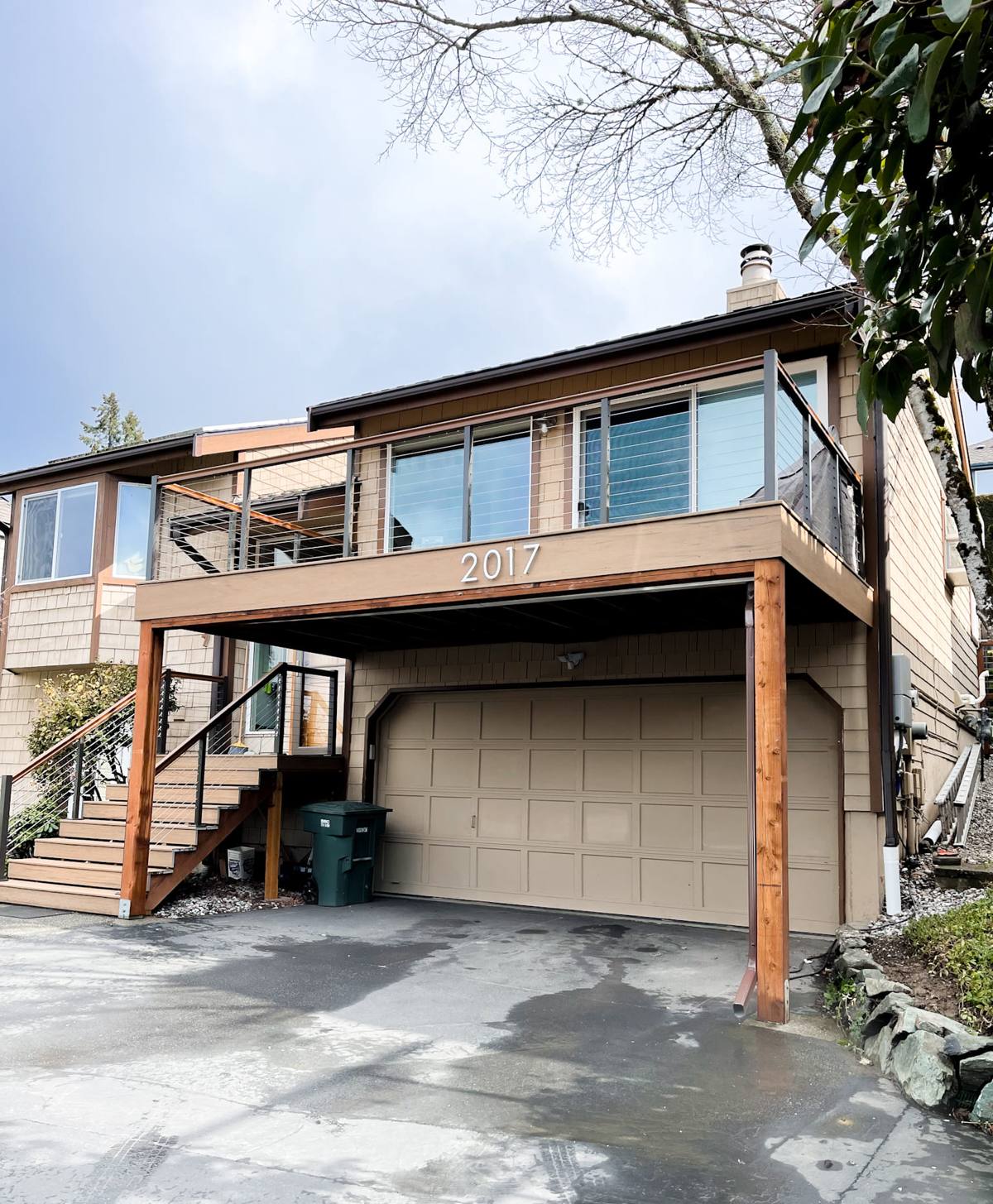
Why Decks Out Here Take Extra Punishment
Salt Air and Corrosion
Airborne salt from the surrounding water accelerates corrosion on any exposed metal — nails, screws, joist hangers, railing brackets. Once a fastener starts rusting, it loses holding strength long before it looks obviously bad. On a lot of the repair calls we run at March Point, the decking boards themselves are still in decent shape, but the fasteners underneath have failed quietly for years.
Driving Rain and Wind-Driven Moisture
Storms coming off the water don't just rain down — wind pushes moisture sideways, up under railings, and into any gap where two pieces of wood meet. That's different from a sheltered inland deck, where most of the wear comes from standing water on flat surfaces. Out here, vertical surfaces and joints take on water too, which is why we pay close attention to ledger boards, post bases, and stair stringers on every March Point inspection.
A Long Moss Season
Skagit County's wet season runs long, and shaded or north-facing deck sections can stay damp for months at a stretch. Moss and algae hold moisture against the wood surface, which softens fibers, degrades finishes faster, and turns boards slick and dangerous underfoot. A deck that looks mossy but structurally fine is a maintenance issue; a deck where the moss has been sitting on soft, spongy wood for a season or two is a repair issue.
Signs Your March Point Deck Needs a Repair Call
- Boards that flex, bounce, or feel soft when you walk across them
- Railings or posts that wiggle when pushed — even slightly
- Rust streaks running down from screw or nail heads
- Gaps opening up where the deck meets the house (ledger board area)
- Stair stringers that feel spongy or show splitting at the notches
- Persistent moss or dark staining in the same spots season after season
- Fasteners backing out or spinning loose in their holes
- Visible daylight or water staining underneath the deck framing
Any one of these on its own might be minor. Two or three together, especially near the ledger board or stairs, usually means it's time for a closer look before someone gets hurt or the damage spreads to framing that's more expensive to fix.
What a Correct Repair Actually Involves
A lot of deck "repairs" amount to swapping a bad board for a new one and calling it done. That fixes what you can see, but it doesn't address why the board failed in the first place — which, out at March Point, is almost always moisture getting somewhere it shouldn't. A repair done right looks at the whole assembly, not just the surface.
The Ledger Board Connection
This is where the deck attaches to the house, and it's the single most important structural point on most decks. If flashing here is missing, damaged, or was never installed correctly, water works its way behind the ledger and into the house rim joist — a slow, hidden problem that can turn into serious rot. Any real repair check includes this connection, even if the visible complaint is somewhere else on the deck.
Fasteners and Hardware
Given the corrosion issue, repairs on a March Point deck should use fasteners and joist hangers rated for coastal or marine exposure — not standard interior-grade hardware. Reusing corroded fasteners, or matching new work to old hardware that's already failing, just resets the clock on the same problem.
Framing Underneath
Surface boards can look fine while the joists or beams underneath have soft spots or rot starting at the ends where water collects. A proper repair includes checking underneath the deck, not just walking the top surface.
Drainage and Airflow
Decks that sit low to the ground or have limited airflow underneath dry out slower after rain, which extends the amount of time wood stays wet and workable for rot and moss. Sometimes a repair includes small adjustments — trimming back vegetation, improving grading, or adding gaps — that help the deck shed water faster going forward.
Repair or Replace? A Practical Way to Decide
| Condition | Usually a Repair | Usually a Replacement |
|---|---|---|
| Isolated soft or damaged boards | Yes — spot replacement works | No, unless damage is widespread |
| Rot at the ledger board connection | Sometimes, if caught early | Often, if it's spread into the rim joist |
| Loose or wobbly railings only | Yes — hardware and post repair | Rarely needed for this alone |
| Widespread soft framing (joists/beams) | Rarely cost-effective | Yes — framing is the deck's skeleton |
| Deck is 20+ years old with recurring issues | Case by case | Often more economical long-term |
| Cosmetic graying, moss staining, minor wear | Cleaning and spot repair | No — not a structural issue |
We'll always tell you honestly which category your deck falls into. If a repair will hold up and save you money, that's what we recommend. If the framing underneath is too far gone, we'll say so rather than patch something that will fail again in a year or two.
Repair Materials: What We Use and Why
| Material | Best For | Trade-Off to Know |
|---|---|---|
| Matching wood (cedar, fir, pressure-treated) | Blending repairs into an existing wood deck seamlessly | Needs the same maintenance and refinishing schedule as the rest of the deck |
| Composite decking | High-moss, high-moisture areas where low upkeep matters | Won't perfectly color-match older wood sections; framing underneath still needs wood-level attention |
| Stainless or coated coastal-rated fasteners | Any repair on a March Point or shoreline-exposed deck | Costs more than standard hardware, but this is not a place to cut corners |
For repairs, we generally recommend matching what's already there unless the existing material is part of why the deck is failing. Mixing a composite patch into an otherwise all-wood deck can work, but we'll talk through the appearance and long-term maintenance trade-offs with you first rather than assume.
Our Repair Process
- Inspection. We check the whole deck — surface, railings, stairs, ledger connection, and underneath the framing — not just the spot you called about.
- Honest assessment. We tell you what's a repair, what's a bigger issue, and what can reasonably wait.
- Written estimate. Scope and cost range before any work starts, no surprises added mid-job.
- Repair work. Damaged boards, framing, hardware, or flashing addressed with materials suited to marine exposure.
- Final check. We walk the deck with you when it's done so you know exactly what was fixed and what to watch going forward.
Simple Maintenance That Extends the Life of a Repair
- Clear leaves and debris from between boards before wet season sets in
- Rinse or gently brush off moss before it has a chance to soften the wood underneath
- Check railings and stair connections for movement once or twice a year
- Keep gutters and downspouts clear of anything that could dump extra water onto the deck
- Trim back plants that are keeping shaded sections of the deck damp longer than necessary
Why a Crew That Already Works March Point Matters
Deck repair isn't a one-size-fits-all trade. A crew that mostly works drier, inland conditions may not think twice about hardware grade or ledger flashing, because those shortcuts don't show up as fast somewhere less exposed. Out at March Point, they show up in a season or two. We work this stretch of Skagit County regularly, so we're not guessing at what the salt air and driving rain out here do to decks over time — we've seen it, repaired it, and know what actually holds up versus what just looks fixed for a year.
We're not going to recommend replacing a deck that only needs a repair, and we're not going to patch a deck that needs real structural work. Either way, you'll get a straight answer and a clear explanation of why.
If you've got a deck at March Point that's showing any of the signs above — or you just want a second opinion before winter weather sets in — we're happy to come take a look. The estimate is free, there's no pressure, and you'll walk away knowing exactly where your deck stands.