 Anacortes Window
 Siding Repair in La Conner: What Living on the Channel Does to a House
La Conner sits right on the Swinomish Channel, tucked between Fidalgo Island and the Skagit Valley flats, a few minutes from Anacortes but with its own weather personality shaped by tidal water on one side and open farmland on the other. That combination of salt-influenced channel air and the wide, exposed flats that catch weather rolling in off the water makes siding repair a different kind of job here than it is in more sheltered parts of Skagit County. We see it on almost every repair call: damage that follows a predictable pattern once you know what to look for, because the same handful of conditions are doing the work year after year.
Siding repair isn't the same job as a new installation, and it shouldn't be treated that way. A repair call is about diagnosis first — figuring out where water is actually getting in, how far it's traveled, and what's still sound underneath — before a single board gets replaced. We install James Hardie fiber cement exclusively when a home needs new siding or a full replacement, but repair work is different. It means going out to a La Conner home, working with whatever material is already on the wall, and giving an honest read on what can be fixed properly versus what's telling you it's past that point.
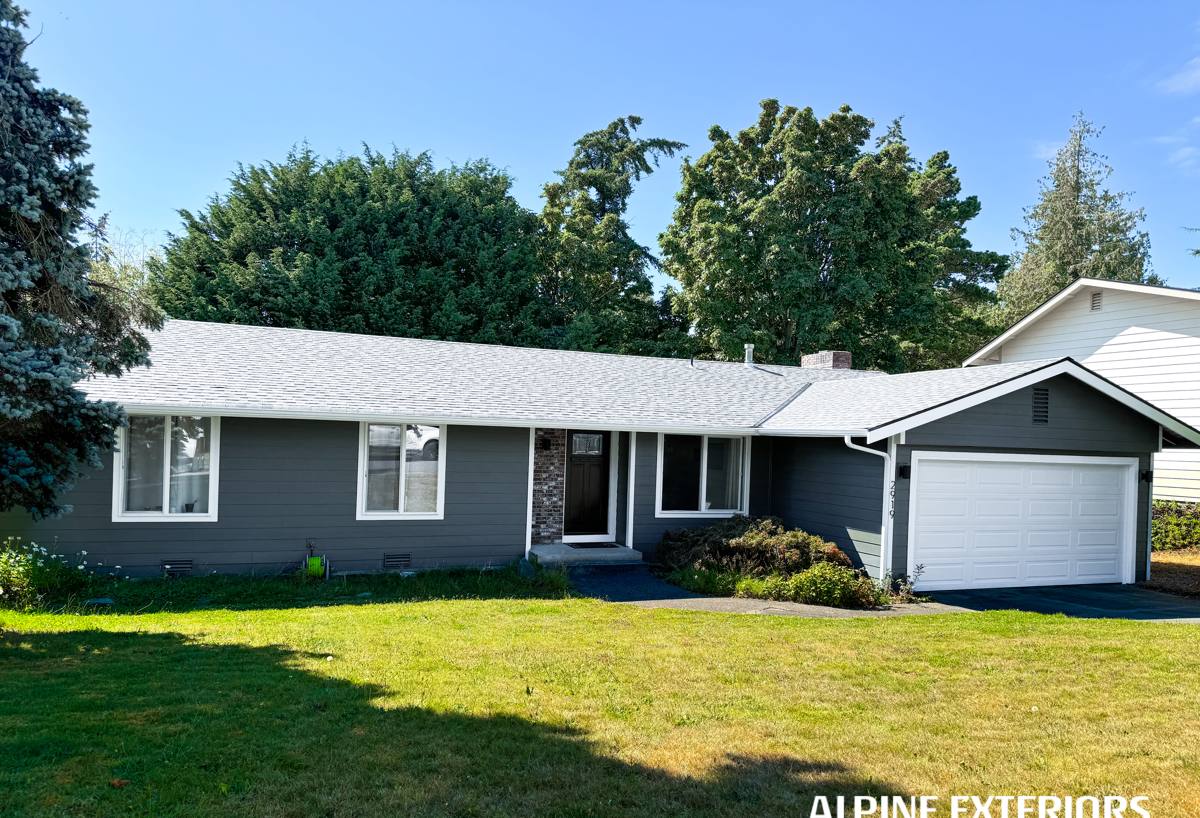
What La Conner's Climate Does to Siding
Salt Air Off the Swinomish Channel
Homes close to the channel take on a steady, low-grade dose of salt-laden air, even away from the open coast. That salt exposure accelerates corrosion on fasteners, flashing, and any exposed metal trim, and it wears down paint and lesser coatings faster than a drier inland climate would. On repair calls, corroded nails and rusted trim are often the first visible sign that moisture and salt have been working on a wall longer than the surface damage suggests.
Driving Rain and Wind Off the Flats
The Skagit Valley flats around La Conner are flat and open, which means storms coming through don't lose much force before they reach a house. Wind pushes rain sideways into wall assemblies, siding laps, and trim joints instead of letting it fall straight down and run off. That sideways-driven moisture finds gaps that a calmer, drier climate would never expose, and it's usually the real culprit behind soft siding that looks fine from ten feet away.
A Long Moss Season
Mild temperatures and near-constant moisture add up to a moss and mildew season that runs most of the year on shaded or north-facing walls. Moss holds water against a surface far longer than open air would, and it takes hold fastest on siding that already has some surface porosity or a coating that's starting to fail. By the time moss is visibly established, whatever is underneath it has usually been damp for a while.
Signs Your La Conner Home Needs Siding Repair
- Soft, spongy, or bouncy siding when pressed, especially low on the wall or around window and door trim
- Bubbling, peeling, or bubbling paint that keeps coming back after a repaint
- Moss or dark staining that returns quickly after cleaning, particularly on shaded or north-facing walls
- Visible gaps, cracks, or separation at butt joints, corners, and trim transitions
- Rust streaking from fasteners or corroded trim near the channel-facing side of the house
- Warping, cupping, or buckling boards, most common on wood-based or engineered wood siding
- Interior signs like musty odor, staining, or soft drywall near an exterior wall — often the first clue moisture has already gotten behind the siding
Repair or Replace? How We Make the Call
Not every damaged wall needs a full re-side, and not every problem area can be honestly patched and left alone. The call usually comes down to how much of the wall is affected, what the material is, and how far moisture has traveled before anyone noticed.
| Signal | Usually Points to Repair | Usually Points to Replacement |
|---|---|---|
| Extent of damage | Isolated to one or two boards, corners, or trim runs | Spread across multiple walls or a full elevation |
| Substrate condition | Sheathing and framing behind the damage are still sound | Sheathing is soft, delaminating, or showing rot |
| Material | Existing siding is otherwise holding up, just locally damaged | Existing material (older wood, vinyl, or failing engineered wood) is nearing the end of its service life across the board |
| Cause | A single identifiable source — a flashing gap, a cracked caulk joint, an isolated impact | A systemic issue like missing rain screen detailing, chronic wind-driven rain exposure, or repeated moss cycling over years |
| Age of siding | Relatively recent installation with a localized failure | Original siding at or past its expected lifespan |
We'll say plainly when a repair is the right call and won't push a full replacement a home doesn't need yet. We'll also say plainly when a patch is just going to fail again in a year or two, because the underlying problem — usually moisture that's already gotten past the surface — hasn't actually been solved.
What a Correct Siding Repair Actually Involves
Finding the Real Water Path
The visible damage on a wall is rarely where the water first got in. A stained board near a window is often fed by a flashing gap higher up, and a soft section near a corner can trace back to a butt joint several feet away. A repair that just replaces the obviously damaged board without tracing the actual path water took is a repair that gets called back on. We open up the affected area enough to see what's really happening behind the surface before deciding what needs to come off and what can stay.
Matching, Sealing, and Finishing the Repair
Once the damaged material and any wet sheathing or framing behind it are addressed, the repair itself needs to tie back into the surrounding wall correctly — proper flashing and house wrap lapped so water sheds outward, fasteners set to the right spacing and type, and joints sealed so the new section doesn't become the next entry point. Matching existing siding profile, reveal, and finish as closely as possible matters too, both for how the repair looks and for how it performs; a mismatched patch that doesn't shed water the same way the surrounding wall does just creates a new weak spot.
Our Siding Repair Process
- On-site inspection: We walk the affected area and the rest of the exterior, since damage in one spot often has a sibling starting somewhere less obvious.
- Diagnosis: We open up enough of the wall to confirm the actual water path and check the condition of the sheathing and framing underneath.
- Honest scope: We tell you what's repairable, what isn't, and why — including if the answer is that a small area has grown into a bigger problem than it looked from the ground.
- The repair: Damaged material comes out, sheathing and framing get addressed if needed, and flashing, house wrap, and fasteners go back in correctly rather than just cosmetically.
- Finish and match: New siding sections are matched to the surrounding wall as closely as the existing material allows, and all joints and penetrations get properly sealed.
- Follow-up: We'll flag any other areas worth watching, since a home with one moisture-driven repair often has conditions elsewhere that are worth keeping an eye on.
Why James Hardie Is What We Install When Repair Isn't Enough
When a wall's damage goes past what a sound repair can fix — widespread rot, failing original siding, or a material that was never well suited to channel-side weather in the first place — that's a replacement conversation, and for that we install James Hardie fiber cement exclusively. We don't install LP SmartSide, vinyl, Cemplank, Allura, primed spruce, or cedar. That's not a knock on every homeowner who has one of those products; it's a professional standard we hold ourselves to because of what we've seen happen to those materials in exactly this kind of salt air and driving rain environment over time.
Hardie's non-combustible fiber cement doesn't swell, cup, or warp the way wood-based products can after repeated wet exposure. The factory-applied ColorPlus finish holds its color and integrity far longer than field-applied paint, which matters in a climate that wears down lesser coatings quickly. The HZ5 product line is engineered specifically for regions with sustained moisture and freeze-thaw cycling, which describes La Conner's channel-side conditions well. And it carries a strong transferable warranty when installed to the manufacturer's spec — which is the other half of the equation, since even the best material fails early if the installation cuts corners on rain screen gaps, fastener spacing, or flashing details.
Cost Factors for Siding Repair in La Conner
| Factor | What Drives It | Channel-Side Consideration |
|---|---|---|
| Extent of damage | Number of boards, area of wall, and whether trim is also affected | Wind-driven rain often spreads damage further than the visible staining suggests |
| Substrate condition | Whether sheathing or framing needs replacement, not just the siding surface | Salt-laden moisture and prolonged dampness accelerate hidden substrate rot |
| Material match | Availability and cost of matching existing siding profile and finish | Older or discontinued products may require a closer color and reveal match on visible walls |
| Access and location | Height, roofline complexity, and equipment needed to reach the damaged area | Repeat exposure areas are often on channel-facing or shaded elevations |
These are general drivers, not a quote — every home in La Conner sits at a slightly different distance from the channel and under different tree cover, and the only way to give an honest number is to actually open up the affected wall and see what's underneath. That's also why we're cautious about repair estimates given sight unseen; two houses with similar-looking damage can turn out to need very different scopes of work.
Why a Crew That Already Works La Conner Matters
A crew that regularly works this stretch of Skagit County has seen how salt air, driving rain off the flats, and a long moss season actually play out on real houses over time, not just how a material performs on paper. That experience shapes practical decisions on a repair call: where damage is likely hiding beyond what's visible, which elevations take the worst of the weather, and when a patch is genuinely the right call versus when it's just delaying a bigger job. La Conner's position on the channel isn't identical to towns further inland in the valley, and a crew that knows the difference diagnoses accordingly instead of guessing.
If your La Conner home has siding that's soft, stained, cracked, or just not holding up the way it used to, we're glad to take a look and give you a straightforward, honest read on what it needs — repair or replacement. Reach out using the form below to schedule a free, no-pressure estimate.