 Anacortes Window
 Guemes Island Siding Takes a Different Kind of Beating
Guemes Island sits close enough to Anacortes to feel like part of the same community, but its siding doesn't live under the same conditions as a house a few miles inland. Homes here face wind-driven rain off Rosario Strait and the Guemes Channel, near-constant salt-laden air, and a long, damp moss season that can run from fall through late spring. Add in the practical reality that the island is reached by ferry, and it's easy to see why siding decisions that work fine elsewhere in Skagit County don't always hold up the same way here.
This page is about one job, done right, in one place: full siding replacement on Guemes Island homes. Not a general overview of siding, and not a pitch for every product on the market — just what actually needs to happen when the old siding on an island home has reached the end of its useful life.
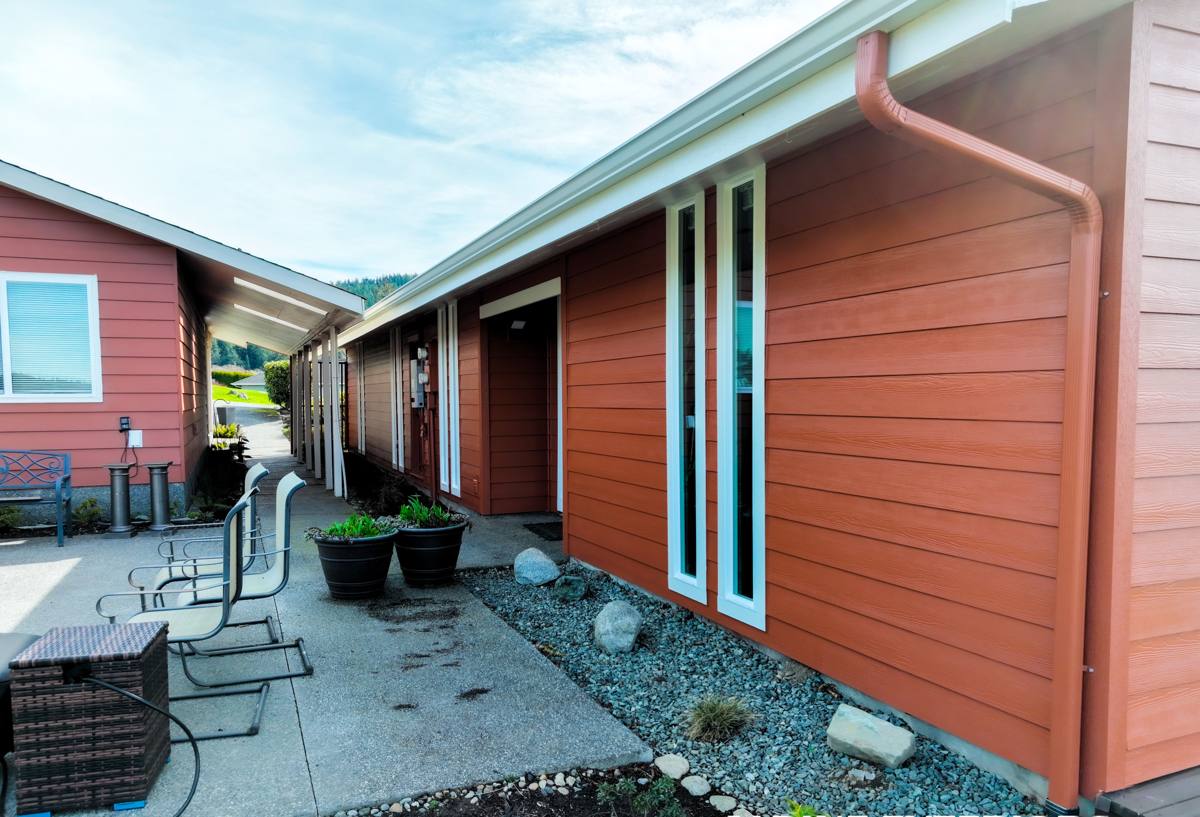
What Salt Air, Rain, and Moss Actually Do to Siding
Salt Air and Corrosion
Airborne salt doesn't just sit on the surface of a wall — it works into fasteners, trim joints, and any exposed metal flashing. Over years, that accelerates corrosion in fasteners and hardware, which can loosen siding panels and trim long before the siding material itself has failed. It also tends to chalk and dull paint finishes faster than inland exposure, especially on the sides of a house that face open water.
Driving Rain and Wind Pressure
Guemes Island gets more direct exposure to wind off the water than a lot of mainland Anacortes lots. That means rain doesn't just fall — it drives sideways into wall assemblies, testing every seam, lap joint, and piece of flashing. Siding that's marginal on installation quality — thin caulk lines, missed flashing details, insufficient overlap — shows its weaknesses here faster than it would in a more sheltered location.
Moss, Lichen, and Moisture Retention
The island's tree cover and the region's wet, mild winters create ideal conditions for moss and lichen growth on north-facing and shaded walls. Beyond the cosmetic issue, moss holds moisture against the siding surface for extended periods. On materials that aren't dimensionally stable or that absorb water at the surface, that sustained dampness is what eventually leads to swelling, soft spots, or coating failure.
Why This Is a Local Service, Not a Generic Siding Job
Working on Guemes Island isn't the same logistics as working in town. Materials, equipment, and crew all have to be staged and scheduled around the ferry, and a full siding tear-off and replacement generates real volume — old siding coming off, new material and trim going on, dumpster or haul-away logistics for debris. A crew that hasn't planned for that ends up burning days on logistics instead of production, which either drags the job out or tempts shortcuts to make up time.
A crew that already works the island knows the ferry schedule, knows how to stage a full week's material delivery instead of relying on frequent short trips, and builds the project timeline around those realities from the estimate forward. That's the difference between a siding job that runs smoothly over its planned timeline and one that stalls out mid-project with a house partially open to the weather.
What a Correct Siding Replacement Actually Involves
Replacing siding is not just pulling off old panels and nailing up new ones. On an island home exposed to salt air and driving rain, the details underneath the visible siding matter as much as the finish material itself.
- Full removal of existing siding and inspection of the sheathing underneath for rot, delamination, or hidden moisture damage
- Repair or replacement of any compromised sheathing before new material goes on — covering over damaged sheathing just hides a problem, it doesn't fix it
- Installation of a code-compliant weather-resistive barrier, lapped correctly to shed water downward and outward
- Correct flashing at every window, door, and penetration — this is where wind-driven rain finds its way in if it's skipped or rushed
- Proper fastening schedule and reveal spacing for the specific siding product being installed
- Careful detailing at inside and outside corners, trim boards, and butt joints, since these are the first places salt air and moisture attack an installation
- Caulking and sealing only where the manufacturer's install specs call for it — over-caulking can trap moisture just as easily as under-caulking lets it in
Skipping or rushing any one of these steps is usually invisible on install day and expensive five to ten years later, when it shows up as soft trim, streaking, or siding that's pulling away from the wall.
Why We Install James Hardie Fiber Cement on Guemes Island Homes
We install James Hardie fiber cement siding exclusively. We don't install vinyl, LP SmartSide, Cemplank, Allura, primed spruce, or cedar siding — not because those products have no merit, but because after years of exterior work in this climate, Hardie is the product we're willing to warranty and stand behind on homes facing this level of salt exposure and moisture.
Fiber cement is non-combustible, which matters given the wildfire risk conversations happening across Washington in recent years, and it doesn't rely on a factory coating alone to resist moisture the way some engineered wood products do — the substrate itself is cement-based and doesn't swell or rot the way wood-based sidings can when a seam takes on water. Hardie's ColorPlus factory finish is baked on and warranted separately from the substrate, which holds color and resists the chalking and fading that salt air accelerates on field-applied paint. And within the Hardie lineup, the HZ5 product line is specifically engineered for climates like ours — freeze-thaw cycles, sustained moisture, and coastal exposure — rather than a one-size-fits-all specification.
None of that means other products are junk. Vinyl is inexpensive and low-maintenance in mild conditions. Cedar has real aesthetic appeal and a long history of use in the Pacific Northwest. Engineered wood products can perform well when kept dry and maintained on schedule. But each of those comes with a trade-off — impact and heat sensitivity for vinyl, ongoing maintenance and moisture vulnerability for cedar, coating and moisture-management demands for engineered wood — that we're not willing to gamble on for a home sitting in driving rain and salt air on an island lot. That's the honest reason we standardized on one product line instead of offering all of them.
Comparing Siding Options for Island and Coastal Exposure
| Material | Moisture Behavior in Salt Air / Driving Rain | Maintenance Demand | Typical Lifespan Range |
|---|---|---|---|
| James Hardie Fiber Cement (HZ5) | Cement substrate does not swell or rot; factory ColorPlus finish resists chalking | Low — periodic washing, no repainting on ColorPlus schedule | Decades when installed to spec, backed by transferable warranty |
| Vinyl Siding | Doesn't absorb water, but seams and fastening can loosen under sustained wind pressure; can warp near heat sources | Low, but limited repair options if panels crack or fade unevenly | Variable; often shorter functional life in high-wind coastal exposure |
| Cedar Siding | Natural material, absorbs and releases moisture; prone to moss and lichen retention in shaded, damp areas | High — regular refinishing, moss treatment, and moisture monitoring | Depends heavily on maintenance discipline |
| Engineered Wood (e.g. LP SmartSide) | Performs well when coating stays intact; vulnerable at cut edges and seams if moisture gets behind the surface | Moderate — coating integrity and edge-sealing need regular attention | Depends on installation quality and ongoing maintenance |
This table reflects general product behavior, not a claim that any one of these materials fails on every home. The point is that in this specific climate — salt air, driving rain, extended moss season — the products with the lowest ongoing maintenance burden and the most stable moisture behavior tend to be the ones that hold up with the least homeowner intervention over time.
Our Process, From Estimate to Finished Job
Every siding replacement starts with an in-person look at the house, not a phone estimate. On Guemes Island, that visit also lets us confirm access, staging space for materials, and any ferry-related scheduling before we quote a timeline. From there:
- On-site evaluation of existing siding, trim, and visible problem areas
- A written estimate that covers material, labor, and scope — including any sheathing repair contingencies identified during the walk-through
- Material ordering and delivery scheduled around ferry logistics, so the crew isn't waiting on supplies mid-job
- Removal of existing siding and inspection of the wall assembly underneath
- Installation of barrier, flashing, and new Hardie siding to manufacturer specification
- Final walk-through with the homeowner before the crew leaves the island
Signs a Guemes Island Home May Need Siding Replacement
- Visible moss or lichen buildup that returns shortly after cleaning
- Soft spots, bubbling, or a spongy feel when pressing on the siding or trim
- Paint that's chalking, peeling, or fading unevenly, especially on water-facing walls
- Warping, cupping, or panels that no longer sit flush against the wall
- Persistent streaking or staining that cleaning doesn't resolve
- Visible gaps opening up at trim boards, corners, or butt joints
- Rising energy bills that may point to a compromised weather barrier behind the siding
If any of that sounds familiar, it's worth having a look before another wet Skagit County winter puts more stress on the walls. We offer free, no-pressure estimates for Guemes Island homes — an honest look at what your siding needs, with no obligation to move forward.