 Anacortes Window
 Why Similk Beach Homes Need Windows Built for This Climate
Similk Beach sits close enough to the water that homes here take a different kind of weathering than houses further inland in Skagit County. Salt-laden air corrodes hardware and finishes faster than dry-climate exposure ever would. Driving rain, pushed sideways by wind off the water, tests every seam and sill on a window rather than just sitting on the sash like it might in a calmer setting. And the long stretch of gray, damp months that define our Anacortes winters gives moss and algae months on end to take hold on anything that stays wet — including window frames, sills, and the trim around them.
An energy-efficient window in this setting has to do two jobs at once: keep conditioned air where it belongs, and shrug off constant moisture exposure without degrading. A window that's efficient on paper but not built for this environment will lose that efficiency within a few years as seals fail, frames swell, or hardware seizes up. We approach every Similk Beach project with both goals in mind, not just the energy number on the label.
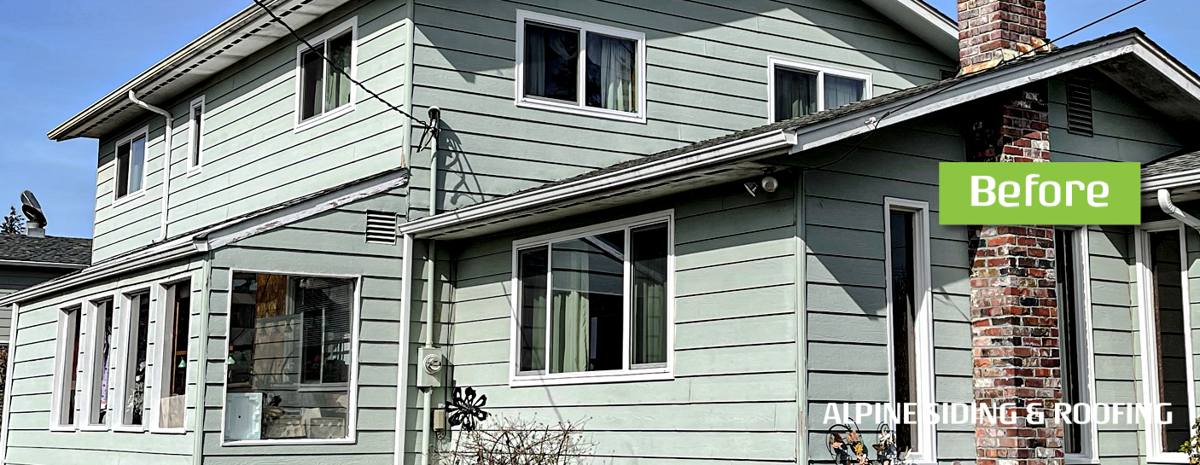
What "Energy-Efficient" Actually Means in a Marine Climate
U-Factor Matters More Than Solar Heat Gain Here
In hotter, sunnier parts of the country, a lot of window marketing focuses on blocking solar heat gain. That's less relevant on Fidalgo Island. Our marine climate is mild and often overcast, so the bigger year-round cost driver is heat loss through the glass and frame, not heat gain. That means U-factor — how well a window resists conducting heat out of the house — deserves more attention than solar heat gain coefficient (SHGC) for most Similk Beach homes, though south- and west-facing rooms still benefit from a moderate SHGC to avoid summer overheating on the clearer days we do get.
Air and Water Infiltration Ratings Matter More Near the Water
Every window carries an air infiltration rating and, ideally, a water resistance test pressure from its manufacturer. Homes exposed to wind-driven rain off Similk Bay or the broader Salish Sea should not settle for the minimum-code product. A window with a stronger air infiltration rating and a higher tested water resistance pressure will hold up better against the kind of sideways rain this area gets several times a winter, and it will keep doing so for longer before seals and weatherstripping start to fail.
Signs Your Current Windows Are Costing You Money
Older or poorly installed windows rarely fail all at once. They show warning signs first. If you're noticing any of the following in your Similk Beach home, it's worth having the windows looked at before the next wet season:
- Visible condensation or fogging between the panes of a double-pane window (a sign the seal has failed and the gas fill is gone)
- Cold drafts near the frame even when the window is fully closed and locked
- Wood trim or sills that feel soft, discolored, or show early rot around the window opening
- Moss or dark green/black staining building up on the sill or lower frame faster than on the surrounding siding
- Hardware — locks, cranks, hinges — that has corroded, stiffened, or stopped operating smoothly
- A noticeably higher heating bill compared to similar-sized homes nearby with newer windows
- Paint or finish peeling specifically around the window opening rather than the wall generally
Frame Material Choices for Salt Air and Moss Season
Frame material is one of the biggest decisions in an energy-efficient window project, and it matters more here than in a drier inland climate. Below is how the common options generally hold up under our conditions.
| Frame Material | Behavior in Salt Air / Rain | Maintenance Load |
|---|---|---|
| Vinyl | Doesn't corrode or rot; handles moisture well; can be prone to expansion/contraction with wide temperature swings, less of a concern in our mild climate | Low — occasional cleaning |
| Fiberglass | Very stable dimensionally, resists moisture and corrosion well, holds paint finishes longer than wood | Low to moderate |
| Wood or wood-clad | Warmer look, but exposed wood is vulnerable to rot and moss growth in this climate unless cladding and flashing details are done correctly | Higher — finish upkeep, moisture monitoring |
| Aluminum | Strong and slim sightlines, but conducts heat/cold readily unless thermally broken, and is more prone to corrosion from salt air over time | Moderate |
We don't push one material on every job. The right call depends on the home's exposure to wind and salt spray, the existing trim and siding, and the homeowner's tolerance for upkeep. What we do steer clients away from is any product or detail with a known moisture-management weakness for a site like Similk Beach — not because a manufacturer is bad, but because certain combinations of material and installation detail simply don't hold up as well against sustained wind-driven rain and salt exposure, and we'd rather be upfront about that trade-off before the work is done than after.
What a Correct Installation Involves
Flashing and Water Management
Most window failures we see near the water aren't glass failures — they're water management failures. If flashing isn't lapped correctly with the house wrap or siding, or if a sill pan isn't installed under the rough opening, water that gets past the window face during a hard rain has nowhere to go but into the wall framing. That's a slow, expensive problem that can take years to show up as visible damage. Correct flashing sequencing, from the bottom of the opening up, is non-negotiable on every window we install, new construction or replacement.
Sealing and Insulation
Between the window frame and the rough opening, gaps need to be filled with a compatible low-expansion foam or backer rod and sealant — not packed tight enough to bow the frame, but sealed enough to stop air movement. On the exterior, sealant joints need to be compatible with the siding material and rated for continuous moisture exposure, since that joint takes the brunt of the weather here.
Fastening and Structural Fit
A window that's out of square or under-shimmed will bind, leak, or lose efficiency no matter how good the unit itself is. We check every opening for level, plumb, and square before setting the window, and shim as needed rather than relying on the frame alone to hold shape under wind load.
Our Process for Similk Beach Projects
1. On-Site Assessment
We start by looking at the home's actual exposure — how close it sits to open water, prevailing wind direction, existing signs of moisture damage, and the condition of the current window openings. This tells us whether standard details are enough or whether a given elevation needs extra attention.
2. Product Selection Based on Exposure, Not a Default Package
We walk through frame material, glass package, and hardware options against the home's specific exposure and the homeowner's budget and priorities, rather than defaulting to one line of product for every job.
3. Installation with Full Flashing and Sealing Detail
Every opening gets sill pan flashing, correctly lapped water-resistive barrier integration, and code-appropriate sealing — whether it's one window or a full-home replacement.
4. Walkthrough and Follow-Up
Before we consider the job done, we walk the homeowner through operation, hardware care, and what to watch for over the first wet season. If anything settles or needs adjustment, we come back.
Cost Factors for Energy-Efficient Window Replacement
Every home is different, so we won't quote a number here that doesn't apply to your project — but these are the main factors that move the price up or down on a typical Similk Beach job:
| Factor | Effect on Cost |
|---|---|
| Frame material chosen | Vinyl generally lowest upfront cost; fiberglass and wood-clad run higher |
| Number and size of openings | More/larger openings increase material and labor cost proportionally |
| Extent of existing water damage | Rot repair to framing or sheathing found during removal adds cost beyond the window itself |
| Glass package (Low-E coatings, gas fill, number of panes) | Higher-performance glass adds cost but lowers long-term heating expense |
| Site access and exposure | Second-story or hard-to-access windows on exposed elevations take more labor time |
Why Local Experience with Similk Beach Homes Matters
A crew that mostly works drier, inland parts of Skagit County can install a technically correct window and still miss the details that matter here — the extra flashing lap on a wind-exposed wall, the hardware finish that won't pit from salt air within a few seasons, the sill detail that sheds moss-feeding moisture instead of trapping it. We work this stretch of Anacortes and the surrounding water-adjacent neighborhoods regularly, so those details aren't an afterthought — they're built into how we bid and install every job from the start.
Maintenance That Protects Your Investment
Even a well-installed, well-chosen window benefits from basic upkeep in this climate. A few habits go a long way:
- Rinse salt residue and debris off frames and tracks a few times a year, especially after storms
- Clear moss or algae from sills and trim before it spreads to caulking or finish surfaces
- Check and lightly lubricate hardware annually so locks and cranks don't seize
- Inspect exterior caulking each fall before the wet season sets in, and have gaps resealed promptly
- Watch for soft spots in surrounding trim, which can signal a flashing or sealant issue worth catching early
If you're weighing whether your Similk Beach home's windows need attention, or you're ready to plan a replacement before the next wet season, we're happy to take a look and put together a straightforward, no-pressure estimate. Use the form below to get started.