 Anacortes Window
 Deck Replacement Built for Ship Harbor's Waterfront Climate
Ship Harbor sits close enough to the water that homes here take a different kind of weathering than decks just a few miles inland in Anacortes. Salt-laden air off the water accelerates corrosion on fasteners and hardware, wind-driven rain finds its way into joints and end grain that a typical rain shower never reaches, and the long, damp Skagit County shoulder seasons keep wood surfaces wet far longer than sunnier parts of the state. A deck that would hold up for twenty years somewhere drier can start showing real structural problems in half that time out here.
This page covers what deck replacement actually involves for homes in the Ship Harbor area — not a generic overview, but the specific decisions and trade-offs that matter when your deck sits in a marine environment. If you're trying to decide whether your deck needs a repair or a full replacement, or you're planning ahead for a rebuild, this should give you a straight answer on what to expect.
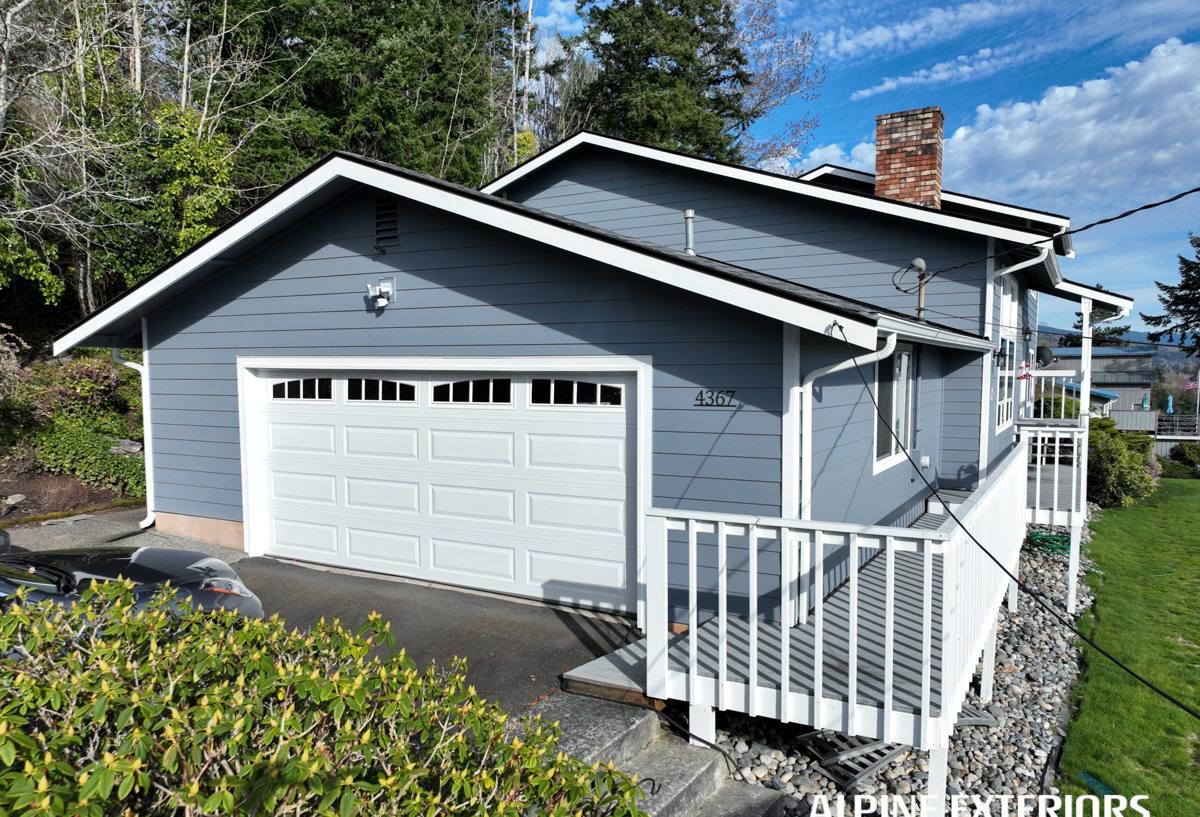
Why Decks Near the Water Fail Differently
Most deck failures we see in this area aren't from one dramatic event — they're from years of moisture cycling in and out of the same weak points. A few things specific to a location like Ship Harbor make this worse than average:
Salt Air and Metal Fatigue
Fasteners, joist hangers, and structural screws corrode faster near salt water, even at a modest distance from the shoreline. Once a fastener starts rusting, it loses grip strength long before it looks obviously bad from the surface. This is one reason a deck can look fine on top while the framing underneath is quietly failing.
Driving Rain and Wind Exposure
Open, breezy sites near the water get rain pushed sideways into railings, ledger boards, and post bases — areas that a standard vertical-rain assumption doesn't account for. Water gets into end grain and fastener holes and just sits there, since it doesn't dry out as fast in a cooler, humid marine climate.
Moss and Algae Season
Anacortes gets a long stretch of the year where surfaces stay damp enough for moss and algae to take hold, especially on shaded or north-facing decking. Beyond being slippery underfoot, sustained moss growth traps moisture against the board surface and speeds up rot in wood decking specifically.
Signs Your Deck Needs Replacing, Not Just Repair
Not every deck problem calls for a full rebuild — but there's a point where patching individual boards is just delaying a bigger cost. Here's what tells us a deck is past the point of spot repair:
- Soft, spongy, or bouncy decking underfoot, especially near the house or at board ends
- Rust streaking around fastener heads, or fasteners that back out or spin freely
- Visible gap or movement where the ledger board meets the house — a common failure point in wet climates
- Moss or algae that regrows within weeks of cleaning, especially on the same boards every time
- Posts or support beams with soft, dark, or crumbling wood at ground contact
- Railings that flex or feel loose when leaned on
- A deck that's simply reached the end of its practical service life and is due for an upgrade in material or layout
If you're only seeing one or two of these and the framing underneath tests solid, repair may still make sense. Once several of these show up together, or the framing itself is compromised, replacement is usually the more honest recommendation — patching a failing structure just means paying for the same repair again in a year or two.
What a Correct Deck Replacement Actually Involves
A deck replacement is more than swapping old boards for new ones. Done right, it starts below the decking surface, with the parts you won't see once the job is finished.
Structure and Framing
This means checking and, where needed, replacing ledger boards, joists, beams, and post footings — not just the decking on top. In a marine climate, we pay particular attention to ledger flashing, since a poorly flashed ledger connection is one of the most common places water gets behind the siding and causes damage well beyond the deck itself.
Fasteners and Hardware
Given the corrosion risk from salt air, hardware selection matters more here than it does further inland. We use fasteners and structural connectors rated for coastal exposure, not standard-grade hardware that looks fine on day one but starts failing quietly within a few years.
Drainage and Airflow
Decks that trap moisture underneath — from poor grading, tight board spacing, or lack of airflow beneath the structure — stay wet longer after every rain. Part of a proper rebuild is making sure water has somewhere to go and the underside of the deck can actually dry out between storms.
Choosing the Right Decking Material
Material choice is one of the biggest decisions in a deck replacement, and it's where climate matters most. There's no single right answer — it depends on your budget, how much upkeep you want to do, and how the deck is used.
| Material | Upfront Cost | Maintenance | Performance in Marine Climate |
|---|---|---|---|
| Pressure-treated wood | Lowest | Annual cleaning, periodic sealing | Needs consistent upkeep to resist moisture and moss; shortest lifespan if neglected |
| Cedar | Moderate | Regular sealing to maintain color and resist moisture | Naturally moisture-resistant but still needs maintenance near salt air |
| Capped composite | Higher | Occasional washing, no sealing or staining | Strong resistance to moisture and moss buildup; consistent performance over time |
| PVC decking | Highest | Occasional washing | Fully synthetic, no wood fibers to absorb moisture; best long-term option in wet, salty conditions |
We install both quality wood and composite/PVC systems. Our general guidance for homes in a spot like Ship Harbor: if low maintenance and long-term moisture resistance matter more to you than upfront cost, a capped composite or PVC product is usually the better investment. If you prefer the look and feel of real wood and are willing to keep up with sealing on a schedule, cedar or treated lumber can still perform well — it just asks more of you as the owner.
Our Deck Replacement Process
We keep the process straightforward and communicate clearly at each stage:
- On-site assessment — We inspect the existing deck, including framing, ledger connection, and footings, not just the surface boards.
- Honest scope and estimate — You get a clear picture of what needs replacing, what materials make sense for your budget and goals, and what it will cost — no inflated add-ons.
- Permitting — We handle the paperwork with the local building department when a permit is required.
- Demolition and disposal — Old decking, framing, and hardware are removed and hauled off.
- Structural rebuild — Footings, posts, beams, and joists are installed or replaced to current code, with attention to proper ledger flashing.
- Decking installation — Your chosen material is installed with fasteners rated for coastal exposure.
- Final walkthrough — We go over the finished deck with you and flag any maintenance steps specific to your material choice.
Permits and Code in Skagit County
Most deck replacements that involve structural changes — new footings, a raised deck, or a ledger reattached to the house — require a building permit through the local jurisdiction. Requirements can vary depending on deck height, size, and whether it's attached to the home, so this isn't something to assume either way. We handle the permit process as part of the job so you're not left navigating it yourself, and so the finished deck is built to current code rather than just to what was there before.
Keeping Your New Deck in Good Shape
A well-built deck still needs some upkeep in this climate, though how much depends on the material you choose. General practices that make a real difference in a marine, moss-prone environment:
- Sweep debris off the deck regularly so organic matter doesn't sit and hold moisture
- Clean moss and algae promptly rather than letting it establish — it's far easier to prevent than remove once it's set in
- Check and re-tighten railings and fasteners periodically, since coastal corrosion can loosen connections over time
- For wood decking, keep to a sealing schedule rather than waiting until it visibly needs it
- Keep gutters and downspouts clear so runoff isn't draining directly onto or under the deck
Why Local Experience Matters for This Job
Deck replacement isn't a one-size-fits-all job, and a crew that mostly works inland or in drier conditions may not think twice about hardware grade, ledger flashing detail, or material choice the way it matters here. Working regularly in and around Ship Harbor and the greater Anacortes area means we've seen firsthand how salt air, driving rain, and moss season actually affect decks over time — not just in theory, but in the framing and fasteners we pull out of failed decks. That experience shapes every recommendation we make, from what material fits your situation to how we detail the parts of the structure you'll never see once the job is done.
If your deck is showing its age, or you're planning ahead before it becomes a safety issue, we're happy to take a look and give you a straightforward assessment. Reach out for a free, no-pressure estimate using the form below.