 Anacortes Window
 Decks Built for Flounder Bay's Marine Climate
Flounder Bay sits close enough to the water that every deck out here deals with conditions a lot of decking material was never designed for. Salt-laden air moves in off the bay, driving rain comes in sideways during fall and winter storms, and the shaded, moisture-heavy stretches of the yard grow moss almost year-round. A deck built with generic, one-size-fits-all methods might look fine for a season or two, but it's the details — fastener choice, framing protection, drainage, material selection — that decide whether it's still solid in ten years or starting to soften, stain, and sag.
We build and repair decks specifically for homes in this part of Skagit County, and the approach we take in Flounder Bay is different from what we'd spec for a deck further inland. Below is what we think actually matters for a deck in this location, and what our process looks like from first visit to final walkthrough.
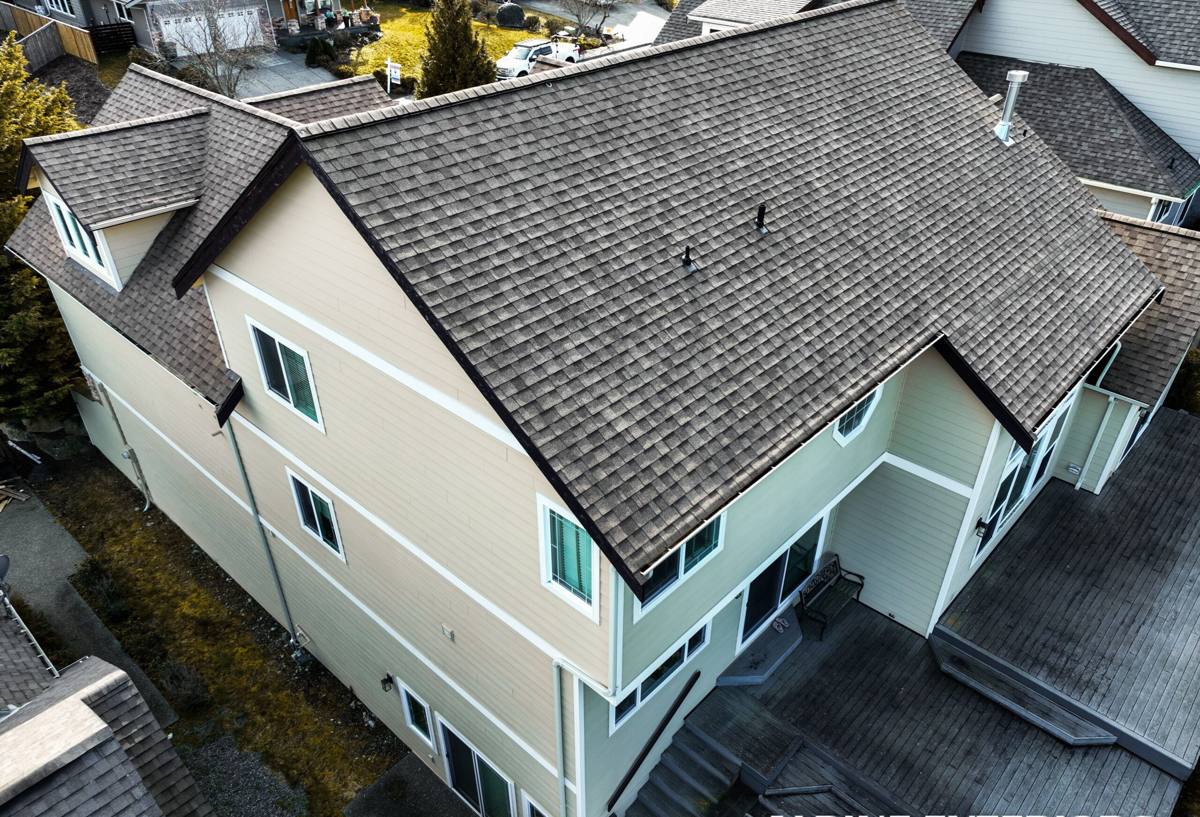
What the Local Climate Actually Does to a Deck
Understanding the failure points is the first step to avoiding them. In Flounder Bay, three conditions do most of the damage over time:
Salt Air and Corrosion
Being close to the water means airborne salt settles on every exposed surface, including fasteners, brackets, and hardware. Standard zinc-coated screws and nails can start corroding within a few years in a marine-air environment. Once a fastener weakens, it can streak the decking around it and eventually lose its grip entirely — which is a structural issue, not just a cosmetic one.
Driving Rain and Trapped Moisture
Storms here don't just fall straight down — wind pushes rain sideways and up under railings, into ledger connections, and along the underside of decking boards. Any place water can collect and not dry out quickly becomes a spot where rot or mold gets a foothold, especially where a deck attaches to the house.
Moss and Shade
Anacortes gets a long wet season, and shaded decks — under trees, on the north side of a house, or tucked below a roofline — can stay damp for weeks at a stretch. Moss doesn't just look bad; it holds moisture against the decking surface and turns boards slick and dangerous underfoot, especially on stairs.
Choosing the Right Decking Material for This Location
There's no universally "best" decking material — the right choice depends on how much upkeep you want to do and what you're willing to spend upfront versus over time. Here's how the common options actually perform in a salt-air, high-moisture setting like Flounder Bay:
| Material | Moisture & Salt Air Performance | Maintenance | Typical Lifespan |
|---|---|---|---|
| Pressure-Treated Wood | Needs sealing to resist moisture; can gray and check without upkeep | Annual cleaning and re-sealing recommended | 10-15 years with consistent maintenance |
| Cedar | Naturally moisture- and insect-resistant, but still needs sealing near salt air | Periodic cleaning, re-oil or re-stain every 1-2 years | 15-20 years with upkeep |
| Composite Decking | Handles moisture well; some early composite products absorbed water at cut ends without proper sealing | Occasional washing to prevent moss and algae buildup | 25-30 years |
| Capped Composite / PVC | Best resistance to moisture, salt, and staining; fully encapsulated boards don't absorb water | Low — mostly just washing | 25+ years, often with longer manufacturer warranties |
For homes right in Flounder Bay, we usually steer clients toward capped composite or well-sealed cedar over bare pressure-treated wood, mainly because the maintenance burden of keeping raw wood sealed against both salt air and constant damp shade is a lot to keep up with. That said, a properly maintained wood deck can still last a long time — it's honest about the extra work involved, not that the material is bad.
What Correct Framing and Substructure Look Like
The decking boards are the part everyone sees, but the framing underneath is what actually determines whether a deck stays safe and level. A few things we treat as non-negotiable on every build:
Ledger Board Flashing
Where a deck attaches to the house is the single most common spot for hidden rot, because water runs down the siding and can wick behind the ledger board if it isn't properly flashed. We install flashing that directs water away from the house structure, not just a bead of caulk that will eventually fail.
Footings Sized for Wet Soil
Skagit County's saturated winter soil conditions mean footings need to be sized and set to the correct frost depth and bearing capacity — not just poured to whatever depth is convenient. Undersized or shallow footings are a common cause of decks that shift or settle over a few wet seasons.
Joist Protection
Untreated or unprotected joist tops trap moisture under the decking boards, which is where rot usually starts first — often invisible until the deck surface is already failing above it. We use joist tape or an equivalent moisture barrier on framing members as standard practice, not an upsell.
Airflow Underneath
A deck built too close to the ground or without enough ventilation underneath will stay damp longer after every rain. Proper clearance and airflow are part of what keeps moss and mildew from taking hold on the underside of the structure.
Fasteners and Hardware That Actually Hold Up
This is one of the most overlooked parts of deck construction, and it's exactly where salt air does the most damage. Standard exterior screws and joist hardware are rated for general outdoor use, but not necessarily for sustained marine-air exposure. For Flounder Bay projects, we specify stainless steel or coated fasteners and connectors rated for coastal or high-corrosion environments wherever water and salt exposure is highest — around ledger connections, stair stringers, and railing posts.
Our Deck Building Process
Every deck we build or rebuild in this area follows the same basic sequence, adjusted for the specific site conditions:
- On-site assessment of the yard's exposure — sun, shade, wind direction, drainage patterns, and proximity to the water
- Material discussion based on your maintenance preferences and budget, with honest tradeoffs explained up front
- Permitting and structural planning, including footing depth and ledger attachment method
- Demolition of the old structure (if a rebuild) with an inspection of the ledger area and any hidden framing damage
- Framing with corrosion-resistant hardware and moisture protection on all joists
- Decking installation with attention to board spacing for drainage and expansion
- Railing, stair, and trim installation
- Final walkthrough covering maintenance expectations specific to your deck's material and exposure
What Deck Building Costs Depend On
Every deck is different, but the same handful of factors drive most of the cost difference between projects. Rather than quote a number that won't mean much without seeing your site, here's what actually moves the price:
| Factor | Why It Matters |
|---|---|
| Size and shape | More square footage and multi-level designs mean more framing, footings, and labor |
| Decking material | Capped composite and PVC cost more upfront than wood but less in long-term maintenance |
| Height and access | A deck built over a slope or requiring stairs adds framing and safety requirements |
| Ledger and site conditions | Existing siding, hidden rot, or difficult access can add time before construction even starts |
| Railing style | Cable, glass, and custom railing systems cost more than standard wood or composite balusters |
| Permitting requirements | Deck height, guardrail requirements, and setback rules affect design and approval time |
We give a firm, written estimate after seeing the site — not a phone-quote guess — because so much of the real cost depends on what's actually happening underneath an existing deck or at the point where it meets the house.
Signs Your Existing Deck Needs Attention
If you already have a deck in Flounder Bay, a few warning signs are worth checking for before they turn into bigger repairs:
- Soft or spongy spots when you walk across the decking
- Green or black staining, especially in shaded corners or under railings
- Rust streaks running down from screws or metal hardware
- Gaps or separation where the deck meets the house siding
- Railings or posts that feel loose or wobble under pressure
- Standing water that takes more than a day to dry after rain
- Persistent moss or algae buildup even after cleaning
Any one of these on its own might be minor. Several together usually mean it's time for a closer look before the next wet season.
Why It Matters to Hire a Crew That Already Works in Flounder Bay
Decking advice that works for a dry, inland lot doesn't always hold up a few hundred yards from the water. A crew that already builds in Flounder Bay knows which fastener grades actually last here, how the wind and rain patterns off the bay affect drainage design, and where the shaded, moss-prone spots on a typical lot tend to be. That local pattern recognition is the difference between a deck that's designed for general use and one that's specifically built to hold up to this address.
We're an Anacortes-based crew, and Skagit County's coastal weather is what we build around every day — not a set of assumptions from a manual.
Get a Straightforward Estimate
Whether you're planning a new deck, replacing one that's showing its age, or just want an honest read on what shape yours is in, we're happy to come take a look. There's no pressure and no obligation — just a clear assessment and a written estimate based on what we actually see at your property.