 Anacortes Window
 Old Town Anacortes Homes Need a Different Approach
Old Town sits close to the water, on some of the oldest residential blocks in Anacortes. A lot of the housing stock here predates modern window standards entirely — original wood sash, older aluminum replacements from decades past, or a patchwork of whatever fit the budget at the time a previous owner finally gave up on a rotting frame. That mix means no two window jobs in this neighborhood look quite the same, and it's why "custom" isn't a marketing word here — it's the only way to do the work correctly.
A production crew that measures for stock sizes and caulks around the gaps will get windows into the openings. Whether those windows actually perform, seal, and survive the local weather is a separate question, and it's the one that matters once winter storms start coming off the water.
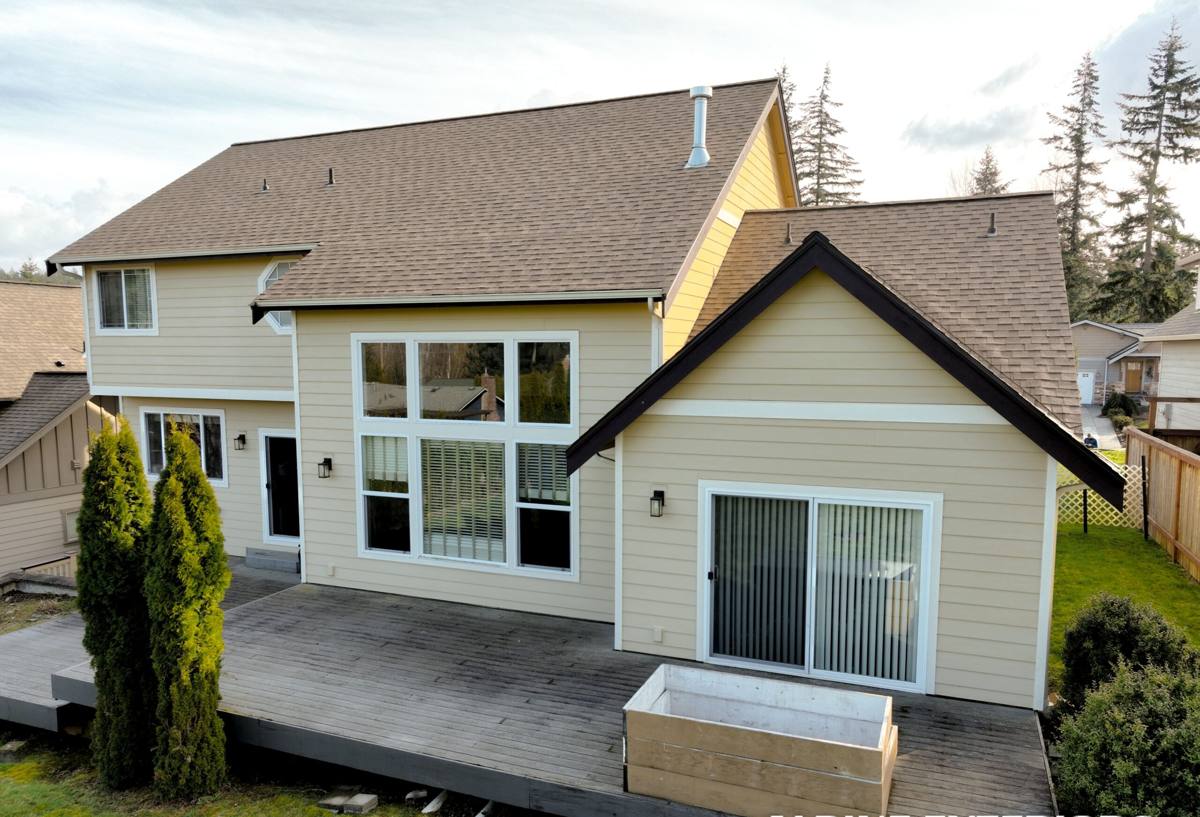
What Anacortes' Marine Climate Does to Windows Over Time
Anacortes sits on Fidalgo Island in Skagit County, surrounded by saltwater on nearly every side. That location gives Old Town a specific combination of stresses that inland Skagit County homes don't deal with in the same way:
- Salt air accelerates corrosion on hardware, screws, and unprotected metal components — locks and hinges fail years before they should if the wrong materials were used.
- Driving, wind-driven rain off the water pushes moisture sideways into gaps that would stay dry in a calmer climate, which is why flashing and sealing details matter more here than in a typical suburban install.
- A long moss and algae season — shaded, north-facing walls and older trim stay damp for months at a stretch, and that constant moisture is what rots wood sills and sashes from the inside out, often before it's visible from the street.
- Temperature swings between marine fog and clear, dry stretches stress seals and glazing over the years, which is usually why old insulated glass units fail and fog up between the panes.
None of this is exotic — it's just the normal cost of living a few blocks from the water. But it means a window that would last twenty years in a drier part of the state can fail in half that time here if it's installed without accounting for the exposure.
Why Older Homes Show the Damage First
A lot of Old Town's housing stock has original or early-generation replacement windows, often single-pane or early double-pane units with wood frames that were never clad or protected. Those frames were built for an earlier era's expectations, not for decades of salt-laden rain. By the time a homeowner notices a soft sill or a window that won't latch cleanly, the moisture has usually been working on the frame for a while.
What "Custom" Actually Means on This Job
For Old Town homes, custom window work usually covers a few specific things, not a menu of upgrades:
Exact, As-Built Measurements
Older homes settle, and openings are rarely square anymore. We measure each opening as it actually exists — not as it was originally framed — so the new window fits tight without relying on excess shim or caulk to make up the difference.
Matching Sightlines and Proportions
Many of these houses have a consistent window rhythm across the front elevation — similar sash proportions, similar trim reveal. Swapping in a stock size that's close but not quite right throws that off in a way that's subtle from a photo but obvious walking up to the house.
Material Chosen for the Exposure, Not Just the Budget
A west- or north-facing wall exposed to driving rain and shade needs a different frame material or finish strategy than a sheltered south wall on the same house. Custom means treating each elevation on its own terms.
Material and Glass Options for a Marine Climate
There's no single "best" window for every wall of an Old Town home — the right choice depends on exposure, budget, and whether the house has a historic look worth preserving. Here's how the common options actually compare for this climate:
| Material | Salt Air / Moisture Performance | Maintenance | Best Use |
|---|---|---|---|
| Fiberglass | Excellent — won't rot, corrode, or swell | Low | Exposed, water-facing walls |
| Vinyl | Good — resists moisture well, budget-friendly | Low | Sheltered elevations, rear/side of house |
| Wood, clad exterior | Good if cladding and flashing detail are done right | Moderate | Front elevations where historic wood look matters |
| Bare wood (uncoated) | Poor in this climate without diligent upkeep | High | Only with a serious maintenance commitment |
| Aluminum (non-thermally broken) | Poor — conducts cold and corrodes near salt air | Moderate | We generally don't recommend it here |
We're honest that we steer people away from bare, uncoated wood on exposed walls in this location — not because wood windows are bad, but because the upkeep required to keep an unprotected wood sill dry through an Anacortes winter is more than most homeowners want to sign up for. A clad exterior with a solid wood interior gets you the look without that maintenance burden.
Our Process for a Custom Window Job in Old Town
1. On-Site Assessment
We look at every window opening individually — checking for soft framing, settled or out-of-square openings, existing flashing (or lack of it), and how each wall is exposed to wind and rain given its direction and any nearby shade.
2. Exact Measurement and Product Selection
We measure to the actual opening, not a nominal size, and recommend materials elevation by elevation rather than a single product for the whole house.
3. Flashing and Water Management First
Before a new window ever gets set, we address how water will be directed away from the opening — sill pan flashing, proper head flashing, and integration with the existing wall covering. This step is what actually prevents the rot problems that show up five or ten years later, and it's the step that gets skipped most often on rushed jobs.
4. Installation and Air/Water Sealing
Windows are set plumb and level, shimmed correctly, and sealed with materials rated for exterior exposure — not just a bead of caulk at the trim line.
5. Final Check and Cleanup
We test operation, confirm locks and hardware seat properly, and walk the job with the homeowner before we consider it finished.
Working With — Not Against — a Historic Look
A number of Old Town's homes have real architectural character worth keeping: original proportions, trim details, and a front-elevation look that a mismatched modern window can undercut fast. Our approach is to match the visual profile — sash lines, grille pattern, exterior color and trim reveal — while updating what's actually failing: the seals, the glass, the weatherproofing, and the hardware. If your home falls inside a designated historic area with its own review process, we'd rather you check with the city on any requirements before work begins — that's a local planning question, not something we'll guess on. What we can guarantee is that the finished look won't read as an obvious swap from the street.
Signs Old Town Windows Need Attention
Given the exposure this neighborhood deals with, these are the signs worth acting on before they turn into structural repair instead of a straightforward window job:
- Soft, spongy, or visibly rotted wood at the sill or lower frame corners
- Fogging or a persistent haze between panes of a double-pane unit — a sign the seal has failed
- Windows that stick, won't latch, or have loose, corroded hardware
- Visible daylight or a noticeable draft around the frame when it's windy
- Moss or dark staining building up on the sill, trim, or the wall directly below the window
- Paint that keeps failing in the same spot no matter how often it's touched up — often a sign of moisture trapped behind it
- A noticeably colder room near the window compared to the rest of the house
What Affects Cost
Every Old Town job we've priced varies with the specifics of the house, but the same factors drive cost up or down on nearly every project:
| Factor | Why It Matters |
|---|---|
| Frame condition | Rotted framing behind an old window means added repair before a new one can even be set |
| Material choice | Fiberglass and clad-wood cost more upfront than vinyl but hold up better in exposed spots |
| Number of exposed vs. sheltered elevations | Water-facing walls often justify a higher-spec product than sheltered ones |
| Custom sizing needs | Non-standard or settled openings take more fabrication time than stock sizes |
| Historic detailing | Matching original sightlines and grille patterns adds labor over a plain swap |
We'd rather walk your specific house and give you real numbers than quote a range that doesn't mean much until we've seen the openings.
Why Hire a Crew That Already Works This Neighborhood
Old Town's exposure to salt air and driving rain isn't the same as a sheltered inland Skagit County lot, and a crew that hasn't worked this kind of coastal, older-home stock tends to learn that the hard way — on your house. Knowing which walls in this part of Anacortes take the worst of the weather, which older framing details need extra attention, and how to keep a historic look intact while fixing what's actually failing isn't something you get from a generic install. It comes from having done the work here before.
If you're noticing rot, drafts, fogged glass, or moss buildup around your windows, we're happy to take a look and give you a straight assessment — no pressure, no upsell. Use the form below to request a free estimate.