 Anacortes Window
 Decks in March Point Face a Different Set of Conditions
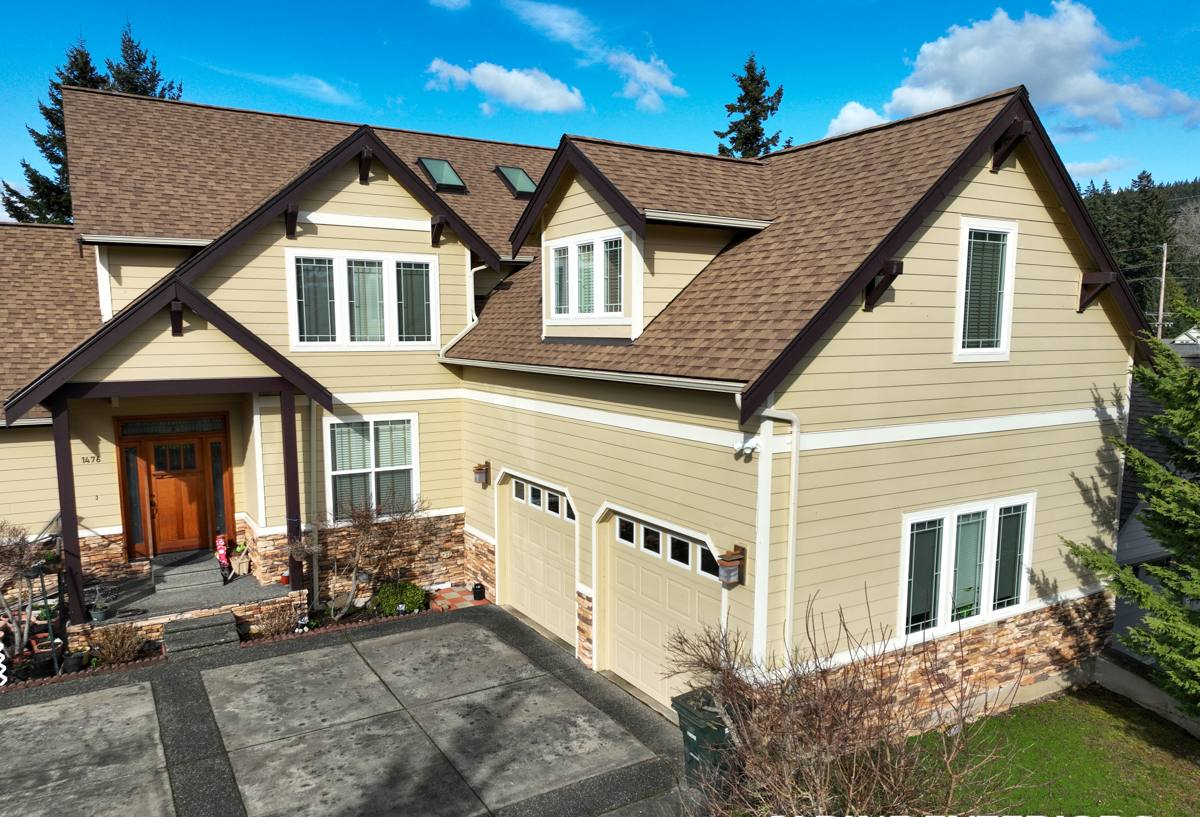
March Point sits out on the water between Fidalgo Bay and Padilla Bay, which means almost every deck here gets more direct exposure to marine air than a deck built a few miles inland in Skagit County. That exposure shows up as salt-laden wind, driving rain that comes in sideways during winter storms, and a moss season that can run eight or nine months out of the year in this part of Washington. A deck built to a generic spec sheet can look fine for a season or two, but the combination of salt, moisture, and shade-driven moss growth is what actually determines whether a deck is still solid and safe in ten years. Building correctly for March Point means making specific choices about fasteners, flashing, decking material, and drainage from the very first day of the project, not adding fixes after problems show up.
What Salt Air, Rain, and Moss Actually Do to a Deck
Each of these conditions attacks a deck in a different way, and a correctly built deck has to account for all three at once.
Salt Air and Hardware Corrosion
Airborne salt accelerates corrosion on any exposed metal — screws, joist hangers, post bases, and railing brackets. Standard electro-galvanized hardware that might hold up fine on a dry-side property can start rusting and staining within a few years in a bay-exposed location like March Point. Once a fastener corrodes, it loses holding strength long before the rust is visible from the surface, which is why hardware selection is a structural decision, not a cosmetic one.
Driving Rain and Water Intrusion
Wind-driven rain doesn't just fall on a deck, it pushes into every gap — behind ledger boards, under flashing laps, and into end grain on cut lumber. The ledger connection where a deck attaches to the house is the single most common point of hidden water damage on decks in this region, because a poorly flashed ledger lets water track directly into the house's band joist and framing.
Moss and Algae on Decking Surfaces
Skagit County's damp, shaded winters give moss and algae exactly the conditions they need: moisture, low light, and organic debris. On decking, moss growth isn't just unsightly — it holds moisture against the board surface, accelerates rot in wood decking, and creates a genuinely slippery walking surface, especially on stairs.
What a Correctly Built Deck Looks Like Here
A deck that's going to hold up in March Point starts with framing and flashing decisions that are easy to skip if a crew is working from a one-size-fits-all approach. Pressure-treated framing lumber should be paired with fasteners and hangers rated for use with modern treated lumber's higher copper content, which is more corrosive to untreated or lower-grade galvanized steel. The ledger board needs continuous flashing that laps correctly with the house's existing water-resistive barrier, with a gap or drainage plane behind it so water that does get past the flashing has somewhere to go besides your framing.
Decking Material Options
The decking surface itself is where most homeowners spend the most attention, and each material handles this climate differently.
| Material | Moisture & Moss Behavior | Maintenance | Typical Lifespan Here |
|---|---|---|---|
| Cedar or wood decking | Natural rot resistance but absorbs moisture; moss gains a foothold in shaded, damp spots | Regular cleaning, periodic sealing or staining | Shorter without consistent upkeep |
| Composite decking | Doesn't rot, but can trap surface moisture and grow algae film if not textured or ventilated well | Periodic washing; no sealing or staining | Long, if ventilation below is correct |
| PVC/capped decking | Fully moisture-resistant surface, least prone to moss staining | Lowest maintenance of the three | Longest, with proper substructure |
We don't push one material over another as a rule — each of these is a legitimate choice, and the right one depends on your budget, how much upkeep you want to do, and how shaded the deck location is. What matters more than the brand name on the decking is whether the substructure underneath it is built to let water and air move through, which we'll cover next.
The Substructure and Fasteners You Don't See
Most of what determines a deck's real lifespan in this climate is underneath the walking surface. Posts should sit on elevated bases that keep the wood end grain off the concrete footing, not buried or resting directly in standing water after a storm. Joist hangers, structural screws, and any hardware within the framing should be rated for coastal or high-moisture exposure — this typically means hot-dip galvanized or stainless steel, not the cheapest available electro-galvanized option. Framing spacing and blocking should give the structure room to breathe underneath, which matters more here than in a drier inland climate because trapped moisture under a deck simply doesn't evaporate as quickly with our humidity and cloud cover.
Drainage and Moisture Management
Water needs a clear path off and away from a deck, and that has to be designed in, not left to chance. Decking boards need consistent gapping so rain drains through rather than pooling on the surface. If the deck is elevated and there's living space or storage underneath, an under-deck drainage system can keep that area dry, but it has to be installed with enough slope and clean flashing details to actually work — a poorly installed drainage membrane can trap water against the framing instead of shedding it. Grading and gutter placement near the deck matter too; a deck built right next to a downspout that dumps water at the base of the posts will stay wetter than the rest of the structure no matter how good the decking material is.
Moss, Algae, and What Ongoing Maintenance Actually Looks Like
No deck material is entirely moss-proof in a climate like Skagit County's, but design choices can meaningfully cut down how much you deal with. Orienting a deck to get more sun exposure where the layout allows, keeping overhanging vegetation trimmed back, and choosing a decking surface with a texture that sheds water rather than holding it all reduce moss buildup. Realistically, most homeowners in March Point should expect to do a seasonal cleaning — a wash with a deck-safe cleaner and a stiff brush, particularly on stairs and shaded sections — heading into the wetter months. Wood decking will also need periodic sealing or staining to keep its moisture resistance intact; composite and PVC decking skip that step but still benefit from regular washing to keep algae film from building up.
Cost Factors for a Custom Deck in March Point
Every deck is priced around its own combination of size, material, and site conditions, so we don't quote a single flat number — but the factors below are what actually move the price up or down, and most fully custom decks in this area land somewhere in the low-to-mid five-figure range once you factor in a mid-size footprint, one of the sturdier decking materials, and code-compliant railings and stairs.
| Factor | Why It Affects Price |
|---|---|
| Square footage and shape | More surface area and complex angles mean more framing and cutting |
| Decking material | Wood, composite, and PVC carry different material and installation costs |
| Elevation and stairs | Taller decks need more substructure, railings, and stair framing |
| Ledger and flashing complexity | Difficult house attachment points take more labor to flash correctly |
| Railing style | Cable, glass, and custom rail systems cost more than standard baluster rail |
| Site access | Sloped or hard-to-reach lots can add equipment or labor time |
Our Process, Start to Finish
We start with an on-site visit and measurement so we can see the actual conditions — sun exposure, existing drainage, how the deck will attach to the house, and what the ground and access look like. From there we go over material options and layout with you, being upfront about what each choice means for both upfront cost and long-term maintenance in this climate. Once a design and material plan is set, we handle the required permitting, build the substructure with corrosion-rated hardware and proper ledger flashing, install the decking and railing, and finish with a walkthrough so you know what maintenance to expect and when.
What to Ask Before You Hire a Deck Contractor
- Are they licensed and bonded to do deck construction in Washington?
- Do they pull permits themselves, or leave that step to you?
- What hardware and fastener grade do they use for ledger and framing connections?
- How do they detail the ledger flashing where the deck meets the house?
- Do they have experience building specifically in coastal or bay-exposed sites like March Point?
- What does their warranty actually cover — materials, labor, or both?
Why Hire a Crew That Already Works in March Point
A deck built by a crew that hasn't worked much in bay-exposed, high-moisture sites tends to default to standard-grade hardware and generic flashing details — the kind of shortcuts that don't show up as a problem until years later. Working regularly in and around Anacortes and Skagit County means we're used to building for salt air and driving rain as the baseline, not the exception, and we know how the local permitting process works so that step doesn't slow your project down. That local familiarity is less about any one trick and more about consistently making the small decisions — fastener grade, flashing laps, drainage detailing — that determine whether a deck is still solid in fifteen years or starting to show problems in five.
If you're planning a new deck or replacing one that's showing its age, we're happy to come take a look and put together a straightforward, no-pressure estimate — just fill out the form below to get started.