 Anacortes Window
 Burlington Sits in a Tougher Climate Than It Looks
Burlington doesn't get the postcard version of coastal weather, but it sits close enough to the Salish Sea and the Skagit River delta that the same marine air mass driving conditions in Anacortes reaches right up the valley. That means damp, moisture-laden air for much of the year, long stretches of low-intensity rain that finds every gap in a siding system, and shaded, slow-drying north walls where moss and algae get a foothold and never really let go. Skagit County's mix of farmland humidity and marine influence is a different challenge than a drier inland climate — siding here has to shed water fast and dry out just as fast, or it starts failing from the inside long before it looks bad from the street.
Homes in and around Burlington see this show up in predictable ways: paint that peels years ahead of schedule on the north and west elevations, trim that stays damp into July, and siding seams that were fine when the house was built but have opened up after a decade or two of freeze-thaw cycles and constant wetting. None of that is a defect in the original construction — it's just what this valley does to exterior materials over time, especially materials that weren't built with this climate in mind.
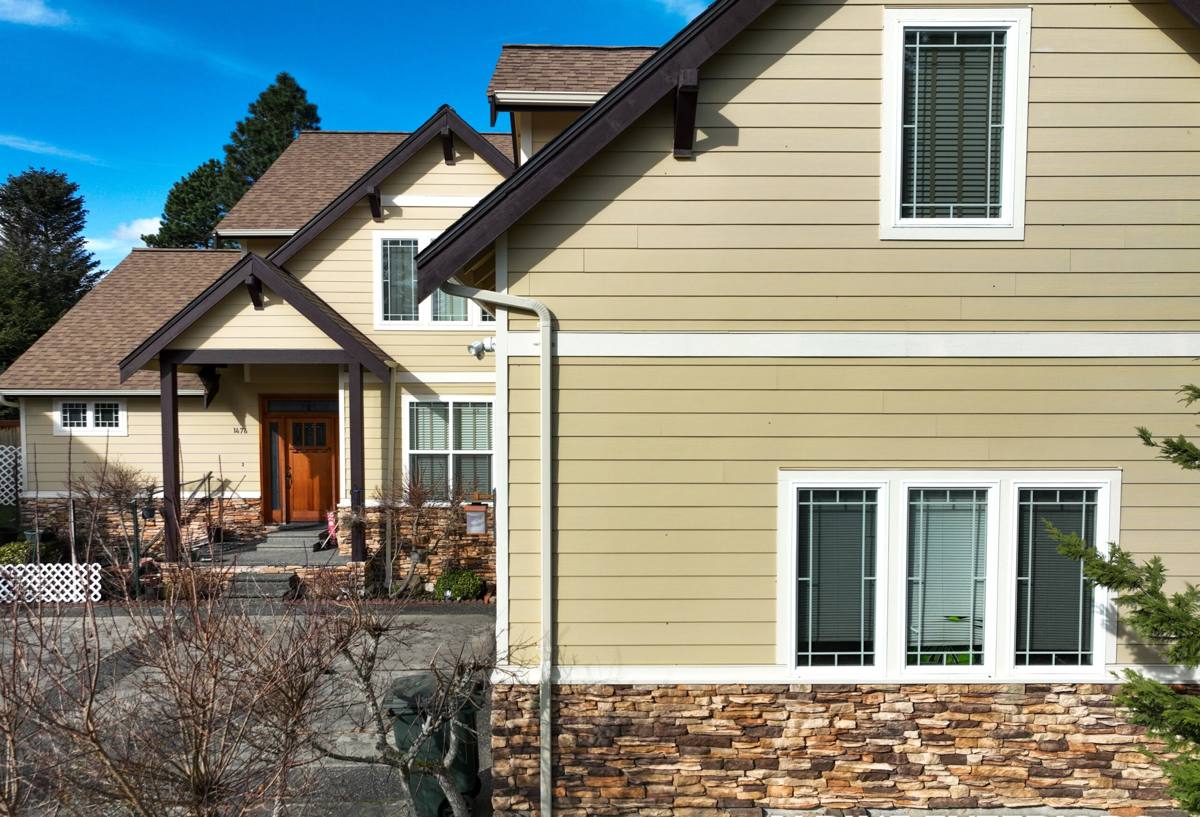
Signs a Burlington Home Actually Needs Siding Replacement
Not every siding problem means a full tear-off. But there's a point where patching stops being cost-effective and starts being a way to delay the inevitable while water keeps getting behind the wall. Here's what we look for when we walk a Burlington property:
- Soft or spongy spots when you press on the siding, especially near the bottom courses and around window trim
- Persistent moss or dark streaking on north- and west-facing walls that comes back within a season of cleaning
- Paint failure — bubbling, peeling, or chalking — that keeps returning within a year or two of repainting
- Visible cupping, warping, or delamination in wood-based or composite panels
- Gaps opening up at seams, corners, or where siding meets trim and flashing
- A musty smell in an interior room that backs up to an exterior wall
- Siding that's simply reached the end of its practical service life, even if it looks okay from the curb
If you're seeing two or more of these, it's worth having someone look at the sheathing underneath, not just the visible siding. In this climate, by the time siding shows obvious damage, moisture has often already been working on the layer behind it for a while.
What a Correct Siding Replacement Actually Involves
Siding replacement done right is a system, not a swap. Pulling off old material and nailing up new panels without addressing what's underneath just resets the clock on the same problems. A proper job in a wet climate like Skagit County includes:
Tear-Off and Inspection
Removing the old siding is when problems hiding behind it finally show themselves — soft sheathing, past water intrusion, or house wrap that's torn or missing in spots. This is the point where a contractor either deals with what they find or covers it back up. We deal with it.
Water-Resistive Barrier and Flashing
A weather-resistant barrier, properly lapped and taped, goes over the sheathing before any siding goes up. Flashing gets installed at every window, door, and horizontal transition so water is directed out and down instead of behind the wall. This step matters more in a marine climate than almost anything else in the job — it's the difference between siding that sheds rain and siding that eventually traps it.
Proper Fastening and Clearances
Fiber cement siding has specific nailing patterns, fastener types, and minimum clearances from grade, roof lines, and decks. Skipping these to save time is one of the most common ways a siding job fails early, even with a good product.
Caulking, Trim, and Finish Details
Corners, trim boards, and penetrations get sealed with products rated for exterior use, and factory-finished panels get touched up at cut edges so the factory coating's protection isn't compromised.
Why We Install Only James Hardie Fiber Cement
We get asked why we don't offer vinyl, LP SmartSide, primed wood, or cedar as options. It's a fair question, and the honest answer is that after years of doing this work in Skagit County's climate, we standardized on one product because it holds up here better than the alternatives, not because it's the only thing that exists.
Vinyl is inexpensive and low-maintenance in a dry climate, but it expands and contracts with temperature swings, can crack in cold snaps, and doesn't hold paint if you ever want to change the color. Wood and cedar look great and have real character, but they need ongoing maintenance — staining, sealing, moss treatment — that most homeowners don't want to keep up with in a climate that gives wood every opportunity to hold moisture. Engineered wood products like LP SmartSide perform reasonably well when installation and maintenance are followed exactly, but they're still wood-based at the core, which means edge sealing and caulking upkeep are non-negotiable in a wet environment.
James Hardie fiber cement is non-combustible, doesn't expand and contract the way vinyl does, and comes with a factory-applied ColorPlus finish that's baked on rather than field-painted, so it resists fading and chipping far better than a job-site paint job. Hardie also engineers specific product lines (HZ5 and HZ10) for different climate zones, which matters in a region that swings between wet Pacific storms and occasional hard freezes. It's not that every other product is bad — it's that we'd rather install one system extremely well, understand its behavior completely, and stand behind it, than offer five options and be an expert in none of them.
Hardie Product Lines: What Fits a Burlington Home
| Product | Best Use | Why It Fits This Climate |
|---|---|---|
| HardiePlank lap siding | Most common choice for full replacements | Traditional look, wide color range, engineered for Pacific Northwest moisture exposure |
| HardiePanel vertical siding | Modern facades, accent walls, gables | Fewer horizontal seams means fewer water entry points |
| HardieTrim boards | Window, door, and corner trim | Matches the siding's moisture resistance so trim doesn't fail before the field siding does |
| HardieShingle | Accent areas, dormers, gable ends | Adds texture and dimension without sacrificing the fiber cement performance |
Cost Factors for a Burlington Siding Replacement
Every home is different, but the same variables tend to move the price up or down on most projects we quote in this area:
| Factor | How It Affects Cost |
|---|---|
| Home size and wall complexity | More square footage and more corners, dormers, or angles mean more cutting and labor |
| Condition of the sheathing underneath | Rot or water damage found during tear-off adds repair scope before new siding can go up |
| Siding profile and accessories chosen | Lap width, trim details, and accent siding (like vertical panels or shingle sections) affect material cost |
| Number of stories and access | Second-story and steep-lot homes require more scaffolding and staging time |
| Existing siding removal | Multiple layers of old siding or extensive prep work add time to the tear-off phase |
We won't quote a job over the phone based on square footage alone — too many of these factors only show up once we're actually looking at the walls.
Our Process, Start to Finish
- Walkthrough and assessment — we look at every elevation, check for soft spots, and talk through what we're seeing
- Written estimate — a clear scope of work and price, no vague allowances
- Tear-off and inspection — old siding comes off, sheathing gets checked, any repairs get flagged before we move forward
- Barrier, flashing, and prep — the water management system goes in before a single piece of finish siding does
- Hardie installation — installed to manufacturer spec, including fastening, clearances, and joint treatment
- Final walkthrough — we go over the finished job with you before we call it done
Why a Crew That Already Works Burlington Matters
Siding installation isn't just about following a manual — it's about knowing how a specific product behaves in a specific climate over years, not just on installation day. A crew that regularly works Skagit County homes already knows which elevations in this area take the worst weathering, how much clearance to leave given the amount of rain the valley sees, and what past siding failures in this region tend to look like before they're obvious. That's the kind of judgment that only comes from doing the work here repeatedly, not from a general contractor passing through on a one-off job.
It also means faster response if something needs attention after the fact. A contractor based in the area isn't a stranger driving in from out of town — they're someone who can get back to your property without it being a special trip.
Get a Straightforward Estimate
If your Burlington home's siding is showing its age, the best next step is a walkthrough, not a guess. We'll take a real look at your walls, tell you honestly what we're seeing, and give you a clear estimate for James Hardie fiber cement siding built for what this climate actually does to a house. There's no pressure and no obligation — just a straight answer about where things stand and what it would take to fix it right.